
Iranikoo | Leben in Deutschland (LiD) Test 2026: Full Guide, Official Resources, and Free Online Practice
Prepare faster and smarter for the Leben in Deutschland test
If you are preparing for the Leben in Deutschland (LiD) test, this guide gives you a practical and realistic plan based on official structure and common candidate mistakes. You will learn what to study, how to practice, what to expect on exam day, and how to avoid wasting time on outdated material.
At the institutional level, BAMF defines the official framework, question catalog, and exam policy. In many cities, implementation and exam logistics are commonly handled by accredited centers such as VHS (Volkshochschule). In short: BAMF is the official authority, while centers like VHS are often where candidates register and sit for the test.
You need this exam to document civic knowledge required in many residence and naturalization pathways, especially if you do not have a recognized substitute credential.
This guide explains how scoring works, how many correct answers are typically needed, how retakes usually work, and how to pass with a calm, structured study method.
Exam Types: Understanding Einbürgerungstest vs. LiD Test
If you're preparing for German naturalization, you may have heard that there are two types of civic exams: one for people who did not attend an official integration course, and another for those who did. Both use the same question bank, but eligibility differs.
1. Naturalization Test (Einbürgerungstest)
Who should take this exam?
If you did not attend or complete an official citizenship integration course (Integrationskurs), you must take the naturalization test (Einbürgerungstest).
- Never enrolled in an official integration course
- Dropped out of an integration course
- Did not complete the full course
2. Leben in Deutschland Test (LiD)
Who should take this exam?
If you completed an official citizenship integration course (Integrationskurs), you may take the LiD test instead.
- Enrolled in an official integration course
- Completed the full course
- Have a completion certificate
Decision Guide:
| Your Situation | Take This Exam |
|---|---|
| You never attended an integration course | Einbürgerungstest |
| You enrolled but did not complete the course | Einbürgerungstest |
| You completed an integration course fully | LiD-Test (Leben in Deutschland) |
Key Point: Both exams use the same official BAMF question catalog and have the same format. The only difference is the eligibility requirement (completion of integration course or not).
What this exam actually measures
The LiD test checks civic knowledge needed for life in Germany. The question set covers constitutional values, democratic institutions, legal basics, social rules, recent history, and federal state specific facts. The test is not a language exam, but you still need clear reading comprehension to avoid missing key words in answer options.
Exam format in plain language
- 33 total questions
- 30 nationwide questions
- 3 federal state specific questions
- 60 minutes total
- Multiple choice format with one correct answer per question
The complete official catalog currently includes 300 nationwide and 160 state specific questions (10 per each of the 16 federal states). In the real test, a smaller exam sheet is drawn from that full catalog.
Important: Not all 460 questions are relevant to you. You only need to study 310 questions: the 300 nationwide questions plus the 10 questions for your specific federal state. The other 150 state-specific questions belong to the remaining 15 states and will never appear in your exam.
Passing strategy and score target
For naturalization use cases, candidates usually target at least 17 correct answers out of 33. Many people prepare for a higher safety zone, often 20 or more in timed practice, to reduce stress on test day.
Main official BAMF reference: BAMF Online Test Center for the LiD and naturalization test.
A two week study plan that works
Days 1 to 4: Learn core nationwide topics in blocks. Focus on democracy, institutions, rights and duties, and social order.
Days 5 to 7: Add your state specific question set. Practice mixed quizzes so your brain switches quickly between general and state context.
Days 8 to 10: Start timed simulations of 33 questions in 60 minutes. Build rhythm and timing.
Days 11 to 12: Review only weak areas. Do not reread everything. Fix the mistakes that repeat.
Days 13 to 14: Final full mocks and light revision. Keep your pace stable and sleep well.
Use our free tool for daily practice
To keep preparation simple and consistent, use our fully online practice tool with no installation:
Practice now with our LiD exam tool
You can run full timed sessions and build exam rhythm before your official appointment.
If you log in, your exam attempts are saved and you can review wrong answers at the end and later from your history.
This is useful for short sessions during the day because you can open it instantly on mobile or desktop.
Important references you should keep open
For offline Persian practice, we sincerely thank the translators and reviewers of the Persian material: Afsaaneh Ali Yazdani for translation and arrangement, and official translator Jahangir Teyfoori for review and confirmation.
- Persian translated PDF: LiD Persian translated questions PDF
- Official sample questionnaire format: Sample questionnaire for naturalization and LiD style
- Latest complete official catalog: Complete official LiD and naturalization question catalog
Important: parts of the Persian translated PDF may be outdated. Always verify sensitive and time dependent facts in the latest official catalog, including current political office holders such as the Chancellor of Germany.
Exam day checklist
- Bring valid photo ID
- Arrive early to reduce stress
- Read every option fully before marking
- Answer easy questions first, then return to difficult ones
- Keep 5 to 10 minutes at the end for review
Common mistakes and how to avoid them
- Studying only random screenshots instead of official catalog based practice
- Ignoring state specific questions until the last day
- Memorizing without understanding key concepts
- Practicing without time pressure
- Using outdated files without final cross check
The LiD test becomes much easier when preparation is structured. Stay consistent, practice with updated material, and use short daily sessions instead of last minute cramming.
Do one last pass with the LiD tool before exam day
For your final review session, use the button below.
Login gives you saved attempts and mistake tracking so you can revisit weak points quickly.
Essential Links
Quick Navigation
All 460 LiD Questions — German · English
In Deutschland dürfen Menschen offen etwas gegen die Regierung sagen, weil …
- A)hier Religionsfreiheit gilt.
- B)die Menschen Steuern zahlen.
- C)die Menschen das Wahlrecht haben.
- D)hier Meinungsfreiheit gilt.✓
In Germany, people are allowed to openly say things against the government because ...
- A)freedom of religion applies here.
- B)people pay taxes.
- C)people have the right to vote.
- D)freedom of expression applies here.✓
In Deutschland können Eltern bis zum 14. Lebensjahr ihres Kindes entscheiden, ob es in der Schule am …
- A)Geschichtsunterricht teilnimmt.
- B)Religionsunterricht teilnimmt.✓
- C)Politikunterricht teilnimmt.
- D)Sprachunterricht teilnimmt.
In Germany, parents can decide until their child reaches age 14 whether the child participates in school ...
- A)history class.
- B)religious education class.✓
- C)politics class.
- D)language class.
Deutschland ist ein Rechtsstaat. Was ist damit gemeint?
- A)Alle Einwohnerinnen/Einwohner und der Staat müssen sich an die Gesetze halten.✓
- B)Der Staat muss sich nicht an die Gesetze halten.
- C)Nur Deutsche müssen die Gesetze befolgen.
- D)Die Gerichte machen die Gesetze.
Germany is a state governed by the rule of law. What does that mean?
- A)All residents and the state must comply with the laws.✓
- B)The state does not have to abide by the laws.
- C)Only Germans have to follow the laws.
- D)The courts make the laws.
Welches Recht gehört zu den Grundrechten in Deutschland?
- A)Waffenbesitz
- B)Faustrecht
- C)Meinungsfreiheit✓
- D)Selbstjustiz
Which right belongs to the fundamental rights in Germany?
- A)possession of weapons.
- B)law of the fist (might makes right).
- C)freedom of expression.✓
- D)vigilante justice.
Wahlen in Deutschland sind frei. Was bedeutet das?
- A)Man darf Geld annehmen, wenn man dafür eine bestimmte Kandidatin/einen bestimmten Kandidaten wählt.
- B)Nur Personen, die noch nie im Gefängnis waren, dürfen wählen.
- C)Die Wählerin/der Wähler darf bei der Wahl weder beeinflusst noch zu einer bestimmten Stimmabgabe gezwungen werden und keine Nachteile durch die Wahl haben.✓
- D)Alle wahlberechtigten Personen müssen wählen.
Elections in Germany are free. What does that mean?
- A)You may accept money if you vote for a certain candidate.
- B)Only people who have never been in prison are allowed to vote.
- C)The voter may not be influenced in the election, or forced to cast a specific vote, and must suffer no disadvantage because of their vote.✓
- D)All eligible persons must vote.
Wie heißt die deutsche Verfassung?
- A)Volksgesetz
- B)Bundesgesetz
- C)Deutsches Gesetz
- D)Grundgesetz✓
What is the name of the German constitution?
- A)People's Law.
- B)Federal Law.
- C)German Law.
- D)Basic Law (Grundgesetz).✓
Welches Recht gehört zu den Grundrechten, die nach der deutschen Verfassung garantiert werden? Das Recht auf …
- A)Glaubens- und Gewissensfreiheit✓
- B)Unterhaltung
- C)Arbeit
- D)Wohnung
Which right belongs to the fundamental rights guaranteed by the German constitution?
- A)Freedom of belief and conscience.✓
- B)Entertainment.
- C)Work.
- D)Housing.
Was steht nicht im Grundgesetz von Deutschland?
- A)Die Würde des Menschen ist unantastbar.
- B)Alle sollen gleich viel Geld haben.✓
- C)Jeder Mensch darf seine Meinung sagen.
- D)Alle sind vor dem Gesetz gleich.
What is not in the Basic Law of Germany?
- A)Human dignity is inviolable.
- B)Everyone should have the same amount of money✓
- C)Everyone is allowed to express their opinion.
- D)Everyone is equal before the law.
Welches Grundrecht gilt in Deutschland nur für Ausländerinnen/Ausländer? Das Grundrecht auf …
- A)Schutz der Familie
- B)Menschenwürde
- C)Asyl✓
- D)Meinungsfreiheit
What is a fundamental right that applies only to foreigners? The fundamental right to ...
- A)protection of the family
- B)human dignity
- C)asylum✓
- D)freedom of opinion
Was ist mit dem deutschen Grundgesetz vereinbar?
- A)die Prügelstrafe
- B)die Folter
- C)die Todesstrafe
- D)die Geldstrafe✓
What is compatible with the German Basic Law?
- A)corporal punishment.
- B)torture.
- C)the death penalty.
- D)a fine.✓
Wie wird die Verfassung der Bundesrepublik Deutschland genannt?
- A)Grundgesetz✓
- B)Bundesverfassung
- C)Gesetzbuch
- D)Verfassungsvertrag
What is the name of the constitution of the Federal Republic of Germany?
- A)Basic Law (Grundgesetz).✓
- B)Federal Constitution.
- C)Code of Law.
- D)Constitutional Treaty.
Eine Partei im Deutschen Bundestag will die Pressefreiheit abschaffen. Ist das möglich?
- A)Ja, wenn mehr als die Hälfte der Abgeordneten im Bundestag dafür sind.
- B)Ja, aber dazu müssen zwei Drittel der Abgeordneten im Bundestag dafür sein.
- C)Nein, denn die Pressefreiheit ist ein Grundrecht. Sie kann nicht abgeschafft werden.✓
- D)Nein, denn nur der Bundesrat kann die Pressefreiheit abschaffen.
A party in the German Bundestag wants to abolish freedom of the press. Is that possible?
- A)Yes, if more than half of the members of the Bundestag are in favor.
- B)Yes, but for this, two-thirds of the members of the Bundestag must be in favor.
- C)No, because freedom of the press is a fundamental right. It cannot be abolished.✓
- D)No, because only the Federal Council can abolish freedom of the press.
Im Parlament steht der Begriff "Opposition" für …
- A)die regierenden Parteien.
- B)die Fraktion mit den meisten Abgeordneten.
- C)alle Parteien, die bei der letzten Wahl die 5%-Hürde erreichen konnten.
- D)alle Abgeordneten, die nicht zu der Regierungspartei/den Regierungsparteien gehören.✓
In parliament, the term "opposition" refers to ...
- A)the governing parties.
- B)the parliamentary group with the most members.
- C)all parties that were able to clear the 5% threshold at the last election.
- D)all members of parliament who do not belong to the governing party/parties.✓
Meinungsfreiheit in Deutschland heißt, dass ich …
- A)Passanten auf der Straße beschimpfen darf.
- B)meine Meinung im Internet äußern kann.✓
- C)Nazi-, Hamas- oder Islamischer Staat-Symbole öffentlich tragen darf.
- D)meine Meinung nur dann äußern darf, solange ich der Regierung nicht widerspreche.
Freedom of expression in Germany means that I ...
- A)may insult passers-by on the street.
- B)can express my opinion on the internet.✓
- C)may publicly display Nazi, Hamas, or Islamic State symbols.
- D)may only express my opinion as long as I do not contradict the government.
Was verbietet das deutsche Grundgesetz?
- A)Militärdienst
- B)Zwangsarbeit✓
- C)freie Berufswahl
- D)Arbeit im Ausland
What does the German Basic Law prohibit?
- A)military service
- B)forced labor✓
- C)free choice of profession
- D)work abroad
Wann ist die Meinungsfreiheit in Deutschland eingeschränkt?
- A)bei der öffentlichen Verbreitung falscher Behauptungen über einzelne Personen✓
- B)bei Meinungsäußerungen über die Bundesregierung
- C)bei Diskussionen über Religionen
- D)bei Kritik am Staat
Freedom of expression has limits in Germany. It ends ...
- A)with the public dissemination of false allegations about individual persons.✓
- B)when expressing opinions about the Federal Government.
- C)in discussions about religions.
- D)in case of criticism of the state.
Die deutschen Gesetze verbieten …
- A)Meinungsfreiheit der Einwohnerinnen und Einwohner.
- B)Petitionen der Bürgerinnen und Bürger.
- C)Versammlungsfreiheit der Einwohnerinnen und Einwohner.
- D)Ungleichbehandlung der Bürgerinnen und Bürger durch den Staat.✓
German laws prohibit ...
- A)freedom of expression of residents.
- B)petitions by citizens.
- C)freedom of assembly of residents.
- D)unequal treatment of citizens by the state.✓
Welches Grundrecht ist in Artikel 1 des Grundgesetzes der Bundesrepublik Deutschland garantiert?
- A)die Unantastbarkeit der Menschenwürde✓
- B)das Recht auf Leben
- C)Religionsfreiheit
- D)Meinungsfreiheit
Which fundamental right is guaranteed in Article 1 of the Basic Law of the Federal Republic of Germany?
- A)the inviolability of human dignity.✓
- B)the right to life.
- C)freedom of religion.
- D)freedom of expression.
Was versteht man unter dem Recht der "Freizügigkeit" in Deutschland?
- A)Man darf sich seinen Wohnort selbst aussuchen.✓
- B)Man kann seinen Beruf wechseln.
- C)Man darf sich für eine andere Religion entscheiden.
- D)Man darf sich in der Öffentlichkeit nur leicht bekleidet bewegen.
What is part of freedom of movement in Germany?
- A)You may choose your own place of residence.✓
- B)You may change your profession.
- C)You may choose a different religion.
- D)You are allowed to dress lightly in public.
Eine Partei in Deutschland verfolgt das Ziel, eine Diktatur zu errichten. Sie ist dann …
- A)tolerant.
- B)rechtsstaatlich orientiert.
- C)gesetzestreu.
- D)verfassungswidrig.✓
A party in Germany is pursuing the goal of establishing a dictatorship. It is then ...
- A)tolerant.
- B)based on the rule of law.
- C)law-abiding.
- D)unconstitutional.✓
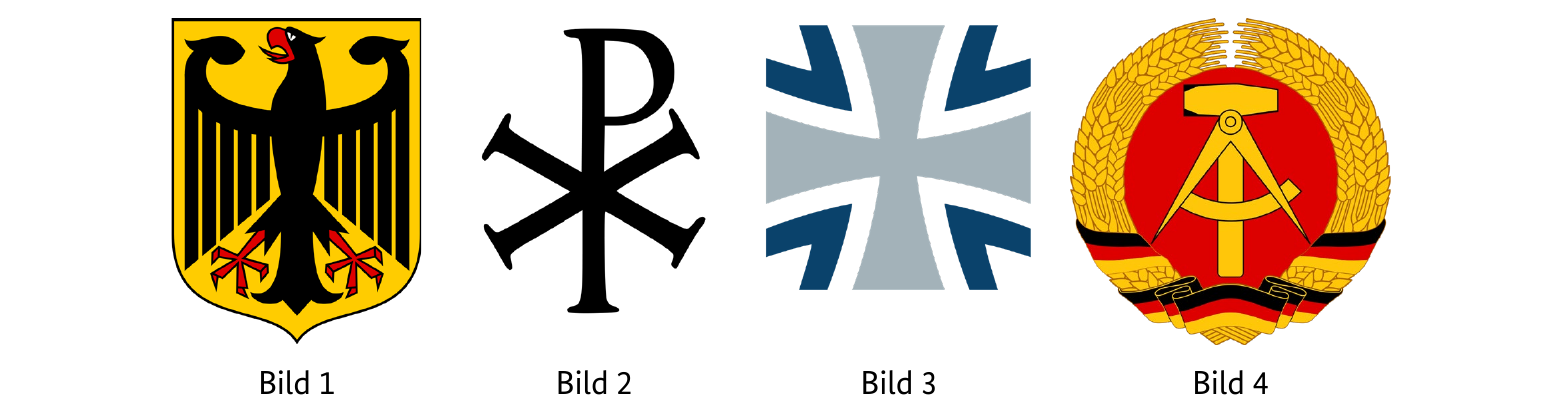
Welches ist das Wappen der Bundesrepublik Deutschland?
- A)Bild 1✓
- B)Bild 2
- C)Bild 3
- D)Bild 4
What is the coat of arms of the Federal Republic of Germany?
- A)1✓
- B)2
- C)3
- D)4
Was für eine Staatsform hat Deutschland?
- A)Monarchie
- B)Diktatur
- C)Republik✓
- D)Fürstentum
What kind of government does Germany have?
- A)Monarchy
- B)Dictatorship
- C)Republic✓
- D)Principality
In Deutschland sind die meisten Erwerbstätigen …
- A)in kleinen Familienunternehmen beschäftigt.
- B)ehrenamtlich für ein Bundesland tätig.
- C)selbstständig mit einer eigenen Firma tätig.
- D)bei einer Firma oder Behörde beschäftigt.✓
In Germany, most employed people are ...
- A)employed in small family businesses.
- B)working voluntarily for a federal state.
- C)self-employed with their own company.
- D)employed at a company or government agency.✓
Wie viele Bundesländer hat die Bundesrepublik Deutschland?
- A)14
- B)15
- C)16✓
- D)17
How many federal states does the Federal Republic of Germany have?
- A)14
- B)15
- C)16✓
- D)17
Was ist kein Bundesland der Bundesrepublik Deutschland?
- A)Elsass-Lothringen✓
- B)Nordrhein-Westfalen
- C)Mecklenburg-Vorpommern
- D)Sachsen-Anhalt
What is not a federal state of the Federal Republic of Germany?
- A)Alsace-Lorraine✓
- B)North Rhine-Westphalia
- C)Mecklenburg-Vorpommern
- D)Saxony-Anhalt
Deutschland ist …
- A)eine kommunistische Republik.
- B)ein demokratischer und sozialer Bundesstaat.✓
- C)eine kapitalistische und soziale Monarchie.
- D)ein sozialer und sozialistischer Bundesstaat.
Germany is ...
- A)a communist republic.
- B)a democratic and social federal state.✓
- C)a capitalist and social monarchy.
- D)a social and socialist federal state.
Deutschland ist …
- A)ein sozialistischer Staat.
- B)ein Bundesstaat.✓
- C)eine Diktatur.
- D)eine Monarchie.
Germany is ...
- A)a socialist state.
- B)a federal state.✓
- C)a dictatorship.
- D)a monarchy.
Wer wählt in Deutschland die Abgeordneten zum Bundestag?
- A)das Militär
- B)die Wirtschaft
- C)das wahlberechtigte Volk✓
- D)die Verwaltung
Who elects the members of the Bundestag in Germany?
- A)the military
- B)the economy / business sector
- C)the eligible voters✓
- D)the administration
Welches Tier ist das Wappentier der Bundesrepublik Deutschland?
- A)Löwe
- B)Adler✓
- C)Bär
- D)Pferd
Which animal is the heraldic animal of the Federal Republic of Germany?
- A)Lion
- B)Eagle✓
- C)Bear
- D)Horse
Was ist kein Merkmal unserer Demokratie?
- A)regelmäßige Wahlen
- B)Pressezensur✓
- C)Meinungsfreiheit
- D)verschiedene Parteien
What is not a characteristic of our democracy?
- A)regular elections
- B)press censorship✓
- C)freedom of opinion
- D)various parties
Die Zusammenarbeit von Parteien zur Bildung einer Regierung nennt man in Deutschland …
- A)Einheit.
- B)Koalition.✓
- C)Ministerium.
- D)Fraktion.
The cooperation of parties to form a government is called in Germany …
- A)Unity.
- B)Coalition.✓
- C)Ministry.
- D)parliamentary group (Fraktion).
Was ist keine staatliche Gewalt in Deutschland?
- A)Gesetzgebung
- B)Regierung
- C)Presse✓
- D)Rechtsprechung
What is not a form of state power (Staatsgewalt) in Germany?
- A)legislation.
- B)government.
- C)press.✓
- D)jurisdiction / judiciary.
Welche Aussage ist richtig? In Deutschland …
- A)sind Staat und Religionsgemeinschaften voneinander getrennt.✓
- B)bilden die Religionsgemeinschaften den Staat.
- C)ist der Staat abhängig von den Religionsgemeinschaften.
- D)bilden Staat und Religionsgemeinschaften eine Einheit.
Which statement is correct? In Germany ...
- A)state and religious communities are separated from each other.✓
- B)the religious communities form the state.
- C)the state is dependent on the religious communities.
- D)state and religious communities form a unit.
Was ist Deutschland nicht?
- A)eine Demokratie
- B)ein Rechtsstaat
- C)eine Monarchie✓
- D)ein Sozialstaat
What is Germany not?
- A)a democracy
- B)a constitutional state (rule of law)
- C)a monarchy✓
- D)a welfare state
Womit finanziert der deutsche Staat die Sozialversicherung?
- A)Kirchensteuer
- B)Sozialabgaben✓
- C)Spendengeldern
- D)Vereinsbeiträgen
How does the German state finance social security?
- A)Church tax
- B)Social security contributions✓
- C)Donations
- D)Association fees
Welche Maßnahme schafft in Deutschland soziale Sicherheit?
- A)die Krankenversicherung✓
- B)die Autoversicherung
- C)die Gebäudeversicherung
- D)die Haftpflichtversicherung
What measure creates social security in Germany?
- A)health insurance✓
- B)car insurance
- C)buildings insurance
- D)liability insurance
Wie werden die Regierungschefinnen/Regierungschefs der meisten Bundesländer in Deutschland genannt?
- A)Erste Ministerin/Erster Minister
- B)Premierministerin/Premierminister
- C)Senatorin/Senator
- D)Ministerpräsidentin/Ministerpräsident✓
What are the heads of government of most German federal states called?
- A)First Minister.
- B)Prime Minister.
- C)Senator.
- D)Minister-President (Ministerpräsident).✓
Die Bundesrepublik Deutschland ist ein demokratischer und sozialer …
- A)Staatenverbund.
- B)Bundesstaat.✓
- C)Staatenbund.
- D)Zentralstaat.
The Federal Republic of Germany is a democratic and social ...
- A)union of states (Staatenverbund).
- B)federal state (Bundesstaat).✓
- C)confederation (Staatenbund).
- D)central state (Zentralstaat).
Was hat jedes deutsche Bundesland?
- A)eine eigene Außenministerin/einen eigenen Außenminister
- B)eine eigene Währung
- C)eine eigene Armee
- D)eine eigene Regierung✓
What does every German federal state have?
- A)its own foreign minister
- B)its own currency
- C)its own army
- D)its own government✓
Mit welchen Worten beginnt die deutsche Nationalhymne?
- A)Völker, hört die Signale …
- B)Einigkeit und Recht und Freiheit …✓
- C)Freude schöner Götterfunken …
- D)Deutschland einig Vaterland …
With which words does the German national anthem begin?
- A)Peoples, hear the signals ...
- B)Unity and justice and freedom ...✓
- C)Joy, beautiful spark of the gods ...
- D)Germany, united fatherland ...
Warum gibt es in einer Demokratie mehr als eine Partei?
- A)weil dadurch die unterschiedlichen Meinungen der Bürgerinnen und Bürger vertreten werden✓
- B)damit Bestechung in der Politik begrenzt wird
- C)um politische Demonstrationen zu verhindern
- D)um wirtschaftlichen Wettbewerb anzuregen
Why does a democracy have more than one party?
- A)because this represents the different opinions of citizens.✓
- B)to limit bribery in politics.
- C)to prevent political demonstrations.
- D)to stimulate economic competition.
Wer beschließt in Deutschland ein neues Gesetz?
- A)die Regierung
- B)das Parlament✓
- C)die Gerichte
- D)die Polizei
Who passes a new law in Germany?
- A)the government.
- B)parliament.✓
- C)the courts.
- D)the police.
Wann kann in Deutschland eine Partei verboten werden?
- A)wenn ihr Wahlkampf zu teuer ist
- B)wenn sie gegen die Verfassung kämpft✓
- C)wenn sie Kritik am Staatsoberhaupt äußert
- D)wenn ihr Programm eine neue Richtung vorschlägt
When can a party be banned in Germany?
- A)when its election campaign is too expensive
- B)when it acts against the constitution✓
- C)when it expresses criticism of the head of state
- D)when its program proposes a new direction
Wen kann man als Bürgerin/Bürger in Deutschland nicht direkt wählen?
- A)Abgeordnete des EU-Parlaments
- B)Die Bundespräsidentin/den Bundespräsidenten✓
- C)Landtagsabgeordnete
- D)Bundestagsabgeordnete
Who can you NOT directly elect as a citizen in Germany?
- A)Members of the EU Parliament.
- B)the Federal President.✓
- C)Members of the State Parliament (Landtag).
- D)Members of the Bundestag.
Zu welcher Versicherung gehört die Pflegeversicherung?
- A)Sozialversicherung✓
- B)Unfallversicherung
- C)Hausratsversicherung
- D)Haftpflicht- und Feuerversicherung
Which type of insurance does the long-term care insurance (Pflegeversicherung) belong to?
- A)social insurance.✓
- B)accident insurance.
- C)household contents insurance.
- D)liability and fire insurance.
Der deutsche Staat hat viele Aufgaben. Welche Aufgabe gehört dazu?
- A)Er baut Straßen und Schulen.✓
- B)Er verkauft Lebensmittel und Kleidung.
- C)Er versorgt alle Einwohnerinnen und Einwohner kostenlos mit Zeitungen.
- D)Er produziert Autos und Busse.
The German state has many tasks. Which task belongs to them?
- A)It builds roads and schools.✓
- B)It sells food and clothing.
- C)It provides all residents with newspapers free of charge.
- D)It produces cars and buses.
Der deutsche Staat hat viele Aufgaben. Welche Aufgabe gehört nicht dazu?
- A)Er bezahlt für alle Staatsangehörigen Urlaubsreisen.✓
- B)Er zahlt Kindergeld.
- C)Er unterstützt Museen.
- D)Er fördert Sportlerinnen und Sportler.
The German state has many tasks. Which task does not belong to them?
- A)It pays for vacation trips for all citizens.✓
- B)It pays child benefit.
- C)It supports museums.
- D)It promotes athletes.
Welches Organ gehört nicht zu den Verfassungsorganen Deutschlands?
- A)der Bundesrat
- B)die Bundespräsidentin/der Bundespräsident
- C)die Bürgerversammlung✓
- D)die Regierung
Which organ does NOT belong to the constitutional organs of Germany?
- A)the Federal Council (Bundesrat).
- B)the Federal President.
- C)the citizens' assembly (Bürgerversammlung).✓
- D)the government.
Wer bestimmt in Deutschland die Schulpolitik?
- A)die Lehrer und Lehrerinnen
- B)die Bundesländer✓
- C)das Familienministerium
- D)die Universitäten
Who determines education policy in Germany?
- A)the teachers
- B)the federal states✓
- C)the Ministry of Family Affairs
- D)the universities
Die Wirtschaftsform in Deutschland nennt man …
- A)freie Zentralwirtschaft.
- B)soziale Marktwirtschaft.✓
- C)gelenkte Zentralwirtschaft.
- D)Planwirtschaft.
The economic system in Germany is called ...
- A)free central economy.
- B)social market economy.✓
- C)directed central economy.
- D)planned economy.
Zu einem demokratischen Rechtsstaat gehört es nicht, dass …
- A)Menschen sich kritisch über die Regierung äußern können.
- B)Bürger friedlich demonstrieren gehen dürfen.
- C)Menschen von einer Privatpolizei ohne Grund verhaftet werden.✓
- D)jemand ein Verbrechen begeht und deshalb verhaftet wird.
It is not part of a democratic constitutional state that ...
- A)people can express critical opinions about the government.
- B)citizens are allowed to demonstrate peacefully.
- C)people are arrested by a private police force without reason.✓
- D)someone commits a crime and is therefore arrested.
Was bedeutet "Volkssouveränität"? Alle Staatsgewalt geht vom ...
- A)Volke aus.✓
- B)Bundestag aus.
- C)preußischen König aus.
- D)Bundesverfassungsgericht aus.
What does 'Volkssouveränität' (popular sovereignty) mean? All state authority derives from the ...
- A)the people.✓
- B)the Bundestag.
- C)the Prussian king.
- D)the Federal Constitutional Court.
Was bedeutet "Rechtsstaat" in Deutschland?
- A)Der Staat hat Recht.
- B)Es gibt nur rechte Parteien.
- C)Die Bürgerinnen und Bürger entscheiden über Gesetze.
- D)Der Staat muss die Gesetze einhalten.✓
What does "Rechtsstaat" (constitutional state / rule of law) mean in Germany?
- A)The state is right.
- B)There are only right-wing parties.
- C)The citizens decide on laws.
- D)The state must comply with the laws.✓
Was ist keine staatliche Gewalt in Deutschland?
- A)Legislative
- B)Judikative
- C)Exekutive
- D)Direktive✓
Which of the following is NOT one of the three pillars of power (separation of powers) in Germany?
- A)legislative.
- B)judiciary.
- C)executive.
- D)directive.✓
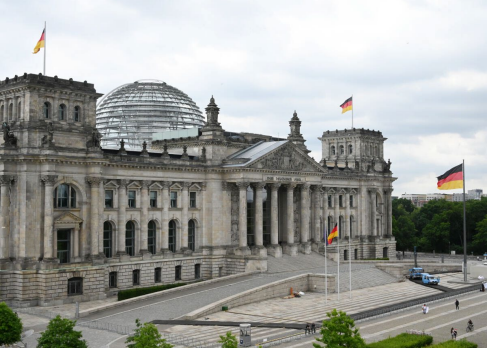
Was zeigt dieses Bild? © Deutscher Bundestag/Achim Melde
- A)den Bundestagssitz in Berlin✓
- B)das Bundesverfassungsgericht in Karlsruhe
- C)das Bundesratsgebäude in Berlin
- D)das Bundeskanzleramt in Berlin
What does this picture show?
- A)the seat of the Bundestag in Berlin✓
- B)the Federal Constitutional Court in Karlsruhe
- C)the Bundesrat building in Berlin
- D)the Federal Chancellery in Berlin
Welches Amt gehört in Deutschland zur Gemeindeverwaltung?
- A)Pfarramt
- B)Ordnungsamt✓
- C)Finanzamt
- D)Auswärtiges Amt
Which office belongs to the municipal administration in Germany?
- A)Parish office
- B)Public Order Office✓
- C)Tax office
- D)Federal Foreign Office
Wer wird meistens zur Präsidentin/zum Präsidenten des Deutschen Bundestages gewählt?
- A)die/der älteste Abgeordnete im Parlament
- B)die Ministerpräsidentin/der Ministerpräsident des größten Bundeslandes
- C)eine ehemalige Bundeskanzlerin/ein ehemaliger Bundeskanzler
- D)eine Abgeordnete/ein Abgeordneter der stärksten Fraktion✓
Who is usually elected as President of the German Bundestag?
- A)the oldest member of parliament
- B)the Minister-President of the largest federal state
- C)a former Federal Chancellor
- D)a member of parliament from the strongest parliamentary group✓
Wer ernennt in Deutschland die Ministerinnen/die Minister der Bundesregierung?
- A)die Präsidentin/der Präsident des Bundesverfassungsgerichtes
- B)die Bundespräsidentin/der Bundespräsident✓
- C)die Bundesratspräsidentin/der Bundesratspräsident
- D)die Bundestagspräsidentin/der Bundestagspräsident
Who appoints the ministers of the Federal Government in Germany?
- A)the President of the Federal Constitutional Court.
- B)the Federal President.✓
- C)the President of the Bundesrat.
- D)the President of the Bundestag.
Vor wie vielen Jahren gab es erstmals eine jüdische Gemeinde auf dem Gebiet des heutigen Deutschlands?
- A)vor etwa 300 Jahren
- B)vor etwa 700 Jahren
- C)vor etwa 1150 Jahren
- D)vor etwa 1700 Jahren✓
How many years ago was there a Jewish community for the first time in the territory of today's Germany?
- A)about 300 years ago
- B)about 700 years ago
- C)about 1150 years ago
- D)about 1700 years ago✓
In Deutschland gehören der Bundestag und der Bundesrat zur …
- A)Exekutive.
- B)Legislative.✓
- C)Direktive.
- D)Judikative.
In Germany, the Bundestag and the Bundesrat belong to the ...
- A)executive.
- B)legislative.✓
- C)directive.
- D)judiciary.
Was bedeutet "Volkssouveränität"?
- A)Die Königin/der König herrscht über das Volk.
- B)Das Bundesverfassungsgericht steht über der Verfassung.
- C)Die Interessenverbände üben die Souveränität zusammen mit der Regierung aus.
- D)Die Staatsgewalt geht vom Volke aus.✓
What does "popular sovereignty" mean?
- A)The queen/king rules over the people.
- B)The Federal Constitutional Court stands above the constitution.
- C)Interest groups exercise sovereignty together with the government.
- D)State authority derives from the people.✓
Wenn das Parlament eines deutschen Bundeslandes gewählt wird, nennt man das …
- A)Kommunalwahl
- B)Landtagswahl✓
- C)Europawahl
- D)Bundestagswahl
When the parliament of a German federal state is elected, this is called ...
- A)Municipal elections.
- B)State parliament election.✓
- C)European elections.
- D)Bundestag election.
Was gehört in Deutschland nicht zur Exekutive?
- A)die Polizei
- B)die Gerichte✓
- C)das Finanzamt
- D)die Ministerien
What does not belong to the executive branch in Germany?
- A)the police
- B)the courts✓
- C)the tax office
- D)the ministries
Die Bundesrepublik Deutschland ist heute gegliedert in …
- A)vier Besatzungszonen.
- B)einen Oststaat und einen Weststaat.
- C)16 Kantone.
- D)Bund, Länder und Kommunen.✓
The Federal Republic of Germany is today divided into ...
- A)four occupation zones.
- B)an eastern state and a western state.
- C)16 cantons.
- D)the federal government, states, and municipalities.✓
Es gehört nicht zu den Aufgaben des Deutschen Bundestages, …
- A)Gesetze zu entwerfen.
- B)die Bundesregierung zu kontrollieren.
- C)die Bundeskanzlerin/den Bundeskanzler zu wählen.
- D)das Bundeskabinett zu bilden.✓
It is not one of the tasks of the German Bundestag to ...
- A)draft laws.
- B)control the federal government.
- C)elect the Federal Chancellor.
- D)form the Federal Cabinet.✓
Welche Städte haben die größten jüdischen Gemeinden in Deutschland?
- A)Berlin und München✓
- B)Hamburg und Essen
- C)Nürnberg und Stuttgart
- D)Worms und Speyer
Which cities have the largest Jewish communities in Germany?
- A)Berlin and Munich✓
- B)Hamburg and Essen
- C)Nuremberg and Stuttgart
- D)Worms and Speyer
Was ist in Deutschland vor allem eine Aufgabe der Bundesländer?
- A)Verteidigungspolitik
- B)Außenpolitik
- C)Wirtschaftspolitik
- D)Schulpolitik✓
What is primarily a responsibility of the federal states in Germany?
- A)Defense policy
- B)Foreign policy
- C)Economic policy
- D)Education policy✓
Warum kontrolliert der Staat in Deutschland das Schulwesen?
- A)weil es in Deutschland nur staatliche Schulen gibt
- B)weil alle Schülerinnen und Schüler einen Schulabschluss haben müssen
- C)weil es in den Bundesländern verschiedene Schulen gibt
- D)weil es nach dem Grundgesetz seine Aufgabe ist✓
Why does the state control the school system in Germany?
- A)because there are only state schools in Germany
- B)because all pupils must have a school leaving certificate
- C)because there are different schools in the federal states
- D)because it is its task according to the Basic Law✓
Die Bundesrepublik Deutschland hat einen dreistufigen Verwaltungsaufbau. Wie heißt die unterste politische Stufe?
- A)Stadträte
- B)Landräte
- C)Gemeinden✓
- D)Bezirksämter
The Federal Republic of Germany has a three-tier administrative structure. What is the lowest political level called?
- A)City councils
- B)District administrators
- C)Municipalities✓
- D)District offices
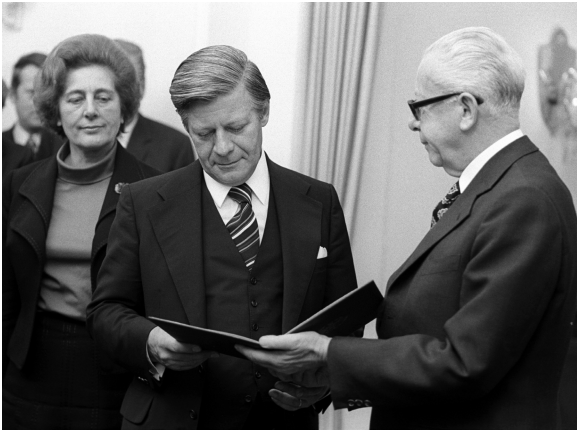
Der deutsche Bundespräsident Gustav Heinemann gibt Helmut Schmidt 1974 die Ernennungsurkunde zum deutschen Bundeskanzler. Was gehört zu den Aufgaben der deutschen Bundespräsidentin/des deutschen Bundespräsidenten? © Bundesregierung/Engelbert Reineke
- A)Sie/Er führt die Regierungsgeschäfte.
- B)Sie/Er kontrolliert die Regierungspartei.
- C)Sie/Er wählt die Ministerinnen/Minister aus.
- D)Sie/Er schlägt die Kanzlerin/den Kanzler zur Wahl vor.✓
The German Federal President Gustav Heinemann gives Helmut Schmidt 1974 the certificate of appointment as German Federal Chancellor. Which task belongs to the duties of the German Federal President?
- A)The President carries out government business.
- B)The President controls the governing party.
- C)The President selects the ministers.
- D)The President proposes the Chancellor for election.✓
Wo hält sich die deutsche Bundeskanzlerin/der deutsche Bundeskanzler am häufigsten auf? Am häufigsten ist sie/er …
- A)in Bonn, weil sich dort das Bundeskanzleramt und der Bundestag befinden.
- B)auf Schloss Meseberg, dem Gästehaus der Bundesregierung, um Staatsgäste zu empfangen.
- C)auf Schloss Bellevue, dem Amtssitz der Bundespräsidentin/des Bundespräsidenten, um Staatsgäste zu empfangen.
- D)in Berlin, weil sich dort das Bundeskanzleramt und der Bundestag befinden.✓
Where does the German Federal Chancellor spend most of their time?
- A)in Bonn, because the Federal Chancellery and the Bundestag are located there
- B)at Schloss Meseberg, the guesthouse of the Federal Government, to receive state guests
- C)at Schloss Bellevue, the official residence of the Federal President, to receive state guests
- D)in Berlin, because the Federal Chancellery and the Bundestag are located there✓
Wie heißt die jetzige Bundeskanzlerin/der jetzige Bundeskanzler von Deutschland?
- A)Gerhard Schröder
- B)Angela Merkel
- C)Ursula von der Leyen
- D)Friedrich Merz✓
What is the name of the current Federal Chancellor of Germany?
- A)Gerhard Schröder
- B)Angela Merkel
- C)Ursula von der Leyen
- D)Friedrich Merz✓
Die beiden größten Fraktionen im Deutschen Bundestag heißen zurzeit …
- A)CDU/CSU und AfD.✓
- B)Die Linke und Bündnis 90/Die Grünen.
- C)Bündnis 90/Die Grünen und SPD.
- D)Die Linke und CDU/CSU.
The two largest parliamentary groups in the German Bundestag are currently …
- A)CDU/CSU and AfD.✓
- B)Die Linke and Bündnis 90/Die Grünen.
- C)Alliance 90/The Greens and SPD.
- D)Die Linke and CDU/CSU.
Wie heißt das Parlament für ganz Deutschland?
- A)Bundesversammlung
- B)Volkskammer
- C)Bundestag✓
- D)Bundesgerichtshof
What is the parliament for all of Germany called?
- A)Federal Assembly
- B)People's Chamber
- C)Bundestag✓
- D)Federal Court of Justice
Wie heißt Deutschlands heutiges Staatsoberhaupt?
- A)Frank-Walter Steinmeier✓
- B)Bärbel Bas
- C)Bodo Ramelow
- D)Joachim Gauck
What is the name of Germany's current head of state?
- A)Frank-Walter Steinmeier✓
- B)Bärbel Bas
- C)Bodo Ramelow
- D)Joachim Gauck
Was bedeutet die Abkürzung CDU in Deutschland?
- A)Christliche Deutsche Union
- B)Club Deutscher Unternehmer
- C)Christlicher Deutscher Umweltschutz
- D)Christlich Demokratische Union✓
What does the abbreviation CDU stand for in Germany?
- A)Christian German Union
- B)Club of German Entrepreneurs
- C)Christian German Environmental Protection
- D)Christian Democratic Union✓
Was ist die Bundeswehr?
- A)die deutsche Polizei
- B)ein deutscher Hafen
- C)eine deutsche Bürgerinitiative
- D)die deutsche Armee✓
What is the Bundeswehr?
- A)the German police
- B)a German port
- C)a German civic initiative
- D)the German army✓
Was bedeutet die Abkürzung SPD?
- A)Sozialistische Partei Deutschlands
- B)Sozialpolitische Partei Deutschlands
- C)Sozialdemokratische Partei Deutschlands✓
- D)Sozialgerechte Partei Deutschlands
What does the abbreviation SPD stand for?
- A)Socialist Party of Germany
- B)Social Policy Party of Germany
- C)Social Democratic Party of Germany✓
- D)Socially Just Party of Germany
Was bedeutet die Abkürzung FDP in Deutschland?
- A)Friedliche Demonstrative Partei
- B)Freie Deutschland Partei
- C)Führende Demokratische Partei
- D)Freie Demokratische Partei✓
What does the abbreviation FDP stand for in Germany?
- A)Peaceful Demonstrative Party
- B)Free Germany Party
- C)Leading Democratic Party
- D)Free Democratic Party✓
Welches Gericht in Deutschland ist zuständig für die Auslegung des Grundgesetzes?
- A)Oberlandesgericht
- B)Amtsgericht
- C)Bundesverfassungsgericht✓
- D)Verwaltungsgericht
Which court in Germany is responsible for interpreting the Basic Law?
- A)Higher Regional Court
- B)Local Court
- C)Federal Constitutional Court✓
- D)Administrative Court
Wer wählt die Bundeskanzlerin/den Bundeskanzler in Deutschland?
- A)der Bundesrat
- B)die Bundesversammlung
- C)das Volk
- D)der Bundestag✓
Who elects the Federal Chancellor in Germany?
- A)the Federal Council
- B)the Federal Assembly
- C)the people
- D)the Bundestag✓
Wer leitet das deutsche Bundeskabinett?
- A)die Bundestagspräsidentin/der Bundestagspräsident
- B)die Bundespräsidentin/der Bundespräsident
- C)die Bundesratspräsidentin/der Bundesratspräsident
- D)die Bundeskanzlerin/der Bundeskanzler✓
Who heads the German Federal Cabinet?
- A)the President of the Bundestag
- B)the Federal President
- C)the President of the Federal Council
- D)the Federal Chancellor✓
Wer wählt die deutsche Bundeskanzlerin/den deutschen Bundeskanzler?
- A)das Volk
- B)die Bundesversammlung
- C)der Bundestag✓
- D)die Bundesregierung
Who elects the German Federal Chancellor?
- A)the people
- B)the Federal Assembly
- C)the Bundestag✓
- D)the Federal Government
Welche Hauptaufgabe hat die deutsche Bundespräsidentin/der deutsche Bundespräsident? Sie/Er …
- A)regiert das Land.
- B)entwirft die Gesetze.
- C)repräsentiert das Land.✓
- D)überwacht die Einhaltung der Gesetze.
What is the main task of the German Federal President? He/She ...
- A)governs the country.
- B)drafts the laws.
- C)represents the country.✓
- D)monitors compliance with the laws.
Wer bildet den deutschen Bundesrat?
- A)die Abgeordneten des Bundestages
- B)die Ministerinnen und Minister der Bundesregierung
- C)die Regierungsvertreter der Bundesländer✓
- D)die Parteimitglieder
Who forms the German Federal Council?
- A)the members of the Bundestag
- B)the ministers of the Federal Government
- C)the government representatives of the federal states✓
- D)the party members
Wer wählt in Deutschland die Bundespräsidentin/den Bundespräsidenten?
- A)die Bundesversammlung✓
- B)der Bundesrat
- C)das Bundesparlament
- D)das Bundesverfassungsgericht
Who elects the Federal President in Germany?
- A)the Federal Assembly✓
- B)the Federal Council
- C)the Federal Parliament
- D)the Federal Constitutional Court
Wer ist das Staatsoberhaupt der Bundesrepublik Deutschland?
- A)die Bundeskanzlerin/der Bundeskanzler
- B)die Bundespräsidentin/der Bundespräsident✓
- C)die Bundesratspräsidentin/der Bundesratspräsident
- D)die Bundestagspräsidentin/der Bundestagspräsident
Who is the head of state of the Federal Republic of Germany?
- A)the Federal Chancellor
- B)the Federal President✓
- C)the President of the Federal Council
- D)the President of the Bundestag
Die parlamentarische Opposition im Deutschen Bundestag …
- A)kontrolliert die Regierung.✓
- B)entscheidet, wer Bundesministerin/Bundesminister wird.
- C)bestimmt, wer im Bundesrat sitzt.
- D)schlägt die Regierungschefinnen/Regierungschefs der Länder vor.
The parliamentary opposition in the German Bundestag …
- A)controls the government.✓
- B)decides who becomes Federal Minister.
- C)determines who sits in the Bundesrat.
- D)proposes the heads of government of the federal states.
Wie nennt man in Deutschland die Vereinigung von Abgeordneten einer Partei im Parlament?
- A)Verband
- B)Ältestenrat
- C)Fraktion✓
- D)Opposition
What is the term used in Germany for the grouping of members of parliament belonging to one party?
- A)Association
- B)Council of Elders
- C)Parliamentary group (Fraktion)✓
- D)Opposition
Die deutschen Bundesländer wirken an der Gesetzgebung des Bundes mit durch …
- A)den Bundesrat.✓
- B)die Bundesversammlung.
- C)den Bundestag.
- D)die Bundesregierung.
How do the German federal states participate in federal legislation?
- A)through the Federal Council (Bundesrat).✓
- B)through the Federal Convention (Bundesversammlung).
- C)through the Bundestag.
- D)through the Federal Government.
In Deutschland kann ein Regierungswechsel in einem Bundesland Auswirkungen auf die Bundespolitik haben. Das Regieren wird …
- A)schwieriger, wenn sich dadurch die Mehrheit im Bundestag ändert.
- B)leichter, wenn dadurch neue Parteien in den Bundesrat kommen.
- C)schwieriger, wenn dadurch die Mehrheit im Bundesrat verändert wird.✓
- D)leichter, wenn es sich um ein reiches Bundesland handelt.
In Germany, a change of government in a federal state can have effects on federal policy. Governing becomes …
- A)more difficult if the majority in the Bundestag changes as a result.
- B)easier if new parties enter the Federal Council (Bundesrat) as a result.
- C)more difficult if the majority in the Federal Council (Bundesrat) is changed as a result.✓
- D)easier if it is a wealthy federal state.
Was bedeutet die Abkürzung CSU in Deutschland?
- A)Christlich Sichere Union
- B)Christlich Süddeutsche Union
- C)Christlich Sozialer Unternehmerverband
- D)Christlich Soziale Union✓
What does the abbreviation CSU stand for in Germany?
- A)Christian Secure Union
- B)Christian South German Union
- C)Christian Social Entrepreneurs' Association
- D)Christian Social Union✓
Je mehr "Zweitstimmen" eine Partei bei einer Bundestagswahl bekommt, desto …
- A)weniger Erststimmen kann sie haben.
- B)mehr Direktkandidaten der Partei ziehen ins Parlament ein.
- C)größer ist das Risiko, eine Koalition bilden zu müssen.
- D)mehr Sitze erhält die Partei im Parlament.✓
What effect does the second vote (Zweitstimme) have in a Bundestag election? The more second votes a party gets ...
- A)the fewer first votes it can receive.
- B)the more direct candidates of the party enter parliament.
- C)the greater the risk of having to form a coalition.
- D)the more seats the party receives in parliament.✓
Ab welchem Alter darf man in Deutschland an der Wahl zum Deutschen Bundestag teilnehmen?
- A)16
- B)18✓
- C)21
- D)23
From what age are German citizens allowed to vote in a Bundestag election?
- A)16 years old.
- B)18 years old.✓
- C)21 years old.
- D)23 years old.
Was gilt für die meisten Kinder in Deutschland?
- A)Wahlpflicht
- B)Schulpflicht✓
- C)Schweigepflicht
- D)Religionspflicht
What applies to most children in Germany?
- A)compulsory voting.
- B)compulsory schooling.✓
- C)confidentiality obligation.
- D)religious obligation.
Wie kann jemand, der den Holocaust leugnet, bestraft werden?
- A)Kürzung sozialer Leistungen
- B)bis zu 100 Sozialstunden
- C)gar nicht, Holocaustleugnung ist erlaubt
- D)mit Freiheitsstrafe bis zu fünf Jahren oder mit Geldstrafe✓
How can someone who denies the Holocaust be punished?
- A)Reduction of social benefits
- B)Up to 100 hours of community service
- C)Not at all — Holocaust denial is permitted
- D)With imprisonment of up to five years or a fine✓
Was bezahlt man in Deutschland automatisch, wenn man fest angestellt ist?
- A)Sozialversicherung✓
- B)Sozialhilfe
- C)Kindergeld
- D)Wohngeld
What does one automatically pay in Germany when permanently employed?
- A)Social insurance✓
- B)Social welfare / Income support
- C)Child benefit
- D)Housing benefit
Wenn Abgeordnete im Deutschen Bundestag ihre Fraktion wechseln, …
- A)dürfen sie nicht mehr an den Sitzungen des Parlaments teilnehmen.
- B)kann die Regierung ihre Mehrheit verlieren.✓
- C)muss die Bundespräsidentin/der Bundespräsident zuvor ihr/sein Einverständnis geben.
- D)dürfen die Wählerinnen/Wähler dieser Abgeordneten noch einmal wählen.
When members of the German Bundestag change their parliamentary group, …
- A)they are no longer allowed to attend the sittings of parliament.
- B)the government may lose its majority.✓
- C)the Federal President must first give his/her consent.
- D)the voters of these members of parliament may vote once more.
Wer bezahlt in Deutschland die Sozialversicherungen?
- A)Arbeitgeberinnen/Arbeitgeber und Arbeitnehmerinnen/Arbeitnehmer✓
- B)nur Arbeitnehmerinnen/Arbeitnehmer
- C)alle Staatsangehörigen
- D)nur Arbeitgeberinnen/Arbeitgeber
Who pays for social security in Germany?
- A)Employers and employees.✓
- B)Employees only.
- C)All nationals.
- D)Employers only.
Was gehört nicht zur gesetzlichen Sozialversicherung?
- A)die Lebensversicherung✓
- B)die gesetzliche Rentenversicherung
- C)die Arbeitslosenversicherung
- D)die Pflegeversicherung
Which insurance is NOT part of the German social insurance system?
- A)life insurance.✓
- B)statutory pension insurance.
- C)unemployment insurance.
- D)long-term care insurance.
Gewerkschaften sind Interessenverbände der …
- A)Jugendlichen.
- B)Arbeitnehmerinnen und Arbeitnehmer.✓
- C)Rentnerinnen und Rentner.
- D)Arbeitgeberinnen und Arbeitgeber.
The trade union (Gewerkschaft) in Germany primarily represents the interests of ...
- A)young people.
- B)employees (workers).✓
- C)retirees (pensioners).
- D)employers.
Womit kann man in der Bundesrepublik Deutschland geehrt werden, wenn man auf politischem, wirtschaftlichem, kulturellem, geistigem oder sozialem Gebiet eine besondere Leistung erbracht hat? Mit dem …
- A)Bundesverdienstkreuz✓
- B)Bundesadler
- C)Vaterländischen Verdienstorden
- D)Ehrentitel "Held der Deutschen Demokratischen Republik"
Which decoration/award does the Federal Republic of Germany give?
- A)Order of Merit of the Federal Republic of Germany (Bundesverdienstkreuz).✓
- B)Federal Eagle.
- C)Patriotic Order of Merit.
- D)Honorary title "Hero of the German Democratic Republic".
Was wird in Deutschland als "Ampelkoalition" bezeichnet? Die Zusammenarbeit …
- A)der Bundestagsfraktionen von CDU und CSU
- B)von SPD, FDP und Bündnis 90/Die Grünen in einer Regierung✓
- C)von CSU, Die LINKE und Bündnis 90/Die Grünen in einer Regierung
- D)der Bundestagsfraktionen von CDU und SPD
What is called an "Ampelkoalition" (traffic light coalition) in Germany? The cooperation of ...
- A)the CDU and CSU parliamentary groups in the Bundestag.
- B)SPD, FDP and Bündnis 90/Die Grünen in a government.✓
- C)CSU, Die LINKE and Bündnis 90/Die Grünen in a government.
- D)the CDU and SPD parliamentary groups in the Bundestag.
Eine Frau in Deutschland verliert ihre Arbeit. Was darf nicht der Grund für diese Entlassung sein?
- A)Die Frau ist lange krank und arbeitsunfähig.
- B)Die Frau kam oft zu spät zur Arbeit.
- C)Die Frau erledigt private Sachen während der Arbeitszeit.
- D)Die Frau bekommt ein Kind und ihr Chef weiß das.✓
A woman in Germany loses her job. What must NOT be the reason for this dismissal?
- A)The woman has been ill for a long time and is unable to work.
- B)The woman was often late for work.
- C)The woman does private things during working hours.
- D)The woman is expecting a child and her employer knows this.✓
Was ist eine Aufgabe von Wahlhelferinnen/Wahlhelfern in Deutschland?
- A)Sie helfen alten Menschen bei der Stimmabgabe in der Wahlkabine.
- B)Sie schreiben die Wahlbenachrichtigungen vor der Wahl.
- C)Sie geben Zwischenergebnisse an die Medien weiter.
- D)Sie zählen die Stimmen nach dem Ende der Wahl.✓
What do the election workers (Wahlhelfer) do?
- A)They help old people to vote in the polling booth.
- B)They write the election notifications before the election.
- C)They pass on interim results to the media.
- D)They count the votes after the end of the election.✓
In Deutschland helfen ehrenamtliche Wahlhelferinnen und Wahlhelfer bei den Wahlen. Was ist eine Aufgabe von Wahlhelferinnen/Wahlhelfern?
- A)Sie helfen Kindern und alten Menschen beim Wählen.
- B)Sie schreiben Karten und Briefe mit der Angabe des Wahllokals.
- C)Sie geben Zwischenergebnisse an Journalisten weiter.
- D)Sie zählen die Stimmen nach dem Ende der Wahl.✓
In Germany, volunteer election workers help in elections. What is a task of election workers?
- A)They help children and old people to vote.
- B)They write cards and letters indicating the polling station.
- C)They pass on interim results to journalists.
- D)They count the votes after the end of the election.✓
Für wie viele Jahre wird der Bundestag in Deutschland gewählt?
- A)2 Jahre
- B)4 Jahre✓
- C)6 Jahre
- D)8 Jahre
For how many years is the Bundestag elected in Germany?
- A)2 years
- B)4 years✓
- C)6 years
- D)8 years
Bei einer Bundestagswahl in Deutschland darf jede/jeder wählen, die/der …
- A)in der Bundesrepublik Deutschland wohnt und wählen möchte.
- B)Bürgerin/Bürger der Bundesrepublik Deutschland ist und mindestens 18 Jahre alt ist.✓
- C)seit mindestens 3 Jahren in der Bundesrepublik Deutschland lebt.
- D)Bürgerin/Bürger der Bundesrepublik Deutschland ist und mindestens 21 Jahre alt ist.
In a Bundestag election in Germany, everyone may vote who ...
- A)lives in Germany and wants to vote.
- B)is a citizen of Germany and is at least 18 years old.✓
- C)has lived in Germany for at least 3 years.
- D)is a citizen of Germany and is at least 21 years old.
Wie oft gibt es normalerweise Bundestagswahlen in Deutschland?
- A)alle drei Jahre
- B)alle vier Jahre✓
- C)alle fünf Jahre
- D)alle sechs Jahre
How often are there usually federal elections in Germany?
- A)every three years
- B)every four years✓
- C)every five years
- D)every six years
Für wie viele Jahre wird der Bundestag in Deutschland gewählt?
- A)2 Jahre
- B)3 Jahre
- C)4 Jahre✓
- D)5 Jahre
For how many years is the Bundestag elected in Germany?
- A)2 years.
- B)3 years.
- C)4 years.✓
- D)5 years.
Welche Handlungen mit Bezug auf den Staat Israel sind in Deutschland verboten?
- A)die Politik Israels öffentlich kritisieren
- B)das Aufhängen einer israelischen Flagge auf dem Privatgrundstück
- C)eine Diskussion über die Politik Israels
- D)der öffentliche Aufruf zur Vernichtung Israels✓
Which actions relating to the state of Israel are prohibited in Germany?
- A)Publicly criticizing Israel's policies
- B)Hanging an Israeli flag on private property
- C)A discussion about Israel's policies
- D)The public call for the destruction of Israel✓
Die Wahlen in Deutschland sind …
- A)speziell.
- B)geheim.✓
- C)berufsbezogen.
- D)geschlechtsabhängig.
Elections in Germany are …
- A)special.
- B)secret.✓
- C)occupation-related.
- D)gender-dependent.
Wahlen in Deutschland gewinnt die Partei, die …
- A)die meisten Stimmen bekommt.✓
- B)die meisten Männer mehrheitlich gewählt haben.
- C)die meisten Stimmen bei den Arbeiterinnen/Arbeitern bekommen hat.
- D)die meisten Erststimmen für ihre Kanzlerkandidatin/ihren Kanzlerkandidaten erhalten hat.
Elections in Germany are won by the party that …
- A)receives the most votes.✓
- B)most men have voted for by majority.
- C)has received the most votes from workers.
- D)has received the most first votes for its chancellor candidate.
An demokratischen Wahlen in Deutschland teilzunehmen ist …
- A)eine Pflicht.
- B)ein Recht.✓
- C)ein Zwang.
- D)eine Last.
Participating in democratic elections in Germany is …
- A)an obligation.
- B)a right.✓
- C)a compulsion.
- D)a burden.
Was bedeutet "aktives Wahlrecht" in Deutschland?
- A)Man kann gewählt werden.
- B)Man muss wählen gehen.
- C)Man kann wählen.✓
- D)Man muss zur Auszählung der Stimmen gehen.
What does "active right to vote" mean in Germany?
- A)One can be elected.
- B)One must go and vote.
- C)One can vote.✓
- D)One must attend the vote counting.
Wenn Sie bei einer Bundestagswahl in Deutschland wählen dürfen, heißt das …
- A)aktive Wahlkampagne.
- B)aktives Wahlverfahren.
- C)aktiver Wahlkampf.
- D)aktives Wahlrecht.✓
If you are allowed to vote in a Bundestag election in Germany, this is called …
- A)active election campaign.
- B)active electoral procedure.
- C)active election campaigning.
- D)active right to vote.✓
Wie viel Prozent der Zweitstimmen müssen Parteien mindestens bekommen, um in den Deutschen Bundestag gewählt zu werden?
- A)3%
- B)4%
- C)5%✓
- D)6%
What percentage of second votes must parties receive at minimum to be elected to the German Bundestag?
- A)3%
- B)4%
- C)5%✓
- D)6%
Wer darf bei den rund 40 jüdischen Makkabi-Sportvereinen Mitglied werden?
- A)nur Deutsche
- B)nur Israelis
- C)nur religiöse Menschen
- D)alle Menschen✓
Who is allowed to become a member of the approximately 40 Jewish Maccabi sports clubs?
- A)only Germans
- B)only Israelis
- C)only religious people
- D)all people✓
Wahlen in Deutschland sind frei. Was bedeutet das?
- A)Alle verurteilten Straftäterinnen/Straftäter dürfen nicht wählen.
- B)Wenn ich wählen gehen möchte, muss meine Arbeitgeberin/mein Arbeitgeber mir frei geben.
- C)Jede Person kann ohne Zwang entscheiden, ob sie wählen möchte und wen sie wählen möchte.✓
- D)Ich kann frei entscheiden, wo ich wählen gehen möchte.
Elections in Germany are free. What does this mean?
- A)All convicted criminals are not allowed to vote.
- B)If I want to go and vote, my employer must give me time off.
- C)Every person can freely decide, without any coercion, whether they want to vote and who they want to vote for.✓
- D)I can freely decide where I want to go to vote.
Das Wahlsystem in Deutschland ist ein …
- A)Zensuswahlrecht.
- B)Dreiklassenwahlrecht.
- C)Mehrheits- und Verhältniswahlrecht.✓
- D)allgemeines Männerwahlrecht.
The electoral system in Germany is a …
- A)census suffrage (property-based voting right).
- B)three-class suffrage.
- C)majority and proportional voting system.✓
- D)universal male suffrage.
Eine Partei möchte in den Deutschen Bundestag. Sie muss aber einen Mindestanteil an Wählerstimmen haben. Das heißt …
- A)5%-Hürde.✓
- B)Zulassungsgrenze.
- C)Basiswert.
- D)Richtlinie.
A party wants to enter the German Bundestag. However, it must receive a minimum share of votes. This is called the ...
- A)5% threshold.✓
- B)admission limit.
- C)base value.
- D)guideline.
Welchem Grundsatz unterliegen Wahlen in Deutschland? Wahlen in Deutschland sind …
- A)frei, gleich, geheim.✓
- B)offen, sicher, frei.
- C)geschlossen, gleich, sicher.
- D)sicher, offen, freiwillig.
Elections in Germany are ...
- A)free, equal, and secret.✓
- B)open, safe, and free.
- C)closed, equal, and safe.
- D)safe, open, and voluntary.
Was ist in Deutschland die "5%-Hürde"?
- A)Abstimmungsregelung im Bundestag für kleine Parteien
- B)Anwesenheitskontrolle im Bundestag für Abstimmungen
- C)Mindestanteil an Wählerstimmen, um ins Parlament zu kommen✓
- D)Anwesenheitskontrolle im Bundesrat für Abstimmungen
What is the "5% threshold" in Germany?
- A)a voting rule in the Bundestag for small parties
- B)an attendance check in the Bundestag for votes
- C)the minimum share of votes needed to enter parliament✓
- D)an attendance check in the Bundesrat for votes
Die Bundestagswahl in Deutschland ist die Wahl …
- A)der Bundeskanzlerin/des Bundeskanzlers.
- B)der Parlamente der Länder.
- C)des Parlaments für Deutschland.✓
- D)der Bundespräsidentin/des Bundespräsidenten.
The Bundestag election in Germany is the election of ...
- A)the Federal Chancellor.
- B)the parliaments of the federal states.
- C)the parliament for Germany.✓
- D)the Federal President.
In einer Demokratie ist eine Funktion von regelmäßigen Wahlen, …
- A)die Bürgerinnen und Bürger zu zwingen, ihre Stimme abzugeben.
- B)nach dem Willen der Wählermehrheit den Wechsel der Regierung zu ermöglichen.✓
- C)im Land bestehende Gesetze beizubehalten.
- D)den Armen mehr Macht zu geben.
What is one of the main purposes of elections in a democracy?
- A)to force citizens to cast their vote.
- B)to enable a change of government according to the will of the majority of voters.✓
- C)to maintain existing laws in the country.
- D)to give more power to the poor.
Was bekommen wahlberechtigte Bürgerinnen und Bürger in Deutschland vor einer Wahl?
- A)eine Wahlbenachrichtigung von der Gemeinde✓
- B)eine Wahlerlaubnis von der Bundespräsidentin/von dem Bundespräsidenten
- C)eine Benachrichtigung von der Bundesversammlung
- D)eine Benachrichtigung vom Pfarramt
What do eligible voters in Germany receive before an election?
- A)a voter notification from the municipality.✓
- B)a voting permit from the Federal President.
- C)a notification from the Federal Assembly.
- D)a notification from the parish office.
Warum gibt es die 5%-Hürde im Wahlgesetz der Bundesrepublik Deutschland? Es gibt sie, weil …
- A)die Programme von vielen kleinen Parteien viele Gemeinsamkeiten haben.
- B)die Bürgerinnen und Bürger bei vielen kleinen Parteien die Orientierung verlieren können.
- C)viele kleine Parteien die Regierungsbildung erschweren.✓
- D)die kleinen Parteien nicht so viel Geld haben, um die Politikerinnen und Politiker zu bezahlen.
Why does Germany's electoral law have the 5% threshold?
- A)the programmes of many small parties have much in common
- B)citizens may lose their orientation with many small parties
- C)many small parties make forming a government more difficult✓
- D)small parties don't have enough money to pay their politicians
Parlamentsmitglieder, die von den Bürgerinnen und Bürgern gewählt werden, nennt man …
- A)Abgeordnete.✓
- B)Kanzlerinnen/Kanzler.
- C)Botschafterinnen/Botschafter.
- D)Ministerpräsidentinnen/Ministerpräsidenten.
Members of parliament who are elected by citizens are called …
- A)members of parliament (deputies).✓
- B)chancellors.
- C)ambassadors.
- D)minister-presidents.
Vom Volk gewählt wird in Deutschland …
- A)die Bundeskanzlerin/der Bundeskanzler.
- B)die Ministerpräsidentin/der Ministerpräsident eines Bundeslandes.
- C)der Bundestag.✓
- D)die Bundespräsidentin/der Bundespräsident.
What is elected by the people in Germany?
- A)the Federal Chancellor.
- B)the Minister-President of a federal state.
- C)the Bundestag.✓
- D)the Federal President.
Welcher Stimmzettel wäre bei einer Bundestagswahl gültig? In Anlehnung an Bundeswahlordnung (BWO), Anlage 26
- A)1✓
- B)2
- C)3
- D)4
Which ballot paper would be valid in a Bundestag election?
- A)1✓
- B)2
- C)3
- D)4
In Deutschland ist eine Bürgermeisterin/ein Bürgermeister …
- A)die Leiterin/der Leiter einer Schule.
- B)die Chefin/der Chef einer Bank.
- C)das Oberhaupt einer Gemeinde.✓
- D)die/der Vorsitzende einer Partei.
In Germany, a mayor is ...
- A)the head of a school.
- B)the head of a bank.
- C)the head of a municipality.✓
- D)the chairperson of a political party.
Viele Menschen in Deutschland arbeiten in ihrer Freizeit ehrenamtlich. Was bedeutet das?
- A)Sie arbeiten als Soldatinnen/Soldaten.
- B)Sie arbeiten freiwillig und unbezahlt in Vereinen und Verbänden.✓
- C)Sie arbeiten in der Bundesregierung.
- D)Sie arbeiten in einem Krankenhaus und verdienen dabei Geld.
Many people in Germany work voluntarily in their free time. What does this mean?
- A)They work as soldiers.
- B)They work voluntarily and unpaid in clubs and associations.✓
- C)They work in the federal government.
- D)They work in a hospital and earn money doing so.
Was ist bei Bundestags- und Landtagswahlen in Deutschland erlaubt?
- A)Der Ehemann wählt für seine Frau mit.
- B)Man kann durch Briefwahl seine Stimme abgeben.✓
- C)Man kann am Wahltag telefonisch seine Stimme abgeben.
- D)Kinder ab dem Alter von 14 Jahren dürfen wählen.
What is permitted in Bundestag and state parliament elections in Germany?
- A)The husband votes on behalf of his wife as well.
- B)One can cast their vote by postal ballot.✓
- C)One can cast their vote by phone on election day.
- D)Children from the age of 14 are allowed to vote.
Man will die Buslinie abschaffen, mit der Sie immer zur Arbeit fahren. Was können Sie machen, um die Buslinie zu erhalten?
- A)Ich beteilige mich an einer Bürgerinitiative für die Erhaltung der Buslinie oder gründe selber eine Initiative.✓
- B)Ich werde Mitglied in einem Sportverein und trainiere Radfahren.
- C)Ich wende mich an das Finanzamt, weil ich als Steuerzahlerin/Steuerzahler ein Recht auf die Buslinie habe.
- D)Ich schreibe einen Brief an das Forstamt der Gemeinde.
The bus line in your area is to be cancelled. What do you do?
- A)I participate in a citizens' initiative for the preservation of the bus line or start one myself.✓
- B)I become a member of a sports club and train cycling.
- C)I turn to the tax office because as a taxpayer I have a right to the bus line.
- D)I write a letter to the forestry office of the municipality.
Wen vertreten die Gewerkschaften in Deutschland?
- A)große Unternehmen
- B)kleine Unternehmen
- C)Selbstständige
- D)Arbeitnehmerinnen und Arbeitnehmer✓
Who do trade unions represent in Germany?
- A)large companies.
- B)small businesses.
- C)self-employed persons.
- D)employees (workers).✓
Sie gehen in Deutschland zum Arbeitsgericht bei …
- A)falscher Nebenkostenabrechnung.
- B)ungerechtfertigter Kündigung durch Ihre Chefin/Ihren Chef.✓
- C)Problemen mit den Nachbarinnen/Nachbarn.
- D)Schwierigkeiten nach einem Verkehrsunfall.
In Germany, you go to the labor court for ...
- A)a wrong utility bill.
- B)unjustified termination by your employer.✓
- C)problems with neighbors.
- D)difficulties after a traffic accident.
Welches Gericht ist in Deutschland bei Konflikten in der Arbeitswelt zuständig?
- A)das Familiengericht
- B)das Strafgericht
- C)das Arbeitsgericht✓
- D)das Amtsgericht
Which court is responsible in Germany for conflicts in the workplace?
- A)the family court
- B)the criminal court
- C)the labor court✓
- D)the local court (Amtsgericht)
Was kann ich in Deutschland machen, wenn mir meine Arbeitgeberin/mein Arbeitgeber zu Unrecht gekündigt hat?
- A)weiterarbeiten und freundlich zur Chefin/zum Chef sein
- B)ein Mahnverfahren gegen die Arbeitgeberin/den Arbeitgeber führen
- C)Kündigungsschutzklage erheben✓
- D)die Arbeitgeberin/den Arbeitgeber bei der Polizei anzeigen
What can I do in Germany if my employer has wrongfully dismissed me?
- A)Continue working and be friendly to the employer.
- B)Initiate a debt collection (Mahnverfahren) procedure against the employer.
- C)File a claim for protection against wrongful dismissal (Kündigungsschutzklage).✓
- D)Report the employer to the police.
Wann kommt es in Deutschland zu einem Prozess vor Gericht? Wenn jemand …
- A)zu einer anderen Religion übertritt.
- B)eine Straftat begangen hat und angeklagt wird.✓
- C)eine andere Meinung als die der Regierung vertritt.
- D)sein Auto falsch geparkt hat und es abgeschleppt wird.
When does a court trial take place in Germany? When someone ...
- A)converts to a different religion.
- B)has committed a criminal act and is charged.✓
- C)holds a different opinion than the government.
- D)has parked their car illegally and it is towed.
Was macht eine Schöffin/ein Schöffe in Deutschland? Sie/Er …
- A)entscheidet mit Richterinnen/Richtern über Schuld und Strafe.✓
- B)gibt Bürgerinnen/Bürgern rechtlichen Rat.
- C)stellt Urkunden aus.
- D)verteidigt die Angeklagte/den Angeklagten.
What does a lay judge (Schöffe) do in Germany?
- A)decides with professional judges about guilt and punishment✓
- B)gives citizens legal advice
- C)issues official certificates
- D)defends the accused person
Wer berät in Deutschland Personen bei Rechtsfragen und vertritt sie vor Gericht?
- A)eine Rechtsanwältin/ein Rechtsanwalt✓
- B)eine Richterin/ein Richter
- C)eine Schöffin/ein Schöffe
- D)eine Staatsanwältin/ein Staatsanwalt
Who advises people in Germany on legal matters and represents them in court?
- A)a lawyer / attorney✓
- B)a judge
- C)a lay judge (Schöffe)
- D)a public prosecutor
Was ist die Hauptaufgabe einer Richterin/eines Richters in Deutschland? Eine Richterin/ein Richter …
- A)vertritt Bürgerinnen und Bürger vor einem Gericht.
- B)arbeitet an einem Gericht und spricht Urteile.✓
- C)ändert Gesetze.
- D)betreut Jugendliche vor Gericht.
What is the main task of a judge in Germany? A judge ...
- A)represents citizens before a court.
- B)works at a court and pronounces verdicts.✓
- C)changes laws.
- D)looks after young people at court.
Eine Richterin/ein Richter in Deutschland gehört zur …
- A)Judikative.✓
- B)Exekutive.
- C)Operative.
- D)Legislative.
A judge in Germany belongs to the …
- A)judiciary (Judikative)✓
- B)executive (Exekutive)
- C)Operative
- D)legislature (Legislative)
Eine Richterin/ein Richter gehört in Deutschland zur …
- A)vollziehenden Gewalt.
- B)rechtsprechenden Gewalt.✓
- C)planenden Gewalt.
- D)gesetzgebenden Gewalt.
In Germany, a judge belongs to the …
- A)executive power
- B)judicial power✓
- C)planning power
- D)legislative power
In Deutschland wird die Staatsgewalt geteilt. Für welche Staatsgewalt arbeitet eine Richterin/ein Richter? Für die …
- A)Judikative✓
- B)Exekutive
- C)Presse
- D)Legislative
In Germany, state power is divided. For which state power does a judge work? For the …
- A)judiciary.✓
- B)executive.
- C)press.
- D)legislative.
Wie nennt man in Deutschland ein Verfahren vor einem Gericht?
- A)Programm
- B)Prozedur
- C)Protokoll
- D)Prozess✓
What is a court case called in Germany?
- A)Program
- B)Procedure
- C)Protocol
- D)Process (trial)✓
Was ist die Arbeit einer Richterin/eines Richters in Deutschland?
- A)Deutschland regieren
- B)Recht sprechen✓
- C)Pläne erstellen
- D)Gesetze erlassen
What is the work of a judge in Germany?
- A)governing Germany
- B)administering justice✓
- C)drafting plans
- D)enacting laws
Was ist eine Aufgabe der Polizei in Deutschland?
- A)das Land zu verteidigen
- B)die Bürgerinnen und Bürger abzuhören
- C)die Gesetze zu beschließen
- D)die Einhaltung von Gesetzen zu überwachen✓
What is one task of the police in Germany?
- A)to defend the country
- B)to surveil / wiretap citizens
- C)to pass laws
- D)to monitor compliance with laws✓
Was ist ein Beispiel für antisemitisches Verhalten?
- A)ein jüdisches Fest besuchen
- B)die israelische Regierung kritisieren
- C)den Holocaust leugnen✓
- D)gegen Juden Fußball spielen.
What is an example of antisemitic behavior?
- A)attending a Jewish festival
- B)criticizing the Israeli government
- C)denying the Holocaust✓
- D)playing football against Jews
Eine Gerichtsschöffin/ein Gerichtsschöffe in Deutschland ist …
- A)die Stellvertreterin/der Stellvertreter des Stadtoberhaupts.
- B)eine ehrenamtliche Richterin/ein ehrenamtlicher Richter.✓
- C)ein Mitglied eines Gemeinderats.
- D)eine Person, die Jura studiert hat.
A court lay judge (Gerichtsschöffe) in Germany is …
- A)the deputy of the town's head of government
- B)a voluntary lay judge✓
- C)a member of a municipal council
- D)a person who has studied law
Wer baute die Mauer in Berlin?
- A)Großbritannien
- B)die DDR✓
- C)die Bundesrepublik Deutschland
- D)die USA
Who built the Wall in Berlin?
- A)the United Kingdom.
- B)the GDR (East Germany).✓
- C)the Federal Republic of Germany (West Germany).
- D)the USA.
Wann waren die Nationalsozialisten mit Adolf Hitler in Deutschland an der Macht?
- A)1918 bis 1923
- B)1932 bis 1950
- C)1933 bis 1945✓
- D)1945 bis 1989
When were the National Socialists under Adolf Hitler in power in Germany?
- A)1918 to 1923
- B)1932 to 1950
- C)1933 to 1945✓
- D)1945 to 1989
Was war am 8. Mai 1945?
- A)Tod Adolf Hitlers
- B)Beginn des Berliner Mauerbaus
- C)Wahl von Konrad Adenauer zum Bundeskanzler
- D)Ende des Zweiten Weltkriegs in Europa✓
What happened on May 8, 1945?
- A)Death of Adolf Hitler
- B)Beginning of the construction of the Berlin Wall
- C)Election of Konrad Adenauer as Federal Chancellor
- D)End of World War II in Europe✓
Wann war der Zweite Weltkrieg zu Ende?
- A)1933
- B)1945✓
- C)1949
- D)1961
When did World War II end?
- A)1933
- B)1945✓
- C)1949
- D)1961
Wann waren die Nationalsozialisten in Deutschland an der Macht?
- A)1888 bis 1918
- B)1921 bis 1934
- C)1933 bis 1945✓
- D)1949 bis 1963
When were the National Socialists in power in Germany?
- A)1888 to 1918
- B)1921 to 1934
- C)1933 to 1945✓
- D)1949 to 1963
In welchem Jahr wurde Hitler Reichskanzler?
- A)1923
- B)1927
- C)1933✓
- D)1936
What year did Hitler become Chancellor of the Reich?
- A)1923
- B)1927
- C)1933✓
- D)1936
Die Nationalsozialisten mit Adolf Hitler errichteten 1933 in Deutschland …
- A)eine Diktatur.✓
- B)einen demokratischen Staat.
- C)eine Monarchie.
- D)ein Fürstentum.
The National Socialists with Adolf Hitler established in Germany in 1933 …
- A)a dictatorship.✓
- B)a democratic state.
- C)a monarchy.
- D)a principality.
Das "Dritte Reich" war eine …
- A)Diktatur.✓
- B)Demokratie.
- C)Monarchie.
- D)Räterepublik.
The "Third Reich" was a …
- A)dictatorship.✓
- B)democracy.
- C)monarchy.
- D)council republic.
Was gab es in Deutschland nicht während der Zeit des Nationalsozialismus?
- A)freie Wahlen✓
- B)Pressezensur
- C)willkürliche Verhaftungen
- D)Verfolgung von Juden
What did NOT exist in Germany during the time of National Socialism?
- A)free elections✓
- B)press censorship
- C)arbitrary arrests
- D)persecution of Jews
Welcher Krieg dauerte von 1939 bis 1945?
- A)der Erste Weltkrieg
- B)der Zweite Weltkrieg✓
- C)der Vietnamkrieg
- D)der Golfkrieg
Which war lasted from 1939 to 1945?
- A)the First World War.
- B)the Second World War.✓
- C)the Vietnam War.
- D)the Gulf War.
Was kennzeichnete den NS-Staat? Eine Politik …
- A)des staatlichen Rassismus✓
- B)der Meinungsfreiheit
- C)der allgemeinen Religionsfreiheit
- D)der Entwicklung der Demokratie
What characterized the Nazi state? A policy …
- A)of state racism✓
- B)of freedom of opinion
- C)of general religious freedom
- D)of the development of democracy
Claus Schenk Graf von Stauffenberg wurde bekannt durch …
- A)eine Goldmedaille bei den Olympischen Spielen 1936.
- B)den Bau des Reichstagsgebäudes.
- C)den Aufbau der Wehrmacht.
- D)das Attentat auf Hitler am 20. Juli 1944.✓
Claus Schenk Graf von Stauffenberg became known through …
- A)a gold medal at the 1936 Olympic Games.
- B)the construction of the Reichstag building.
- C)the establishment of the Wehrmacht.
- D)the assassination attempt on Hitler on July 20, 1944.✓
In welchem Jahr zerstörten die Nationalsozialisten Synagogen und jüdische Geschäfte in Deutschland?
- A)1925
- B)1930
- C)1938✓
- D)1945
In what year did the National Socialists destroy synagogues and Jewish businesses in Germany?
- A)1925
- B)1930
- C)1938✓
- D)1945
Was passierte am 9. November 1938 in Deutschland?
- A)Mit dem Angriff auf Polen beginnt der Zweite Weltkrieg.
- B)Die Nationalsozialisten verlieren eine Wahl und lösen den Reichstag auf.
- C)Jüdische Geschäfte und Synagogen werden durch Nationalsozialisten und ihre Anhänger zerstört.✓
- D)Hitler wird Reichspräsident und lässt alle Parteien verbieten.
What happened in Germany on November 9, 1938?
- A)With the attack on Poland, the Second World War begins.
- B)The National Socialists lose an election and dissolve the Reichstag.
- C)Jewish shops and synagogues are destroyed by National Socialists and their supporters.✓
- D)Hitler becomes Reich President and has all parties banned.
Wie hieß der erste Bundeskanzler der Bundesrepublik Deutschland?
- A)Konrad Adenauer✓
- B)Kurt Georg Kiesinger
- C)Helmut Schmidt
- D)Willy Brandt
What was the name of the first Federal Chancellor of the Federal Republic of Germany?
- A)Konrad Adenauer✓
- B)Kurt Georg Kiesinger
- C)Helmut Schmidt
- D)Willy Brandt
Bei welchen Demonstrationen in Deutschland riefen die Menschen "Wir sind das Volk"?
- A)beim Arbeiteraufstand 1953 in der DDR
- B)bei den Demonstrationen 1968 in der Bundesrepublik Deutschland
- C)bei den Anti-Atomkraft-Demonstrationen 1985 in der Bundesrepublik Deutschland
- D)bei den Montagsdemonstrationen 1989 in der DDR✓
During which demonstrations in Germany did people shout "We are the people"?
- A)during the workers' uprising of 1953 in the GDR
- B)during the demonstrations of 1968 in the Federal Republic of Germany
- C)during the anti-nuclear power demonstrations of 1985 in the Federal Republic of Germany
- D)during the Monday demonstrations of 1989 in the GDR✓
Welche Länder wurden nach dem Zweiten Weltkrieg in Deutschland als "Alliierte Besatzungsmächte" bezeichnet?
- A)Sowjetunion, Großbritannien, Polen, Schweden
- B)Frankreich, Sowjetunion, Italien, Japan
- C)USA, Sowjetunion, Spanien, Portugal
- D)USA, Sowjetunion, Großbritannien, Frankreich✓
Which countries were referred to as "Allied Occupying Powers" in Germany after World War II?
- A)Soviet Union, Great Britain, Poland, Sweden
- B)France, Soviet Union, Italy, Japan
- C)USA, Soviet Union, Spain, Portugal
- D)USA, Soviet Union, Great Britain, France✓
Welches Land war keine "Alliierte Besatzungsmacht" in Deutschland?
- A)USA
- B)Sowjetunion
- C)Frankreich
- D)Japan✓
Which country was NOT an "Allied Occupying Power" in Germany?
- A)USA
- B)Soviet Union
- C)France
- D)Japan✓
Wann wurde die Bundesrepublik Deutschland gegründet?
- A)1939
- B)1945
- C)1949✓
- D)1951
When was the Federal Republic of Germany founded?
- A)1939
- B)1945
- C)1949✓
- D)1951
Was gab es während der Zeit des Nationalsozialismus in Deutschland?
- A)das Verbot von Parteien✓
- B)das Recht zur freien Entfaltung der Persönlichkeit
- C)Pressefreiheit
- D)den Schutz der Menschenwürde
What existed in Germany during the time of National Socialism?
- A)the prohibition of parties✓
- B)the right to free development of one's personality
- C)freedom of the press
- D)the protection of human dignity
Soziale Marktwirtschaft bedeutet, die Wirtschaft …
- A)steuert sich allein nach Angebot und Nachfrage.
- B)wird vom Staat geplant und gesteuert, Angebot und Nachfrage werden nicht berücksichtigt.
- C)richtet sich nach der Nachfrage im Ausland.
- D)richtet sich nach Angebot und Nachfrage, aber der Staat sorgt für einen sozialen Ausgleich.✓
Social market economy means that the economy …
- A)controls itself solely according to supply and demand.
- B)is planned and controlled by the state; supply and demand are not taken into account.
- C)is based on demand abroad.
- D)is based on supply and demand, but the state ensures social balance.✓
In welcher Besatzungszone wurde die DDR gegründet? In der …
- A)amerikanischen Besatzungszone
- B)französischen Besatzungszone
- C)britischen Besatzungszone
- D)sowjetischen Besatzungszone✓
In which occupation zone was the GDR founded? In the …
- A)American occupation zone
- B)French occupation zone
- C)British occupation zone
- D)Soviet occupation zone✓
Die Bundesrepublik Deutschland ist ein Gründungsmitglied …
- A)des Nordatlantikpakts (NATO).
- B)der Vereinten Nationen (VN).
- C)der Europäischen Union (EU).✓
- D)des Warschauer Pakts.
The Federal Republic of Germany is a founding member ...
- A)of the North Atlantic Treaty Organization (NATO).
- B)of the United Nations (UN).
- C)of the European Union (EU).✓
- D)of the Warsaw Pact.
Wann wurde die DDR gegründet?
- A)1947
- B)1949✓
- C)1953
- D)1956
When was the GDR founded?
- A)1947
- B)1949✓
- C)1953
- D)1956
Wie viele Besatzungszonen gab es in Deutschland nach dem Zweiten Weltkrieg?
- A)3
- B)4✓
- C)5
- D)6
How many occupation zones were there in Germany after the Second World War?
- A)3
- B)4✓
- C)5
- D)6
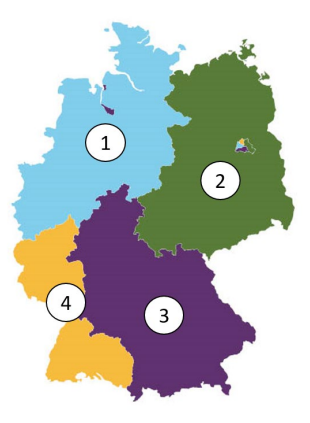
Wie waren die Besatzungszonen Deutschlands nach 1945 verteilt?
- A)1=Großbritannien, 2=Sowjetunion, 3=Frankreich, 4=USA✓
- B)1=Sowjetunion, 2=Großbritannien, 3=USA, 4=Frankreich
- C)1=Großbritannien, 2=Sowjetunion, 3=USA, 4=Frankreich
- D)1=Großbritannien, 2=USA, 3=Sowjetunion, 4=Frankreich
How were the occupation zones of Germany distributed after 1945?
- A)1=Great Britain, 2=Soviet Union, 3=France, 4=USA✓
- B)1=Soviet Union, 2=Great Britain, 3=USA, 4=France
- C)1=Great Britain, 2=Soviet Union, 3=USA, 4=France
- D)1=Great Britain, 2=USA, 3=Soviet Union, 4=France
Welche deutsche Stadt wurde nach dem Zweiten Weltkrieg in vier Sektoren aufgeteilt?
- A)München
- B)Berlin✓
- C)Dresden
- D)Frankfurt/Oder
Which German city was divided into four sectors after World War II?
- A)Munich
- B)Berlin✓
- C)Dresden
- D)Frankfurt/Oder
Vom Juni 1948 bis zum Mai 1949 wurden die Bürgerinnen und Bürger von West-Berlin durch eine Luftbrücke versorgt. Welcher Umstand war dafür verantwortlich?
- A)Für Frankreich war eine Versorgung der West-Berliner Bevölkerung mit dem Flugzeug kostengünstiger.
- B)Die amerikanischen Soldatinnen und Soldaten hatten beim Landtransport Angst vor Überfällen.
- C)Für Großbritannien war die Versorgung über die Luftbrücke schneller.
- D)Die Sowjetunion unterbrach den gesamten Verkehr auf dem Landwege.✓
From June 1948 to May 1949, the citizens of West Berlin were supplied by an airlift. What circumstance was responsible for this?
- A)For France, supplying the West Berlin population by plane was more cost-effective.
- B)The American soldiers feared robberies during land transport.
- C)For Great Britain, the supply via the airlift was faster.
- D)The Soviet Union interrupted all traffic on the land routes.✓
Wie endete der Zweite Weltkrieg in Europa offiziell?
- A)mit dem Tod Adolf Hitlers
- B)durch die bedingungslose Kapitulation Deutschlands✓
- C)mit dem Rückzug der Deutschen aus den besetzten Gebieten
- D)durch eine Revolution in Deutschland
How did World War II officially end in Europe?
- A)with the death of Adolf Hitler
- B)through the unconditional surrender of Germany✓
- C)with the withdrawal of the Germans from the occupied territories
- D)through a revolution in Germany
Der erste Bundeskanzler der Bundesrepublik Deutschland war …
- A)Ludwig Erhard.
- B)Willy Brandt.
- C)Konrad Adenauer.✓
- D)Gerhard Schröder.
Who was the first Chancellor of the Federal Republic of Germany?
- A)Ludwig Erhard.
- B)Willy Brandt.
- C)Konrad Adenauer.✓
- D)Gerhard Schröder.
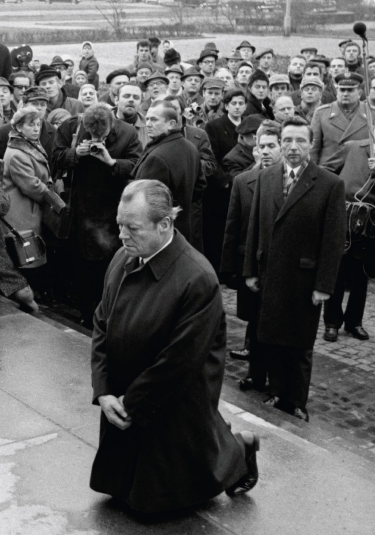
Was wollte Willy Brandt mit seinem Kniefall 1970 im ehemaligen jüdischen Ghetto in Warschau ausdrücken? © Bundesregierung/Engelbert Reineke
- A)Er hat sich den ehemaligen Alliierten unterworfen.
- B)Er bat Polen und die polnischen Juden um Vergebung.✓
- C)Er zeigte seine Demut vor dem Warschauer Pakt.
- D)Er sprach ein Gebet am Grab des Unbekannten Soldaten.
What did Willy Brandt want to express with his genuflection in 1970 in the former Jewish ghetto in Warsaw?
- A)He submitted to the former Allies.
- B)He asked Poland and Polish Jews for forgiveness.✓
- C)He showed his humility before the Warsaw Pact.
- D)He said a prayer at the Tomb of the Unknown Soldier.
Wie heißt das jüdische Gebetshaus?
- A)Basilika
- B)Moschee
- C)Synagoge✓
- D)Kirche
What is the name of the Jewish house of prayer?
- A)Basilica
- B)Mosque
- C)Synagogue✓
- D)Church
Wann war in der Bundesrepublik Deutschland das "Wirtschaftswunder"?
- A)40er Jahre
- B)50er Jahre✓
- C)70er Jahre
- D)80er Jahre
When was the "economic miracle" in the Federal Republic of Germany?
- A)1940s
- B)1950s✓
- C)1970s
- D)1980s
Auf welcher rechtlichen Grundlage wurde der Staat Israel gegründet?
- A)eine Resolution der Vereinten Nationen✓
- B)ein Beschluss des Zionistenkongresses
- C)ein Vorschlag der Bundesregierung
- D)ein Vorschlag der UdSSR
On what legal basis was the State of Israel founded?
- A)a United Nations resolution✓
- B)a resolution of the Zionist Congress
- C)a proposal of the Federal Government
- D)a proposal of the USSR
Wofür stand der Ausdruck "Eiserner Vorhang"? Für die Abschottung …
- A)des Warschauer Pakts gegen den Westen✓
- B)Norddeutschlands gegen Süddeutschland
- C)Nazi-Deutschlands gegen die Alliierten
- D)Europas gegen die USA
What did the term "Iron Curtain" stand for? For the isolation …
- A)of the Warsaw Pact against the West✓
- B)of Northern Germany against Southern Germany
- C)of Nazi Germany against the Allies
- D)of Europe against the USA
Im Jahr 1953 gab es in der DDR einen Aufstand, an den lange Zeit in der Bundesrepublik Deutschland ein Feiertag erinnerte. Wann war das?
- A)1. Mai
- B)17. Juni✓
- C)20. Juli
- D)9. November
In 1953 there was an uprising in the GDR, which was commemorated for a long time in the Federal Republic of Germany with a public holiday. When was it?
- A)May 1st
- B)June 17th✓
- C)July 20th
- D)November 9th
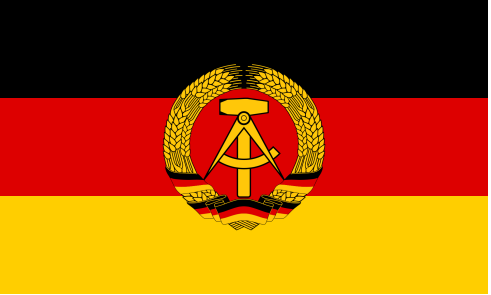
Welcher deutsche Staat hatte eine schwarz-rot-goldene Flagge mit Hammer, Zirkel und Ährenkranz?
- A)Preußen
- B)Bundesrepublik Deutschland
- C)"Drittes Reich"
- D)DDR✓
Which German state had a black-red-gold flag with a hammer, compass, and wreath of grain?
- A)Prussia
- B)Federal Republic of Germany
- C)"Third Reich"
- D)GDR✓
In welchem Jahr wurde die Mauer in Berlin gebaut?
- A)1953
- B)1956
- C)1959
- D)1961✓
In which year was the Wall in Berlin built?
- A)1953
- B)1956
- C)1959
- D)1961✓
Wann baute die DDR die Mauer in Berlin?
- A)1919
- B)1933
- C)1961✓
- D)1990
When did the GDR build the Wall in Berlin?
- A)1919
- B)1933
- C)1961✓
- D)1990
Was bedeutet die Abkürzung DDR?
- A)Dritter Deutscher Rundfunk
- B)Die Deutsche Republik
- C)Dritte Deutsche Republik
- D)Deutsche Demokratische Republik✓
What does the abbreviation DDR stand for?
- A)Third German Broadcasting
- B)The German Republic
- C)Third German Republic
- D)German Democratic Republic✓
Wann wurde die Mauer in Berlin für alle geöffnet?
- A)1987
- B)1989✓
- C)1992
- D)1995
When was the Wall in Berlin opened for everyone?
- A)1987
- B)1989✓
- C)1992
- D)1995
Welches heutige deutsche Bundesland gehörte früher zum Gebiet der DDR?
- A)Brandenburg✓
- B)Bayern
- C)Saarland
- D)Hessen
Which current German federal state formerly belonged to the territory of the GDR?
- A)Brandenburg✓
- B)Bavaria
- C)Saarland
- D)Hesse
Von 1961 bis 1989 war Berlin …
- A)ohne Bürgermeister.
- B)ein eigener Staat.
- C)durch eine Mauer geteilt.✓
- D)nur mit dem Flugzeug erreichbar.
From 1961 to 1989, Berlin was …
- A)without a mayor.
- B)its own state.
- C)divided by a wall.✓
- D)only reachable by plane.
Am 3. Oktober feiert man in Deutschland den Tag der Deutschen …
- A)Einheit.✓
- B)Nation.
- C)Bundesländer.
- D)Städte.
On October 3rd, Germany celebrates the Day of German …
- A)Unity.✓
- B)Nation.
- C)Federal States.
- D)Cities.
Welches heutige deutsche Bundesland gehörte früher zum Gebiet der DDR?
- A)Hessen
- B)Sachsen-Anhalt✓
- C)Nordrhein-Westfalen
- D)Saarland
Which present-day German federal state previously belonged to the territory of the GDR?
- A)Hesse.
- B)Saxony-Anhalt.✓
- C)North Rhine-Westphalia.
- D)Saarland.
Warum nennt man die Zeit im Herbst 1989 in der DDR "Die Wende"? In dieser Zeit veränderte sich die DDR politisch …
- A)von einer Diktatur zur Demokratie.✓
- B)von einer liberalen Marktwirtschaft zum Sozialismus.
- C)von einer Monarchie zur Sozialdemokratie.
- D)von einem religiösen Staat zu einem kommunistischen Staat.
Why is the time in the fall of 1989 in the GDR called "The Wende"? During this time, the GDR changed politically ...
- A)from dictatorship to democracy.✓
- B)from a liberal market economy to socialism.
- C)from a monarchy to social democracy.
- D)from a religious state to a communist state.
Welches heutige deutsche Bundesland gehörte früher zum Gebiet der DDR?
- A)Thüringen✓
- B)Hessen
- C)Bayern
- D)Bremen
Which current German federal state formerly belonged to the territory of the GDR?
- A)Thuringia✓
- B)Hesse
- C)Bavaria
- D)Bremen
Welches heutige deutsche Bundesland gehörte früher zum Gebiet der DDR?
- A)Bayern
- B)Niedersachsen
- C)Sachsen✓
- D)Baden-Württemberg
Which current German federal state formerly belonged to the territory of the GDR?
- A)Bavaria
- B)Lower Saxony
- C)Saxony✓
- D)Baden-Württemberg
Mit der Abkürzung "Stasi" meinte man in der DDR …
- A)das Parlament.
- B)das Ministerium für Staatssicherheit.✓
- C)eine regierende Partei.
- D)das Ministerium für Volksbildung.
In the GDR, the abbreviation "Stasi" meant ...
- A)Parliament.
- B)the Ministry of State Security.✓
- C)a ruling party.
- D)the Ministry of National Education.
Welches heutige deutsche Bundesland gehörte früher zum Gebiet der DDR?
- A)Hessen
- B)Schleswig-Holstein
- C)Mecklenburg-Vorpommern✓
- D)Saarland
Which current German federal state formerly belonged to the territory of the GDR?
- A)Hesse.
- B)Schleswig-Holstein.
- C)Mecklenburg-Western Pomerania.✓
- D)Saarland.
Welche der folgenden Auflistungen enthält nur Bundesländer, die zum Gebiet der früheren DDR gehörten?
- A)Niedersachsen, Nordrhein-Westfalen, Hessen, Schleswig-Holstein, Brandenburg
- B)Mecklenburg-Vorpommern, Brandenburg, Sachsen, Sachsen-Anhalt, Thüringen✓
- C)Bayern, Baden-Württemberg, Rheinland-Pfalz, Thüringen, Sachsen
- D)Sachsen, Thüringen, Hessen, Niedersachen, Brandenburg
Which of the following lists contains only federal states that belonged to the territory of the former GDR?
- A)Lower Saxony, North Rhine-Westphalia, Hesse, Schleswig-Holstein, Brandenburg
- B)Mecklenburg-Vorpommern, Brandenburg, Saxony, Saxony-Anhalt, Thuringia✓
- C)Bavaria, Baden-Württemberg, Rhineland-Palatinate, Thuringia, Saxony
- D)Saxony, Thuringia, Hesse, Lower Saxony, Brandenburg
Zu wem gehörte die DDR im "Kalten Krieg"?
- A)zu den Westmächten
- B)zum Warschauer Pakt✓
- C)zur NATO
- D)zu den blockfreien Staaten
To which group did the GDR belong during the "Cold War"?
- A)to the Western powers
- B)to the Warsaw Pact✓
- C)to NATO
- D)to the non-aligned states
Wie hieß das Wirtschaftssystem der DDR?
- A)Marktwirtschaft
- B)Planwirtschaft✓
- C)Angebot und Nachfrage
- D)Kapitalismus
What was the economic system of the GDR called?
- A)Market economy
- B)Planned economy✓
- C)Supply and demand
- D)Capitalism
Wie wurden die Bundesrepublik Deutschland und die DDR zu einem Staat?
- A)Die Bundesrepublik hat die DDR besetzt.
- B)Die heutigen fünf östlichen Bundesländer sind der Bundesrepublik Deutschland beigetreten.✓
- C)Die westlichen Bundesländer sind der DDR beigetreten.
- D)Die DDR hat die Bundesrepublik Deutschland besetzt.
How did the Federal Republic of Germany and the GDR become one state?
- A)The Federal Republic occupied the GDR.
- B)The current five eastern federal states joined the Federal Republic of Germany.✓
- C)The western federal states joined the GDR.
- D)The GDR occupied the Federal Republic of Germany.
Mit dem Beitritt der DDR zur Bundesrepublik Deutschland gehören die neuen Bundesländer nun auch …
- A)zur Europäischen Union.✓
- B)zum Warschauer Pakt.
- C)zur OPEC.
- D)zur Europäischen Verteidigungsgemeinschaft.
With the accession of the GDR to the Federal Republic of Germany, the new federal states now also belong …
- A)to the European Union.✓
- B)to the Warsaw Pact.
- C)to OPEC.
- D)to the European Defence Community.
Woran erinnern die sogenannten „Stolpersteine“ in Deutschland?
- A)an berühmte deutsche Politikerinnen und Politiker
- B)an die Opfer des Nationalsozialismus✓
- C)an Verkehrstote
- D)an bekannte jüdische Musiker
What do the so-called "Stolpersteine" (stumbling stones) in Germany commemorate?
- A)famous German politicians
- B)the victims of National Socialism✓
- C)traffic fatalities
- D)well-known Jewish musicians
In welchem Militärbündnis war die DDR Mitglied?
- A)in der NATO
- B)im Rheinbund
- C)im Warschauer Pakt✓
- D)im Europabündnis
In which military alliance was the GDR a member?
- A)in NATO
- B)in the Confederation of the Rhine
- C)in the Warsaw Pact✓
- D)in the European Alliance
Was war die "Stasi"?
- A)der Geheimdienst im "Dritten Reich"
- B)eine berühmte deutsche Gedenkstätte
- C)der Geheimdienst der DDR✓
- D)ein deutscher Sportverein während des Zweiten Weltkrieges
What was the "Stasi"?
- A)the secret service in the "Third Reich"
- B)a famous German memorial site
- C)the secret service of the GDR✓
- D)a German sports club during World War II
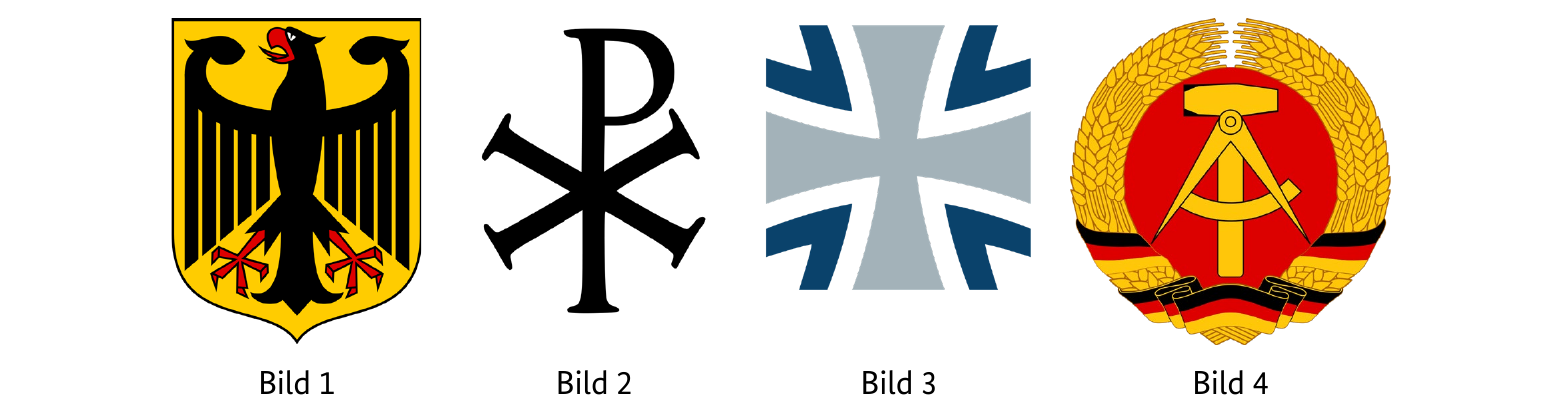
Welches war das Wappen der Deutschen Demokratischen Republik?
- A)Bild 1
- B)Bild 2
- C)Bild 3
- D)Bild 4✓
What was the coat of arms of the German Democratic Republic?
- A)1
- B)2
- C)3
- D)4✓
Was ereignete sich am 17. Juni 1953 in der DDR?
- A)der feierliche Beitritt zum Warschauer Pakt
- B)landesweite Streiks und ein Volksaufstand✓
- C)der 1. SED-Parteitag
- D)der erste Besuch Fidel Castros
What happened on June 17, 1953 in the GDR?
- A)the ceremonial accession to the Warsaw Pact
- B)nationwide strikes and a popular uprising✓
- C)the 1st SED Party Congress
- D)the first visit of Fidel Castro
Welcher Politiker steht für die "Ostverträge"?
- A)Helmut Kohl
- B)Willy Brandt✓
- C)Michail Gorbatschow
- D)Ludwig Erhard
Which politician is associated with the "Eastern Treaties" (Ostverträge)?
- A)Helmut Kohl
- B)Willy Brandt✓
- C)Mikhail Gorbachev
- D)Ludwig Erhard
Wie heißt Deutschland mit vollem Namen?
- A)Bundesstaat Deutschland
- B)Bundesländer Deutschland
- C)Bundesrepublik Deutschland✓
- D)Bundesbezirk Deutschland
What is Germany's full official name?
- A)Federal State of Germany
- B)Federal States of Germany
- C)Federal Republic of Germany✓
- D)Federal District of Germany
Wie viele Einwohner hat Deutschland?
- A)70 Millionen
- B)78 Millionen
- C)84 Millionen✓
- D)90 Millionen
How many inhabitants does Germany have?
- A)70 million
- B)78 million
- C)84 million✓
- D)90 million
Welche Farben hat die deutsche Flagge?
- A)schwarz-rot-gold✓
- B)rot-weiß-schwarz
- C)schwarz-rot-grün
- D)schwarz-gelb-rot
What colors does the German flag have?
- A)black-red-gold✓
- B)red-white-black
- C)black-red-green
- D)black-yellow-red
Wer wird als "Kanzler der Deutschen Einheit" bezeichnet?
- A)Gerhard Schröder
- B)Helmut Kohl✓
- C)Konrad Adenauer
- D)Helmut Schmidt
Who is referred to as the "Chancellor of German Unity"?
- A)Gerhard Schröder
- B)Helmut Kohl✓
- C)Konrad Adenauer
- D)Helmut Schmidt
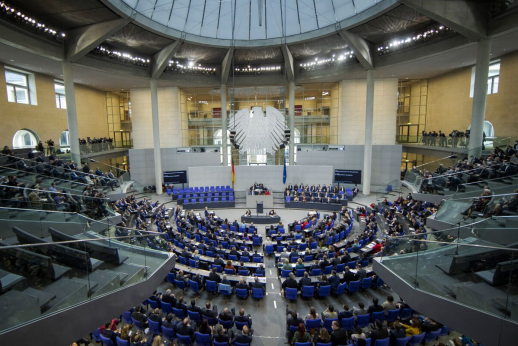
Welches Symbol ist im Plenarsaal des Deutschen Bundestages zu sehen? © Deutscher Bundestag/Janine Schmitz
- A)der Bundesadler✓
- B)die Fahne der Stadt Berlin
- C)der Reichsadler
- D)die Reichskrone
Which symbol can be seen in the plenary hall of the German Bundestag?
- A)the Federal Eagle✓
- B)the flag of the city of Berlin
- C)the Imperial Eagle
- D)the Imperial Crown
In welchem Zeitraum gab es die Deutsche Demokratische Republik (DDR)?
- A)1919 bis 1927
- B)1933 bis 1945
- C)1945 bis 1961
- D)1949 bis 1990✓
In which period did the German Democratic Republic (GDR) exist?
- A)1919 to 1927
- B)1933 to 1945
- C)1945 to 1961
- D)1949 to 1990✓
Wie viele Bundesländer kamen bei der Wiedervereinigung 1990 zur Bundesrepublik Deutschland hinzu?
- A)4
- B)5✓
- C)6
- D)7
How many federal states joined the Federal Republic of Germany at the reunification in 1990?
- A)4
- B)5✓
- C)6
- D)7
Die Bundesrepublik Deutschland hat die Grenzen von heute seit …
- A)1933
- B)1949
- C)1971
- D)1990✓
The Federal Republic of Germany has had its current borders since …
- A)1933
- B)1949
- C)1971
- D)1990✓
Der 27. Januar ist in Deutschland ein offizieller Gedenktag. Woran erinnert dieser Tag?
- A)an das Ende des Zweiten Weltkrieges
- B)an die Verabschiedung des Grundgesetzes
- C)an die Wiedervereinigung Deutschlands
- D)an die Opfer des Nationalsozialismus (Tag der Befreiung des Vernichtungslagers Auschwitz)✓
January 27 is an official day of remembrance in Germany. What does this day commemorate?
- A)the end of the Second World War
- B)the adoption of the Basic Law
- C)the reunification of Germany
- D)the victims of National Socialism (Day of Liberation of the Auschwitz extermination camp)✓
Deutschland ist Mitglied des Schengener Abkommens. Was bedeutet das?
- A)Deutsche können in viele Länder Europas ohne Passkontrolle reisen.✓
- B)Alle Menschen können ohne Personenkontrolle in Deutschland einreisen.
- C)Deutsche können ohne Passkontrolle in jedes Land reisen.
- D)Deutsche können in jedem Land mit dem Euro bezahlen.
Germany is a member of the Schengen Agreement. What does this mean?
- A)Germans can travel to many European countries without passport control.✓
- B)All people can enter Germany without identity checks.
- C)Germans can travel to any country without passport control.
- D)Germans can pay with euros in any country.
Welches Land ist ein Nachbarland von Deutschland?
- A)Ungarn
- B)Portugal
- C)Spanien
- D)Schweiz✓
Which country is a neighboring country of Germany?
- A)Hungary
- B)Portugal
- C)Spain
- D)Switzerland✓
Welches Land ist ein Nachbarland von Deutschland?
- A)Rumänien
- B)Bulgarien
- C)Polen✓
- D)Griechenland
Which country is a neighboring country of Germany?
- A)Romania
- B)Bulgaria
- C)Poland✓
- D)Greece
Was bedeutet die Abkürzung EU?
- A)Europäische Unternehmen
- B)Europäische Union✓
- C)Einheitliche Union
- D)Euro Union
What does the abbreviation EU mean?
- A)European companies
- B)European Union✓
- C)Single Union
- D)Euro Union
In welchem anderen Land gibt es eine große deutschsprachige Bevölkerung?
- A)Tschechien
- B)Norwegen
- C)Spanien
- D)Österreich✓
In which other country is there a large German-speaking population?
- A)Czech Republic
- B)Norway
- C)Spain
- D)Austria✓

Welche ist die Flagge der Europäischen Union?
- A)Bild 1
- B)Bild 2✓
- C)Bild 3
- D)Bild 4
What is the flag of the European Union?
- A)Image 1
- B)Image 2✓
- C)Image 3
- D)Image 4
Welches Land ist ein Nachbarland von Deutschland?
- A)Finnland
- B)Dänemark✓
- C)Norwegen
- D)Schweden
Which country is a neighbor of Germany?
- A)Finland
- B)Denmark✓
- C)Norway
- D)Sweden
Wie wird der Beitritt der DDR zur Bundesrepublik Deutschland im Jahr 1990 allgemein genannt?
- A)NATO-Osterweiterung
- B)EU-Osterweiterung
- C)Deutsche Wiedervereinigung✓
- D)Europäische Gemeinschaft
What is the accession of the GDR to the Federal Republic of Germany in 1990 generally called?
- A)NATO Eastern Expansion
- B)EU Eastern Expansion
- C)German Reunification✓
- D)European Community
Welches Land ist ein Nachbarland von Deutschland?
- A)Spanien
- B)Bulgarien
- C)Norwegen
- D)Luxemburg✓
Which country is a neighboring country of Germany?
- A)Spain
- B)Bulgaria
- C)Norway
- D)Luxembourg✓
Das Europäische Parlament wird regelmäßig gewählt, nämlich alle …
- A)5 Jahre.✓
- B)6 Jahre.
- C)7 Jahre.
- D)8 Jahre.
The European Parliament is regularly elected, namely every ...
- A)5 years.✓
- B)6 years.
- C)7 years.
- D)8 years.
Was bedeutet der Begriff "europäische Integration"?
- A)Damit sind amerikanische Einwanderinnen und Einwanderer in Europa gemeint.
- B)Der Begriff meint den Einwanderungsstopp nach Europa.
- C)Damit sind europäische Auswanderinnen und Auswanderer in den USA gemeint.
- D)Der Begriff meint den Zusammenschluss europäischer Staaten zur EU.✓
What does the term "European integration" mean?
- A)It refers to American immigrants in Europe.
- B)The term means stopping immigration to Europe.
- C)It refers to European emigrants in the USA.
- D)The term refers to the unification of European states into the EU.✓
Wer wird bei der Europawahl gewählt?
- A)die Europäische Kommission
- B)die Länder, die in die EU eintreten dürfen
- C)die Abgeordneten des Europäischen Parlaments✓
- D)die europäische Verfassung
Who is elected in the European Parliament elections?
- A)the European Commission
- B)the countries that are allowed to join the EU
- C)the members of the European Parliament✓
- D)the European constitution
Welches Land ist ein Nachbarland von Deutschland?
- A)Tschechien✓
- B)Bulgarien
- C)Griechenland
- D)Portugal
Which country is a neighbor of Germany?
- A)Czech Republic✓
- B)Bulgaria
- C)Greece
- D)Portugal
Wo ist ein Sitz des Europäischen Parlaments?
- A)London
- B)Paris
- C)Berlin
- D)Straßburg✓
Where is a seat of the European Parliament?
- A)London
- B)Paris
- C)Berlin
- D)Strasbourg✓
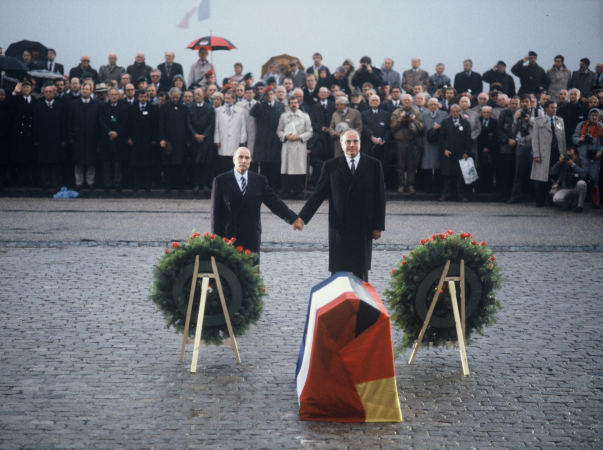
Der damalige französische Staatspräsident François Mitterrand und der damalige deutsche Bundeskanzler Helmut Kohl gedenken in Verdun gemeinsam der Toten beider Weltkriege. Welches Ziel der Europäischen Union wird bei diesem Treffen deutlich? © Bundesregierung/Richard Schulze-Vorberg
- A)Freundschaft zwischen England und Deutschland
- B)Reisefreiheit in alle Länder der EU
- C)Frieden und Sicherheit in den Ländern der EU✓
- D)einheitliche Feiertage in den Ländern der EU
The then French President François Mitterrand and the then German Chancellor Helmut Kohl commemorated the dead of both World Wars together in Verdun. Which goal of the European Union becomes clear at this meeting?
- A)Friendship between England and Germany
- B)Freedom of travel to all countries of the EU
- C)Peace and security in the countries of the EU✓
- D)Uniform public holidays in the countries of the EU
Wie viele Mitgliedstaaten hat die EU heute?
- A)21
- B)23
- C)25
- D)27✓
How many Member States does the EU have today?
- A)21
- B)23
- C)25
- D)27✓
2007 wurde das 50-jährige Jubiläum der "Römischen Verträge" gefeiert. Was war der Inhalt der Verträge?
- A)Beitritt Deutschlands zur NATO
- B)Gründung der Europäischen Wirtschaftsgemeinschaft (EWG)✓
- C)Verpflichtung Deutschlands zu Reparationsleistungen
- D)Festlegung der Oder-Neiße-Linie als Ostgrenze
In 2007, the 50th anniversary of the "Treaties of Rome" was celebrated. What was the content of the treaties?
- A)Germany's accession to NATO
- B)Founding of the European Economic Community (EEC)✓
- C)Germany's obligation to pay reparations
- D)Determination of the Oder-Neisse line as the eastern border
An welchen Orten arbeitet das Europäische Parlament?
- A)Paris, London und Den Haag
- B)Straßburg, Luxemburg und Brüssel✓
- C)Rom, Bern und Wien
- D)Bonn, Zürich und Mailand
In which places does the European Parliament work?
- A)Paris, London and The Hague
- B)Strasbourg, Luxembourg and Brussels✓
- C)Rome, Bern and Vienna
- D)Bonn, Zurich and Milan
Durch welche Verträge schloss sich die Bundesrepublik Deutschland mit anderen Staaten zur Europäischen Wirtschaftsgemeinschaft zusammen?
- A)durch die "Hamburger Verträge"
- B)durch die "Römischen Verträge"✓
- C)durch die "Pariser Verträge"
- D)durch die "Londoner Verträge"
Through which treaties did the Federal Republic of Germany unite with other states to form the European Economic Community?
- A)through the "Hamburg Treaties"
- B)through the "Treaties of Rome"✓
- C)through the "Paris Treaties"
- D)through the "London Treaties"
Seit wann bezahlt man in Deutschland mit dem Euro in bar?
- A)1995
- B)1998
- C)2002✓
- D)2005
Since when do people in Germany pay in cash with the euro?
- A)1995
- B)1998
- C)2002✓
- D)2005
Frau Seger bekommt ein Kind. Was muss sie tun, um Elterngeld zu erhalten?
- A)Sie muss an ihre Krankenkasse schreiben.
- B)Sie muss einen Antrag bei der Elterngeldstelle stellen.✓
- C)Sie muss nichts tun, denn sie bekommt automatisch Elterngeld.
- D)Sie muss das Arbeitsamt um Erlaubnis bitten.
Ms. Seger is having a child. What does she need to do to receive parental allowance?
- A)She must write to her health insurance provider.
- B)She must submit an application at the parental allowance office.✓
- C)She does not need to do anything, as she automatically receives parental allowance.
- D)She must ask the employment agency for permission.
Wer entscheidet, ob ein Kind in Deutschland in den Kindergarten geht?
- A)der Staat
- B)die Bundesländer
- C)die Eltern/die Erziehungsberechtigten✓
- D)die Schulen
Who decides whether a child in Germany goes to kindergarten?
- A)the state
- B)the federal states
- C)the parents/legal guardians✓
- D)the schools
Maik und Sybille wollen mit Freunden an ihrem deutschen Wohnort eine Demonstration auf der Straße abhalten. Was müssen sie vorher tun?
- A)Sie müssen die Demonstration anmelden.✓
- B)Sie müssen nichts tun. Man darf in Deutschland jederzeit überall demonstrieren.
- C)Sie können gar nichts tun, denn Demonstrationen sind in Deutschland grundsätzlich verboten.
- D)Maik und Sybille müssen einen neuen Verein gründen, weil nur Vereine demonstrieren dürfen.
Maik and Sybille want to hold a demonstration on the street with friends at their German place of residence. What do they have to do beforehand?
- A)They must register the demonstration.✓
- B)They do not need to do anything. In Germany, anyone may demonstrate anywhere at any time.
- C)They cannot do anything, because demonstrations are fundamentally prohibited in Germany.
- D)Maik and Sybille must found a new association, because only associations are allowed to demonstrate.
Welchen Schulabschluss braucht man normalerweise, um an einer Universität in Deutschland ein Studium zu beginnen?
- A)das Abitur✓
- B)ein Diplom
- C)die Prokura
- D)eine Gesellenprüfung
What school-leaving certificate do you normally need to begin studying at a university in Germany?
- A)the Abitur✓
- B)a diploma
- C)Prokura (commercial power of attorney)
- D)a journeyman's examination
Wer darf in Deutschland nicht als Paar zusammenleben?
- A)Hans (20 Jahre) und Marie (19 Jahre)
- B)Tom (20 Jahre) und Klaus (45 Jahre)
- C)Sofie (35 Jahre) und Lisa (40 Jahre)
- D)Anne (13 Jahre) und Tim (25 Jahre)✓
Who is not allowed to live together as a couple in Germany?
- A)Hans (20 years) and Marie (19 years)
- B)Tom (20 years) and Klaus (45 years)
- C)Sofie (35 years) and Lisa (40 years)
- D)Anne (13 years) and Tim (25 years)✓
Ab welchem Alter ist man in Deutschland volljährig?
- A)16
- B)18✓
- C)19
- D)21
At what age do you come of age in Germany?
- A)16
- B)18✓
- C)19
- D)21
Eine Frau ist schwanger. Sie ist kurz vor und nach der Geburt ihres Kindes vom Gesetz besonders beschützt. Wie heißt dieser Schutz?
- A)Elternzeit
- B)Mutterschutz✓
- C)Geburtsvorbereitung
- D)Wochenbett
A woman is pregnant. She is specially protected by law shortly before and after the birth of her child. What is this protection called?
- A)Parental leave
- B)Maternity protection✓
- C)Birth preparation
- D)Postpartum period
Die Erziehung der Kinder ist in Deutschland vor allem Aufgabe …
- A)des Staates.
- B)der Eltern.✓
- C)der Großeltern.
- D)der Schulen.
In Germany, the upbringing of children is above all the task of …
- A)the state.
- B)the parents.✓
- C)the grandparents.
- D)the schools.
Wer ist in Deutschland hauptsächlich verantwortlich für die Kindererziehung?
- A)der Staat
- B)die Eltern✓
- C)die Verwandten
- D)die Schulen
Who in Germany is mainly responsible for raising children?
- A)the state
- B)the parents✓
- C)the relatives
- D)the schools
In Deutschland hat man die besten Chancen auf einen gut bezahlten Arbeitsplatz, wenn man …
- A)katholisch ist.
- B)gut ausgebildet ist.✓
- C)eine Frau ist.
- D)Mitglied einer Partei ist.
In Germany, you have the best chances of a well-paid job if you ...
- A)are Catholic.
- B)are well-educated.✓
- C)are a woman.
- D)are a member of a party.
Wenn man in Deutschland ein Kind schlägt, …
- A)geht das niemanden etwas an.
- B)geht das nur die Familie etwas an.
- C)kann man dafür nicht bestraft werden.
- D)kann man dafür bestraft werden.✓
If you hit a child in Germany, ...
- A)it's nobody's business
- B)it's only the family's business
- C)you can't be punished for it
- D)you can be punished for it✓
In Deutschland …
- A)darf man zur gleichen Zeit nur mit einer Partnerin/einem Partner verheiratet sein.✓
- B)kann man mehrere Ehepartnerinnen/Ehepartner gleichzeitig haben.
- C)darf man nicht wieder heiraten, wenn man einmal verheiratet war.
- D)darf eine Frau nicht wieder heiraten, wenn ihr Mann gestorben ist.
In Germany ...
- A)you may only be married to one partner at a time.✓
- B)you can have several spouses simultaneously.
- C)you are not allowed to marry again if you were once married.
- D)a woman is not allowed to remarry if her husband has died.
Wo müssen Sie sich anmelden, wenn Sie in Deutschland umziehen?
- A)beim Einwohnermeldeamt✓
- B)beim Standesamt
- C)beim Ordnungsamt
- D)beim Gewerbeamt
Where do you have to register when you move within Germany?
- A)at the residents' registration office✓
- B)at the registry office
- C)at the public order office
- D)at the trade office
In Deutschland dürfen Ehepaare sich scheiden lassen. Meistens müssen sie dazu das "Trennungsjahr" einhalten. Was bedeutet das?
- A)Der Scheidungsprozess dauert ein Jahr.
- B)Die Ehegatten sind ein Jahr verheiratet, dann ist die Scheidung möglich.
- C)Das Besuchsrecht für die Kinder gilt ein Jahr.
- D)Die Ehegatten führen mindestens ein Jahr getrennt ihr eigenes Leben. Danach ist die Scheidung möglich.✓
In Germany, married couples are allowed to divorce. Usually they must observe the "separation year". What does this mean?
- A)The divorce process takes one year.
- B)The spouses are married for one year, then divorce is possible.
- C)The right of access for children applies for one year.
- D)The spouses live separately for at least one year. After that, divorce is possible.✓
Bei Erziehungsproblemen können Eltern in Deutschland Hilfe erhalten vom …
- A)Ordnungsamt.
- B)Schulamt.
- C)Jugendamt.✓
- D)Gesundheitsamt.
In case of parenting problems, parents in Germany can receive help from the …
- A)public order office.
- B)school authority.
- C)youth welfare office.✓
- D)public health office.
Ein Ehepaar möchte in Deutschland ein Restaurant eröffnen. Was braucht es dazu unbedingt?
- A)eine Erlaubnis der Polizei
- B)eine Genehmigung einer Partei
- C)eine Genehmigung des Einwohnermeldeamts
- D)eine Gaststättenerlaubnis von der zuständigen Behörde✓
A couple wants to open a restaurant in Germany. What is absolutely necessary?
- A)a permit from the police
- B)a permit from a party
- C)a permit from the Residents' Registration Office
- D)a restaurant permit from the competent authority✓
Eine erwachsene Frau möchte in Deutschland das Abitur nachholen. Das kann sie an …
- A)einer Hochschule.
- B)einem Abendgymnasium.✓
- C)einer Hauptschule.
- D)einer Privatuniversität.
An adult woman wants to catch up on her Abitur in Germany. She can do that at ...
- A)a university
- B)an evening grammar school✓
- C)a Hauptschule
- D)a private university
Was darf das Jugendamt in Deutschland?
- A)Es entscheidet, welche Schule das Kind besucht.
- B)Es kann ein Kind, das geschlagen wird oder hungern muss, aus der Familie nehmen.✓
- C)Es bezahlt das Kindergeld an die Eltern.
- D)Es kontrolliert, ob das Kind einen Kindergarten besucht.
What is the youth welfare office allowed to do in Germany?
- A)It decides which school the child attends.
- B)It can remove a child who is beaten or has to starve from the family.✓
- C)It pays the child benefit to the parents.
- D)It checks whether the child attends a kindergarten.
Das Berufsinformationszentrum BIZ bei der Bundesagentur für Arbeit in Deutschland hilft bei der …
- A)Rentenberechnung.
- B)Lehrstellensuche.✓
- C)Steuererklärung.
- D)Krankenversicherung.
The Career Information Center (BIZ) at the Federal Employment Agency in Germany helps with ...
- A)pension calculation.
- B)searching for apprenticeship positions.✓
- C)tax returns.
- D)health insurance.
In Deutschland hat ein Kind in der Schule …
- A)Recht auf unbegrenzte Freizeit.
- B)Wahlfreiheit für alle Fächer.
- C)Anspruch auf Schulgeld.
- D)Anwesenheitspflicht.✓
In Germany, a child in school has ...
- A)the right to unlimited free time.
- B)freedom of choice for all subjects.
- C)entitlement to school fees.
- D)compulsory attendance (Anwesenheitspflicht).✓
Ein Mann möchte mit 30 Jahren in Deutschland sein Abitur nachholen. Wo kann er das tun? An …
- A)einer Hochschule.
- B)einem Abendgymnasium.✓
- C)einer Hauptschule.
- D)einer Privatuniversität.
A man wants to catch up on his Abitur in Germany at the age of 30. Where can he do that? At ...
- A)a university
- B)an evening grammar school✓
- C)a Hauptschule
- D)a private university
Was bedeutet in Deutschland der Grundsatz der Gleichbehandlung?
- A)Niemand darf z.B. wegen einer Behinderung benachteiligt werden.✓
- B)Man darf andere Personen benachteiligen, wenn ausreichende persönliche Gründe hierfür vorliegen.
- C)Niemand darf gegen Personen klagen, wenn sie benachteiligt wurden.
- D)Es ist für alle Gesetz, benachteiligten Gruppen jährlich Geld zu spenden.
What does the principle of equal treatment mean in Germany?
- A)No one may be disadvantaged, for example due to a disability.✓
- B)One may disadvantage other persons if there are sufficient personal reasons.
- C)No one may file a complaint against persons who have been discriminated against.
- D)It is law for everyone to donate money to disadvantaged groups annually.
In Deutschland sind Jugendliche ab 14 Jahren strafmündig. Das bedeutet: Jugendliche, die 14 Jahre und älter sind und gegen Strafgesetze verstoßen, …
- A)werden bestraft.✓
- B)werden wie Erwachsene behandelt.
- C)teilen die Strafe mit ihren Eltern.
- D)werden nicht bestraft.
In Germany, young people from the age of 14 are criminally responsible. This means: young people who are 14 years and older and who violate criminal laws, ...
- A)are punished.✓
- B)are treated like adults.
- C)share the punishment with their parents.
- D)are not punished.
Zu welchem Fest tragen Menschen in Deutschland bunte Kostüme und Masken?
- A)am Rosenmontag✓
- B)am Maifeiertag
- C)beim Oktoberfest
- D)an Pfingsten
At which festival do people in Germany wear colorful costumes and masks?
- A)on Rose Monday (Carnival Monday)✓
- B)on May Day
- C)at Oktoberfest
- D)at Whitsun (Pentecost)
Wohin muss man in Deutschland zuerst gehen, wenn man heiraten möchte?
- A)zum Einwohnermeldeamt
- B)zum Ordnungsamt
- C)zur Agentur für Arbeit
- D)zum Standesamt✓
Where must one go first in Germany if they want to get married?
- A)to the residents' registration office
- B)to the public order office
- C)to the employment agency
- D)to the civil registry office✓
Wann beginnt die gesetzliche Nachtruhe in Deutschland?
- A)wenn die Sonne untergeht
- B)wenn die Nachbarn schlafen gehen
- C)um 0 Uhr, Mitternacht
- D)um 22 Uhr✓
When does the statutory nighttime quiet period begin in Germany?
- A)when the sun sets
- B)when the neighbors go to sleep
- C)at 0:00, midnight
- D)at 22:00✓
Eine junge Frau in Deutschland, 22 Jahre alt, lebt mit ihrem Freund zusammen. Die Eltern der Frau finden das nicht gut, weil ihnen der Freund nicht gefällt. Was können die Eltern tun?
- A)Sie müssen die Entscheidung der volljährigen Tochter respektieren.✓
- B)Sie haben das Recht, die Tochter in die elterliche Wohnung zurückzuholen.
- C)Sie können zur Polizei gehen und die Tochter anzeigen.
- D)Sie suchen einen anderen Mann für die Tochter.
A young woman in Germany, 22 years old, lives together with her boyfriend. The woman's parents disapprove because they do not like the boyfriend. What can the parents do?
- A)They must respect the decision of their adult daughter.✓
- B)They have the right to bring their daughter back to the parental home.
- C)They can go to the police and file a report against their daughter.
- D)They look for another man for their daughter.
Eine junge Frau will den Führerschein machen. Sie hat Angst vor der Prüfung, weil ihre Muttersprache nicht Deutsch ist. Was ist richtig?
- A)Sie muss mindestens zehn Jahre in Deutschland leben, bevor sie den Führerschein machen kann.
- B)Wenn sie kein Deutsch kann, darf sie keinen Führerschein haben.
- C)Sie muss den Führerschein in dem Land machen, in dem man ihre Sprache spricht.
- D)Sie kann die Theorie-Prüfung vielleicht in ihrer Muttersprache machen. Es gibt mehr als zehn Sprachen zur Auswahl.✓
A young woman wants to get a driver's license. She is afraid of the exam because her mother tongue is not German. What is correct?
- A)She must live in Germany for at least ten years before she can get a driver's license.
- B)If she does not know German, she is not allowed to have a driver's license.
- C)She must take her driver's license test in the country where her language is spoken.
- D)She may be able to take the theory exam in her mother tongue. There are more than ten languages to choose from.✓
In Deutschland haben Kinder ab dem Alter von drei Jahren bis zur Ersteinschulung einen Anspruch auf …
- A)monatliches Taschengeld.
- B)einen Platz in einem Sportverein.
- C)einen Kindergartenplatz.✓
- D)einen Ferienpass.
In Germany, children from the age of three until their first day of school are entitled to …
- A)monthly pocket money.
- B)a spot in a sports club.
- C)a place in a kindergarten.✓
- D)a holiday pass.
Die Volkshochschule in Deutschland ist eine Einrichtung …
- A)für den Religionsunterricht.
- B)nur für Jugendliche.
- C)zur Weiterbildung.✓
- D)nur für Rentnerinnen und Rentner.
The Volkshochschule (community college) in Germany is an institution …
- A)for religious education.
- B)only for young people.
- C)for continuing education.✓
- D)only for retirees.
Was ist in Deutschland ein Brauch zu Weihnachten?
- A)bunte Eier verstecken
- B)einen Tannenbaum schmücken✓
- C)sich mit Masken und Kostümen verkleiden
- D)Kürbisse vor die Tür stellen
What is a traditional Christmas custom in Germany?
- A)hiding colorful eggs
- B)decorating a fir tree✓
- C)dressing up with masks and costumes
- D)placing pumpkins in front of the door
Welche Lebensform ist in Deutschland nicht erlaubt?
- A)Mann und Frau sind geschieden und leben mit neuen Partnern zusammen.
- B)Zwei Frauen leben zusammen.
- C)Ein alleinerziehender Vater lebt mit seinen zwei Kindern zusammen.
- D)Ein Mann ist mit zwei Frauen zur selben Zeit verheiratet.✓
Which way of life is not allowed in Germany?
- A)A divorced husband and wife live with new partners.
- B)Two women live together.
- C)A single father lives with his two children.
- D)A man is married to two women at the same time.✓
Bei Erziehungsproblemen gehen Sie in Deutschland …
- A)zur Ärztin/zum Arzt.
- B)zum Gesundheitsamt.
- C)zum Einwohnermeldeamt.
- D)zum Jugendamt.✓
If you have parenting problems in Germany, you go ...
- A)to the doctor
- B)to the health department
- C)to the Residents' Registration Office
- D)to the Youth Welfare Office✓
Sie haben in Deutschland absichtlich einen Brief geöffnet, der an eine andere Person adressiert ist. Was haben Sie nicht beachtet?
- A)das Schweigerecht
- B)das Briefgeheimnis✓
- C)die Schweigepflicht
- D)die Meinungsfreiheit
You have intentionally opened a letter in Germany that was addressed to another person. What have you failed to observe?
- A)the right to remain silent
- B)the secrecy of correspondence✓
- C)the duty of confidentiality
- D)freedom of opinion
Was braucht man in Deutschland für eine Ehescheidung?
- A)die Einwilligung der Eltern
- B)ein Attest einer Ärztin/eines Arztes
- C)die Einwilligung der Kinder
- D)die Unterstützung einer Anwältin/eines Anwalts✓
What do you need for a divorce in Germany?
- A)parental consent
- B)a doctor's certificate
- C)the consent of the children
- D)the support of a lawyer✓
Was sollten Sie tun, wenn Sie von Ihrer Ansprechpartnerin/Ihrem Ansprechpartner in einer deutschen Behörde schlecht behandelt werden?
- A)Ich kann nichts tun.
- B)Ich muss mir diese Behandlung gefallen lassen.
- C)Ich drohe der Person.
- D)Ich kann mich bei der Behördenleiterin/beim Behördenleiter beschweren.✓
What should you do if you are treated poorly by your contact person at a German authority?
- A)I can't do anything.
- B)I have to put up with this treatment.
- C)I threaten the person.
- D)I can complain to the head of the authority.✓
Eine Frau, die ein zweijähriges Kind hat, bewirbt sich in Deutschland um eine Stelle. Was ist ein Beispiel für Diskriminierung? Sie bekommt die Stelle nur deshalb nicht, weil sie …
- A)kein Englisch spricht.
- B)zu hohe Gehaltsvorstellungen hat.
- C)keine Erfahrungen in diesem Beruf hat.
- D)Mutter ist.✓
A woman who has a two-year-old child applies for a job in Germany. What is an example of discrimination? She does not get the job solely because she …
- A)does not speak English.
- B)has salary expectations that are too high.
- C)has no experience in this profession.
- D)is a mother.✓
Ein Mann im Rollstuhl hat sich auf eine Stelle als Buchhalter beworben. Was ist ein Beispiel für Diskriminierung? Er bekommt die Stelle nur deshalb nicht, weil er …
- A)im Rollstuhl sitzt.✓
- B)keine Erfahrung hat.
- C)zu hohe Gehaltsvorstellungen hat.
- D)kein Englisch spricht.
A man in a wheelchair applied for a position as an accountant. What is an example of discrimination? He does not get the job solely because he …
- A)uses a wheelchair.✓
- B)has no experience.
- C)has salary expectations that are too high.
- D)does not speak English.
In den meisten Mietshäusern in Deutschland gibt es eine "Hausordnung". Was steht in einer solchen "Hausordnung"? Sie nennt …
- A)Regeln für die Benutzung öffentlicher Verkehrsmittel.
- B)alle Mieterinnen und Mieter im Haus.
- C)Regeln, an die sich alle Bewohnerinnen und Bewohner halten müssen.✓
- D)die Adresse des nächsten Ordnungsamtes.
In most apartment buildings in Germany, there is a "Hausordnung" (house rules). What is contained in such house rules? It lists ...
- A)rules for using public transportation.
- B)all tenants in the building.
- C)rules that all residents must follow.✓
- D)the address of the nearest public order office.
Wenn Sie sich in Deutschland gegen einen falschen Steuerbescheid wehren wollen, müssen Sie …
- A)nichts machen.
- B)den Bescheid wegwerfen.
- C)Einspruch einlegen.✓
- D)warten, bis ein anderer Bescheid kommt.
If you want to contest an incorrect tax assessment notice (Steuerbescheid) in Germany, you must …
- A)do nothing.
- B)throw away the notice.
- C)file an objection (Einspruch).✓
- D)wait until another decision comes.
Zwei Freunde wollen in ein öffentliches Schwimmbad in Deutschland. Beide haben eine dunkle Hautfarbe und werden deshalb nicht hineingelassen. Welches Recht wird in dieser Situation verletzt? Das Recht auf …
- A)Meinungsfreiheit
- B)Gleichbehandlung✓
- C)Versammlungsfreiheit
- D)Freizügigkeit
Two friends want to go to a public swimming pool in Germany. Both have dark skin and are therefore not allowed in. Which right is being violated in this situation? The right to …
- A)freedom of opinion
- B)equal treatment✓
- C)freedom of assembly
- D)freedom of movement
Welches Ehrenamt müssen deutsche Staatsbürgerinnen und Staatsbürger übernehmen, wenn sie dazu aufgefordert werden?
- A)Vereinstrainerin/Vereinstrainer
- B)Wahlhelferin/Wahlhelfer✓
- C)Bibliotheksaufsicht
- D)Lehrerin/Lehrer
Which honorary civic duty must German citizens take on when called upon to do so?
- A)club trainer/coach
- B)election polling assistant✓
- C)library supervisor
- D)teacher
Was tun Sie, wenn Sie eine falsche Rechnung von einer deutschen Behörde bekommen?
- A)Ich lasse die Rechnung liegen.
- B)Ich lege Widerspruch bei der Behörde ein.✓
- C)Ich schicke die Rechnung an die Behörde zurück.
- D)Ich gehe mit der Rechnung zum Finanzamt.
What do you do if you receive an incorrect invoice from a German authority?
- A)I leave the invoice lying there.
- B)I file a formal objection with the authority.✓
- C)I send the invoice back to the authority.
- D)I go with the invoice to the tax office.
Was man für die Arbeit können muss, ändert sich in Zukunft sehr schnell. Was kann man tun?
- A)Es ist egal, was man lernt.
- B)Erwachsene müssen auch nach der Ausbildung immer weiter lernen.✓
- C)Kinder lernen in der Schule alles, was im Beruf wichtig ist. Nach der Schule muss man nicht weiter lernen.
- D)Alle müssen früher aufhören zu arbeiten, weil sich alles ändert.
What is required for work will change very rapidly in the future. What can one do?
- A)It does not matter what one learns.
- B)Adults must continue learning even after their vocational training.✓
- C)Children learn everything important for their career at school. After school, one does not need to keep learning.
- D)Everyone must stop working earlier because everything is changing.
Frau Frost arbeitet als fest angestellte Mitarbeiterin in einem Büro. Was muss sie nicht von ihrem Gehalt bezahlen?
- A)Lohnsteuer
- B)Beiträge zur Arbeitslosenversicherung
- C)Beiträge zur Renten- und Krankenversicherung
- D)Umsatzsteuer✓
Ms. Frost works as a permanent employee in an office. What does she NOT have to pay from her salary?
- A)wage tax
- B)contributions to unemployment insurance
- C)contributions to pension and health insurance
- D)value-added tax (VAT)✓
Welche Organisation in einer Firma hilft den Arbeitnehmerinnen und Arbeitnehmern bei Problemen mit der Arbeitgeberin/dem Arbeitgeber?
- A)der Betriebsrat✓
- B)die Betriebsprüferin/der Betriebsprüfer
- C)die Betriebsgruppe
- D)das Betriebsmanagement
Which organization within a company helps employees when they have problems with the employer?
- A)the works council✓
- B)the company auditor
- C)the company group
- D)the company management
Sie möchten bei einer Firma in Deutschland ihr Arbeitsverhältnis beenden. Was müssen Sie beachten?
- A)die Gehaltszahlungen
- B)die Arbeitszeit
- C)die Kündigungsfrist✓
- D)die Versicherungspflicht
You want to terminate your employment with a company in Germany. What must you observe?
- A)the salary payments
- B)the working hours
- C)the notice period✓
- D)the compulsory insurance obligation
Woraus begründet sich Deutschlands besondere Verantwortung für Israel?
- A)aus der Mitgliedschaft in der Europäischen Union (EU)
- B)aus den nationalsozialistischen Verbrechen gegen Juden✓
- C)aus dem Grundgesetz der Bundesrepublik Deutschland
- D)aus der christlichen Tradition
What is the basis of Germany's special responsibility for Israel?
- A)from membership in the European Union (EU)
- B)from the National Socialist crimes against Jews✓
- C)from the Basic Law of the Federal Republic of Germany
- D)from the Christian tradition
Ein Mann mit dunkler Hautfarbe bewirbt sich um eine Stelle als Kellner in einem Restaurant in Deutschland. Was ist ein Beispiel für Diskriminierung? Er bekommt die Stelle nur deshalb nicht, weil …
- A)seine Deutschkenntnisse zu gering sind.
- B)er zu hohe Gehaltsvorstellungen hat.
- C)er eine dunkle Haut hat.✓
- D)er keine Erfahrungen im Beruf hat.
A man with dark skin applies for a job as a waiter in a restaurant in Germany. What is an example of discrimination? The only reason he does not get the job is because …
- A)his knowledge of German is too low.
- B)he has salary expectations that are too high.
- C)he has dark skin.✓
- D)he has no experience in the profession.
Sie haben in Deutschland einen Fernseher gekauft. Zu Hause packen Sie den Fernseher aus, doch er funktioniert nicht. Der Fernseher ist kaputt. Was können Sie machen?
- A)eine Anzeige schreiben
- B)den Fernseher reklamieren✓
- C)das Gerät ungefragt austauschen
- D)die Garantie verlängern
You bought a television in Germany. At home you unpack it, but it does not work. What can you do?
- A)file a formal complaint.
- B)complain about the TV / return it to the shop.✓
- C)replace the device without being asked.
- D)extend the warranty.
Warum muss man in Deutschland bei der Steuererklärung aufschreiben, ob man zu einer Kirche gehört oder nicht? Weil …
- A)es eine Kirchensteuer gibt, die an die Einkommen- und Lohnsteuer geknüpft ist.✓
- B)das für die Statistik in Deutschland wichtig ist.
- C)man mehr Steuern zahlen muss, wenn man nicht zu einer Kirche gehört.
- D)die Kirche für die Steuererklärung verantwortlich ist.
Why do you have to write down in your tax return in Germany whether you belong to a church or not? Because …
- A)there is a church tax that is linked to income and wage tax.✓
- B)it is important for statistics in Germany.
- C)you have to pay more taxes if you do not belong to a church.
- D)the church is responsible for the tax return.
Die Menschen in Deutschland leben nach dem Grundsatz der religiösen Toleranz. Was bedeutet das?
- A)Es dürfen keine Moscheen gebaut werden.
- B)Alle Menschen glauben an Gott.
- C)Jeder kann glauben, was er möchte.✓
- D)Der Staat entscheidet, an welchen Gott die Menschen glauben.
The people in Germany live according to the principle of religious tolerance. What does this mean?
- A)No mosques may be built.
- B)All people believe in God.
- C)Everyone can believe what they want.✓
- D)The state decides which God people believe in.
Was ist in Deutschland ein Brauch zu Ostern?
- A)Kürbisse vor die Tür stellen
- B)einen Tannenbaum schmücken
- C)Eier bemalen✓
- D)Raketen in die Luft schießen
What is an Easter custom in Germany?
- A)putting pumpkins in front of the door
- B)decorating a Christmas tree
- C)painting eggs✓
- D)shooting rockets into the air
Pfingsten ist ein …
- A)christlicher Feiertag.✓
- B)deutscher Gedenktag.
- C)internationaler Trauertag.
- D)bayerischer Brauch.
Pentecost is a ...
- A)Christian holiday.✓
- B)German Remembrance Day.
- C)international day of mourning.
- D)Bavarian custom.
Welche Religion hat die europäische und deutsche Kultur geprägt?
- A)der Hinduismus
- B)das Christentum✓
- C)der Buddhismus
- D)der Islam
Which religion has shaped European and German culture?
- A)Hinduism
- B)Christianity✓
- C)Buddhism
- D)Islam
In Deutschland nennt man die letzten vier Wochen vor Weihnachten …
- A)den Buß- und Bettag.
- B)das Erntedankfest.
- C)die Adventszeit.✓
- D)Allerheiligen.
In Germany, the last four weeks before Christmas are called ...
- A)the Day of Repentance and Prayer (Buß- und Bettag).
- B)Thanksgiving (Erntedankfest).
- C)the Advent season.✓
- D)All Saints' Day.
Aus welchem Land sind die meisten Migrantinnen und Migranten nach Deutschland gekommen?
- A)Italien
- B)Polen
- C)Marokko
- D)Türkei✓
From which country have most migrants come to Germany?
- A)Italy
- B)Poland
- C)Morocco
- D)Turkey✓
In der DDR lebten vor allem Migrantinnen und Migranten aus …
- A)Vietnam, Polen, Mosambik.✓
- B)Frankreich, Rumänien, Somalia.
- C)Chile, Ungarn, Simbabwe.
- D)Nordkorea, Mexiko, Ägypten.
In the GDR, migrants lived primarily from ...
- A)Vietnam, Poland, Mozambique.✓
- B)France, Romania, Somalia.
- C)Chile, Hungary, Zimbabwe.
- D)North Korea, Mexico, Egypt.
Ausländische Arbeitnehmerinnen und Arbeitnehmer, die in den 50er und 60er Jahren von der Bundesrepublik Deutschland angeworben wurden, nannte man …
- A)Schwarzarbeiterinnen/Schwarzarbeiter.
- B)Gastarbeiterinnen/Gastarbeiter.✓
- C)Zeitarbeiterinnen/Zeitarbeiter.
- D)Schichtarbeiterinnen/Schichtarbeiter.
Foreign workers recruited by West Germany in the 1950s and 60s were called …
- A)illegal workers (Schwarzarbeiter)
- B)guest workers (Gastarbeiter)✓
- C)temporary workers (Zeitarbeiter)
- D)shift workers (Schichtarbeiter)
Aus welchem Land kamen die ersten Gastarbeiterinnen und Gastarbeiter in die Bundesrepublik Deutschland?
- A)Italien✓
- B)Spanien
- C)Portugal
- D)Türkei
From which country did the first guest workers come to the Federal Republic of Germany?
- A)Italy✓
- B)Spain
- C)Portugal
- D)Turkey
State-Specific Questions
🏛️ BW – Baden-Württemberg
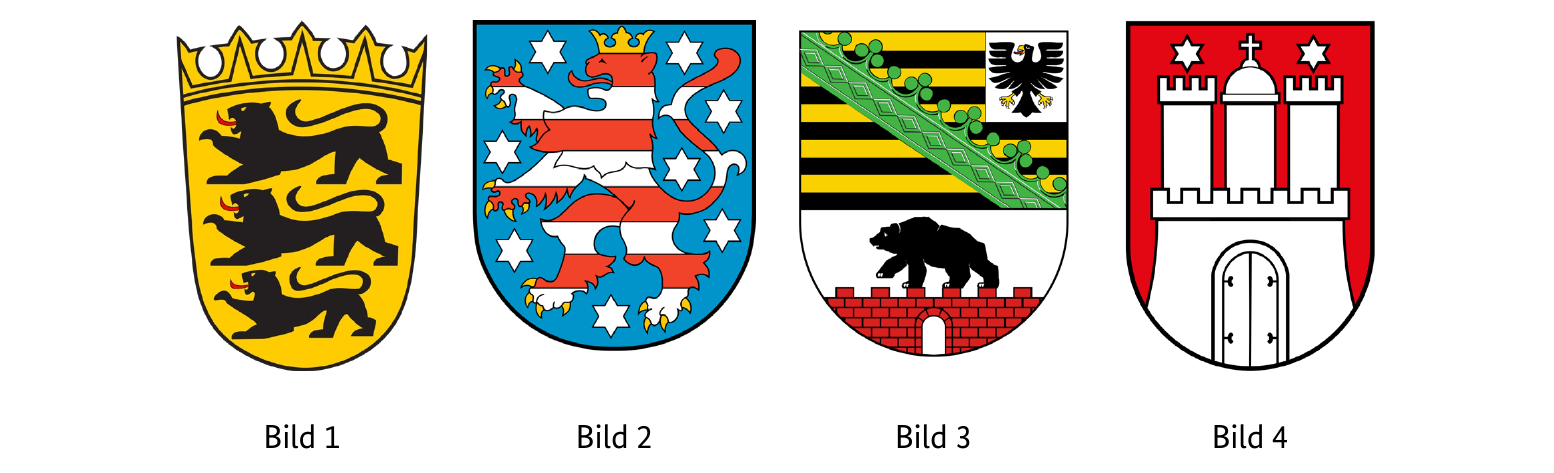
Welches Wappen gehört zum Bundesland Baden-Württemberg?
- A)Bild 1
- B)Bild 2
- C)Bild 3✓
- D)Bild 4
Which coat of arms belongs to the state of Baden-Württemberg?
- A)1
- B)2
- C)3✓
- D)4
Welches ist ein Landkreis in Baden-Württemberg?
- A)Mecklenburgische Seenplatte
- B)Neckar-Odenwald-Kreis✓
- C)Nordfriesland
- D)Altötting
Which is a district in Baden-Württemberg?
- A)Mecklenburg Lake District
- B)Neckar-Odenwald-Kreis✓
- C)Nordfriesland
- D)Altötting
Für wie viele Jahre wird der Landtag in Baden-Württemberg gewählt?
- A)3
- B)4
- C)5✓
- D)6
For how many years is the state parliament in Baden-Württemberg elected?
- A)3
- B)4
- C)5✓
- D)6
Ab welchem Alter darf man in Baden-Württemberg bei Kommunalwahlen wählen?
- A)14
- B)16✓
- C)18
- D)20
From what age can you vote in local elections in Baden-Württemberg?
- A)14
- B)16✓
- C)18
- D)20
Welche Farben hat die Landesflagge von Baden-Württemberg?
- A)blau-weiß-rot
- B)schwarz-gold✓
- C)weiß-blau
- D)grün-weiß-rot
What colors does the state flag of Baden-Württemberg have?
- A)blue-white-red
- B)black-gold✓
- C)white-blue
- D)green-white-red
Wo können Sie sich in Baden-Württemberg über politische Themen informieren?
- A)beim Ordnungsamt der Gemeinde
- B)bei der Verbraucherzentrale
- C)bei der Landeszentrale für politische Bildung✓
- D)bei den Kirchen
Where can you find out about political issues in Baden-Württemberg?
- A)at the public order office of the municipality
- B)at the Consumer Advice Centre
- C)at the State Agency for Civic Education✓
- D)at the churches
Die Landeshauptstadt von Baden-Württemberg heißt …
- A)Heidelberg.
- B)Stuttgart.✓
- C)Karlsruhe.
- D)Mannheim.
The state capital of Baden-Württemberg is called ...
- A)Heidelberg.
- B)Stuttgart.✓
- C)Karlsruhe.
- D)Mannheim.
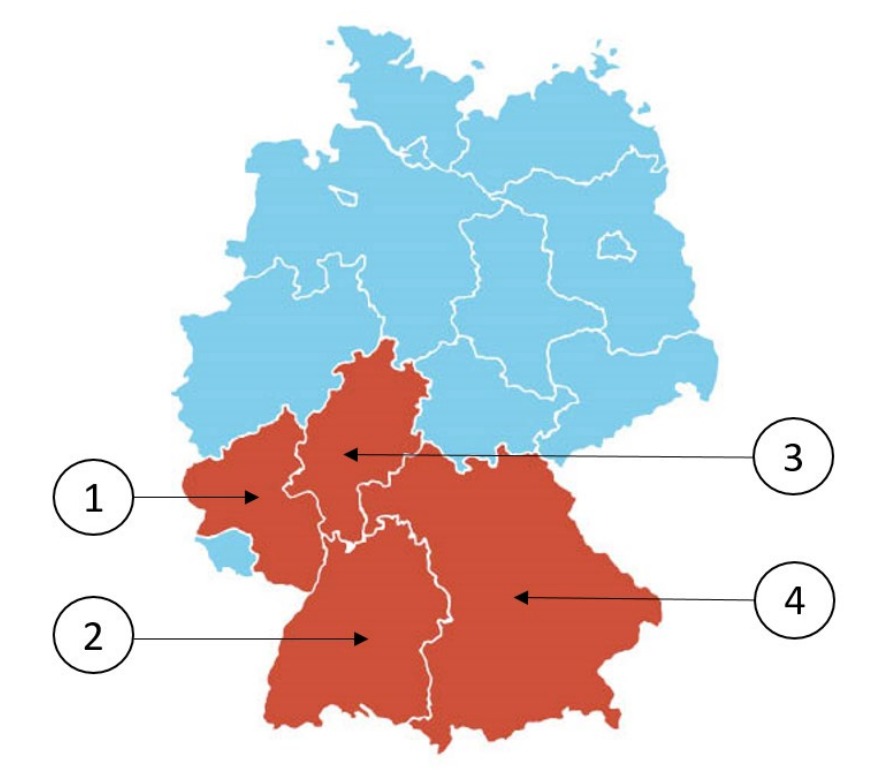
Welches Bundesland ist Baden-Württemberg?
- A)1
- B)2✓
- C)3
- D)4
Which state is Baden-Württemberg?
- A)1
- B)2✓
- C)3
- D)4
Wie nennt man die Regierungschefin/den Regierungschef in Baden-Württemberg?
- A)Erste Ministerin/Erster Minister
- B)Premierministerin/Premierminister
- C)Bürgermeisterin/Bürgermeister
- D)Ministerpräsidentin/Ministerpräsident✓
What is the title of the head of government of Baden-Württemberg?
- A)First Minister
- B)Prime Minister
- C)Mayor
- D)Minister-President✓
Welche Ministerin/welchen Minister hat Baden-Württemberg nicht?
- A)Finanzministerin/Finanzminister
- B)Justizministerin/Justizminister
- C)Innenministerin/Innenminister
- D)Außenministerin/Außenminister✓
Which minister does Baden-Württemberg not have?
- A)Finance Minister
- B)Justice Minister
- C)Interior Minister
- D)Foreign Minister✓
🏛️ BY – Bayern
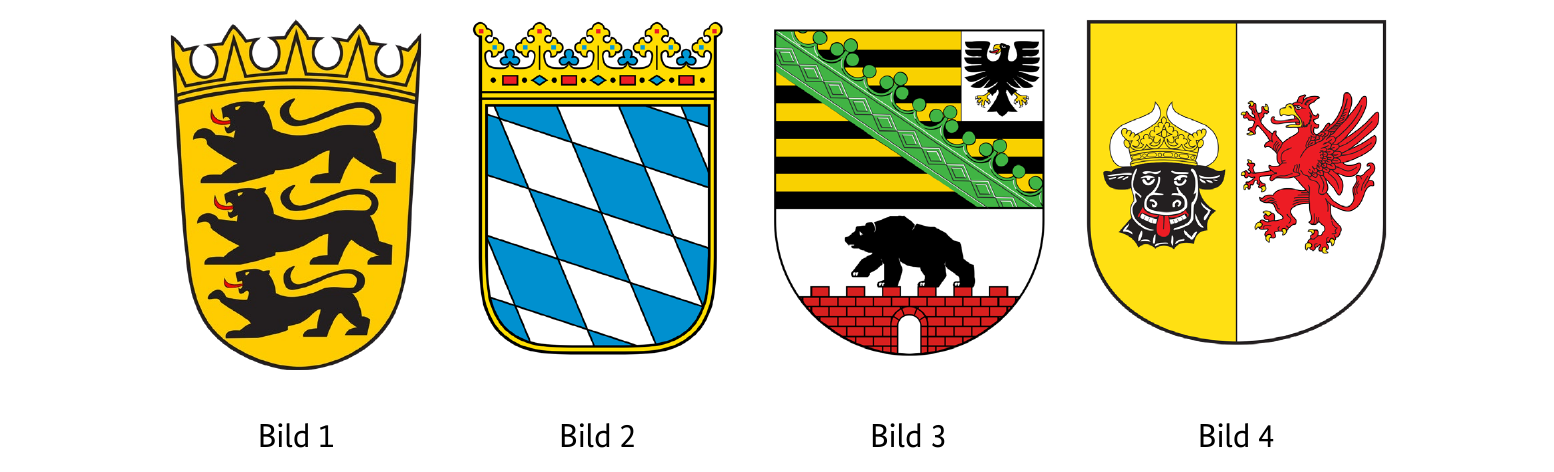
Welches Wappen gehört zum Freistaat Bayern?
- A)Bild 1
- B)Bild 2✓
- C)Bild 3
- D)Bild 4
Which coat of arms belongs to the Free State of Bavaria?
- A)1
- B)2✓
- C)3
- D)4
Welches ist ein Landkreis in Bayern?
- A)Prignitz
- B)Rhein-Sieg-Kreis
- C)Nordfriesland
- D)Altötting✓
Which is a district in Bavaria?
- A)Prignitz
- B)Rhein-Sieg-Kreis
- C)Nordfriesland
- D)Altötting✓
Für wie viele Jahre wird der Landtag in Bayern gewählt?
- A)3
- B)4
- C)5✓
- D)6
For how many years will the state parliament in Bavaria be elected?
- A)3
- B)4
- C)5✓
- D)6
Ab welchem Alter darf man in Bayern bei Kommunalwahlen wählen?
- A)14
- B)16
- C)18✓
- D)20
From what age can you vote in local elections in Bavaria?
- A)14
- B)16
- C)18✓
- D)20
Welche Farben hat die Landesflagge von Bayern?
- A)blau-weiß-rot
- B)weiß-blau✓
- C)grün-weiß-rot
- D)schwarz-gelb
What colors does the state flag of Bavaria have?
- A)blue-white-red
- B)white-blue✓
- C)green-white-red
- D)black-yellow
Wo können Sie sich in Bayern über politische Themen informieren?
- A)beim Ordnungsamt der Gemeinde
- B)bei der Landeszentrale für politische Bildung✓
- C)bei der Verbraucherzentrale
- D)bei den Kirchen
Where can you find out about political issues in Bavaria?
- A)at the public order office of the municipality
- B)at the State Agency for Civic Education✓
- C)at the Consumer Advice Centre
- D)at the churches
Die Landeshauptstadt von Bayern heißt …
- A)Ingolstadt.
- B)Regensburg.
- C)Nürnberg.
- D)München.✓
The state capital of Bavaria is called …
- A)Ingolstadt.
- B)Regensburg.
- C)Nuremberg.
- D)Munich.✓
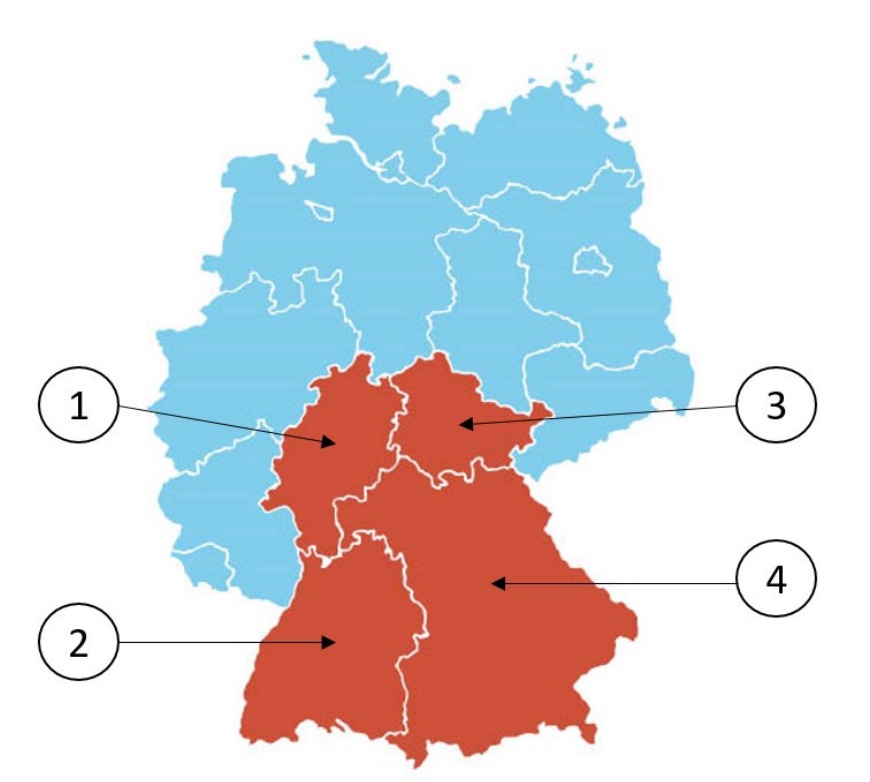
Welches Bundesland ist Bayern?
- A)1
- B)2
- C)3
- D)4✓
Which state is Bavaria?
- A)1
- B)2
- C)3
- D)4✓
Wie nennt man die Regierungschefin/den Regierungschef in Bayern?
- A)Erste Ministerin/Erster Minister
- B)Premierministerin/Premierminister
- C)Bürgermeisterin/Bürgermeister
- D)Ministerpräsidentin/Ministerpräsident✓
What is the title of the head of government of Bavaria?
- A)First Minister
- B)Prime Minister
- C)Mayor
- D)Minister-President✓
Welche Ministerin/welchen Minister hat Bayern nicht?
- A)Justizministerin/Justizminister
- B)Außenministerin/Außenminister✓
- C)Finanzministerin/Finanzminister
- D)Innenministerin/Innenminister
Which minister does Bavaria not have?
- A)Justice Minister
- B)Foreign Minister✓
- C)Finance Minister
- D)Interior Minister
🏛️ BE – Berlin
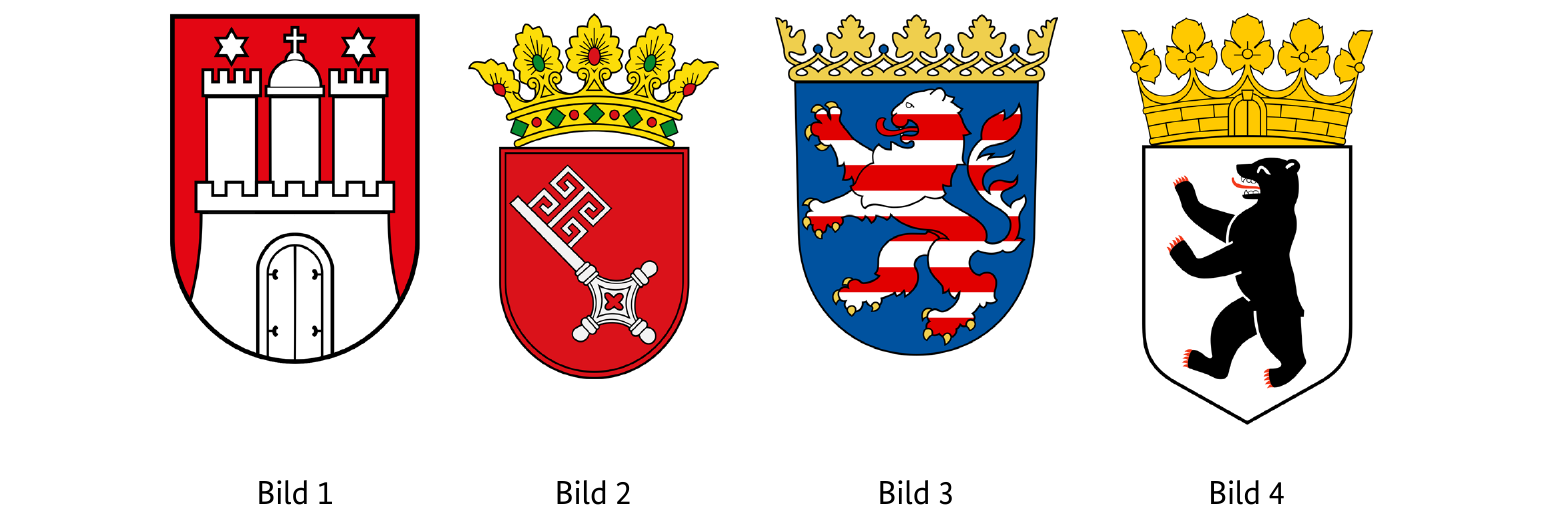
Welches Wappen gehört zum Bundesland Berlin?
- A)Bild 1
- B)Bild 2
- C)Bild 3
- D)Bild 4✓
Which coat of arms belongs to the state of Berlin?
- A)1
- B)2
- C)3
- D)4✓
Welches ist ein Bezirk von Berlin?
- A)Altona
- B)Prignitz
- C)Pankow✓
- D)Mecklenburgische Seenplatte
Which is a district of Berlin?
- A)Altona
- B)Prignitz
- C)Pankow✓
- D)Mecklenburg Lake District
Für wie viele Jahre wird das Landesparlament in Berlin gewählt?
- A)3
- B)4
- C)5✓
- D)6
For how many years is the state parliament in Berlin elected?
- A)3
- B)4
- C)5✓
- D)6
Ab welchem Alter darf man in Berlin bei Kommunalwahlen (Wahl der Bezirksverordnetenversammlung) wählen?
- A)14
- B)16✓
- C)18
- D)20
From what age is it allowed to participate in local elections in Berlin (election of the district council)?
- A)14
- B)16✓
- C)18
- D)20
Welche Farben hat die Landesflagge von Berlin?
- A)blau-weiß-rot
- B)weiß-rot✓
- C)grün-weiß-rot
- D)schwarz-gold
What colors does the state flag of Berlin have?
- A)blue-white-red
- B)white-red✓
- C)green-white-red
- D)black-gold
Wo können Sie sich in Berlin über politische Themen informieren?
- A)beim Ordnungsamt der Gemeinde
- B)bei den Kirchen
- C)bei der Verbraucherzentrale
- D)bei der Landeszentrale für politische Bildung✓
Where can you find out about political issues in Berlin?
- A)at the public order office of the municipality
- B)at the churches
- C)at the Consumer Advice Centre
- D)at the State Agency for Civic Education✓
Welches Bundesland ist ein Stadtstaat?
- A)Berlin✓
- B)Saarland
- C)Brandenburg
- D)Hessen
Which state is a city-state?
- A)Berlin✓
- B)Saarland
- C)Brandenburg
- D)Hesse
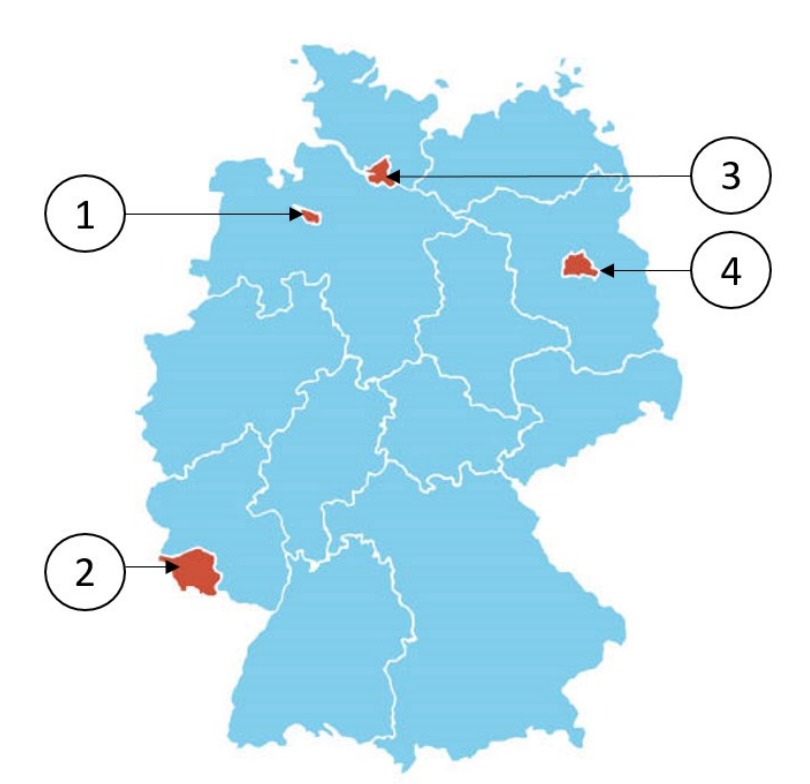
Welches Bundesland ist Berlin?
- A)1
- B)2
- C)3
- D)4✓
Which state is Berlin?
- A)1
- B)2
- C)3
- D)4✓
Wie nennt man die Regierungschefin/den Regierungschef des Stadtstaates Berlin?
- A)Ministerpräsidentin/Ministerpräsident
- B)Oberbürgermeisterin/Oberbürgermeister
- C)Präsidentin/Präsident des Senates
- D)Regierende Bürgermeisterin/Regierender Bürgermeister✓
What is the title of the head of government of Berlin?
- A)Minister-President
- B)Lord Mayor
- C)Senate President
- D)Governing Mayor✓
Welche Senatorin/welchen Senator hat Berlin nicht?
- A)Finanzsenatorin/Finanzsenator
- B)Innensenatorin/Innensenator
- C)Senatorin/Senator für Außenbeziehungen✓
- D)Justizsenatorin/Justizsenator
Which senator does Berlin not have?
- A)Finance Senator
- B)Interior Senator
- C)Senator for External Relations✓
- D)Justice Senator
🏛️ BB – Brandenburg
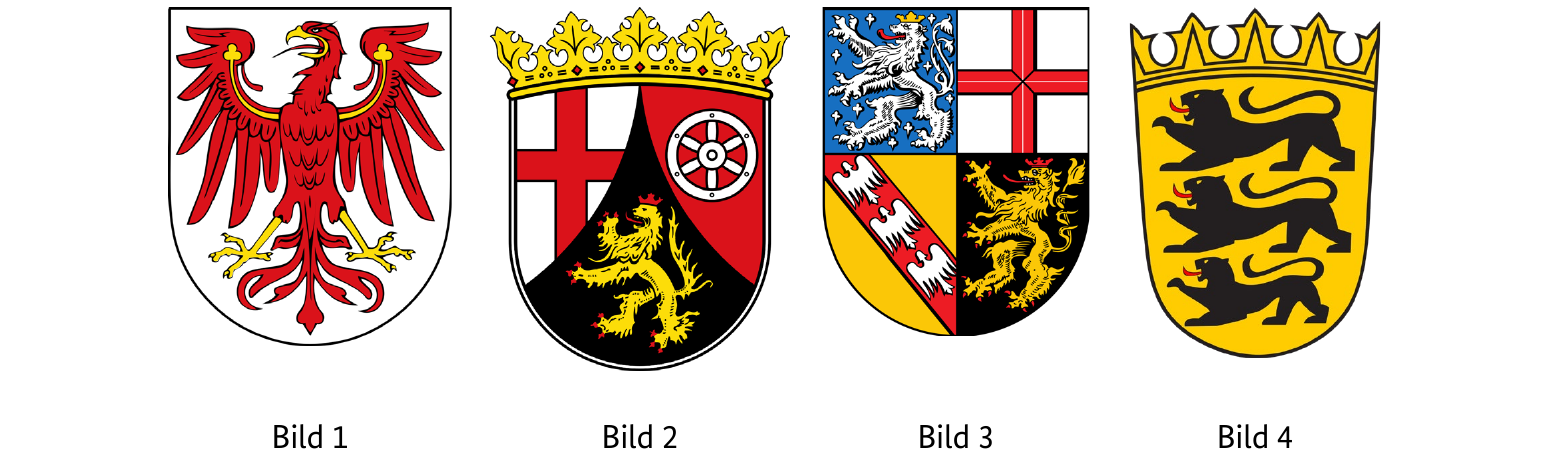
Welches Wappen gehört zum Bundesland Brandenburg?
- A)Bild 1✓
- B)Bild 2
- C)Bild 3
- D)Bild 4
Which coat of arms belongs to the state of Brandenburg?
- A)1✓
- B)2
- C)3
- D)4
Welches ist ein Landkreis in Brandenburg?
- A)Prignitz✓
- B)Rhein-Sieg-Kreis
- C)Vogtlandkreis
- D)Amberg-Sulzbach
Which is a district in Brandenburg?
- A)Prignitz✓
- B)Rhein-Sieg district
- C)Vogtlandkreis
- D)Amberg-Sulzbach
Für wie viele Jahre wird der Landtag in Brandenburg gewählt?
- A)3
- B)4
- C)5✓
- D)6
For how many years will the state parliament in Brandenburg be elected?
- A)3
- B)4
- C)5✓
- D)6
Ab welchem Alter darf man in Brandenburg bei Kommunalwahlen wählen?
- A)14
- B)16✓
- C)18
- D)20
From what age can you vote in local elections in Brandenburg?
- A)14
- B)16✓
- C)18
- D)20
Welche Farben hat die Landesflagge von Brandenburg?
- A)blau-weiß-rot
- B)rot-weiß✓
- C)grün-weiß-rot
- D)schwarz-gelb
What colors does the state flag of Brandenburg have?
- A)blue-white-red
- B)red-white✓
- C)green-white-red
- D)black-yellow
Wo können Sie sich in Brandenburg über politische Themen informieren?
- A)bei den Kirchen
- B)beim Ordnungsamt der Gemeinde
- C)bei der Landeszentrale für politische Bildung✓
- D)bei der Verbraucherzentrale
Where can you find out about political issues in Brandenburg?
- A)at the churches
- B)at the public order office of the municipality
- C)at the State Agency for Civic Education✓
- D)at the Consumer Advice Centre
Die Landeshauptstadt von Brandenburg heißt …
- A)Potsdam.✓
- B)Cottbus.
- C)Brandenburg.
- D)Frankfurt/Oder.
The state capital of Brandenburg is called ...
- A)Potsdam.✓
- B)Cottbus.
- C)Brandenburg.
- D)Frankfurt/Oder.
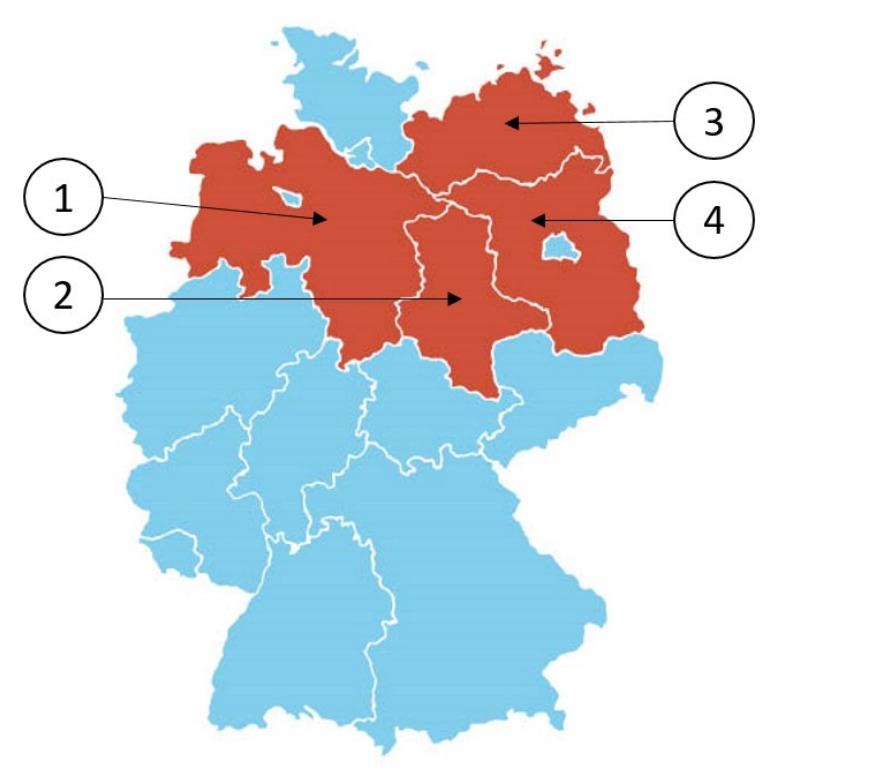
Welches Bundesland ist Brandenburg?
- A)1
- B)2
- C)3
- D)4✓
Which state is Brandenburg?
- A)1
- B)2
- C)3
- D)4✓
Wie nennt man die Regierungschefin/den Regierungschef in Brandenburg?
- A)Erste Ministerin/Erster Minister
- B)Premierministerin/Premierminister
- C)Bürgermeisterin/Bürgermeister
- D)Ministerpräsidentin/Ministerpräsident✓
What is the title of the head of government of Brandenburg?
- A)First Minister
- B)Prime Minister
- C)Mayor
- D)Minister-President✓
Welche Ministerin/welchen Minister hat Brandenburg nicht?
- A)Justizministerin/Justizminister
- B)Außenministerin/Außenminister✓
- C)Finanzministerin/Finanzminister
- D)Innenministerin/Innenminister
Which minister does Brandenburg not have?
- A)Justice Minister
- B)Foreign Minister✓
- C)Finance Minister
- D)Interior Minister
🏛️ HB – Bremen
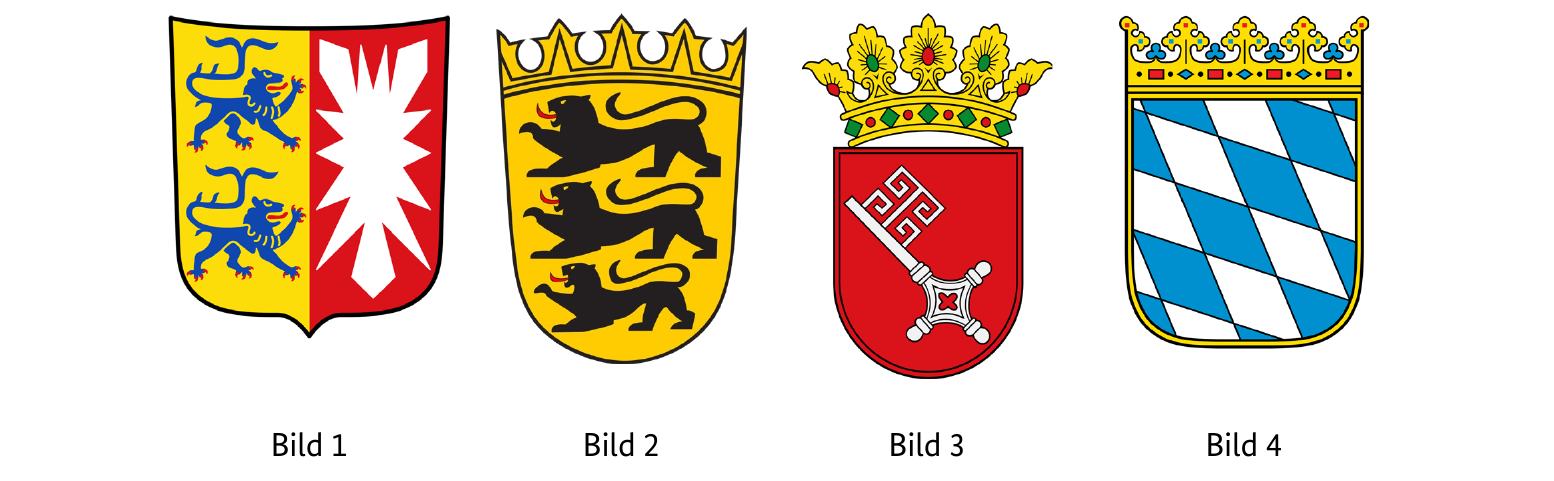
Welches Wappen gehört zur Freien Hansestadt Bremen?
- A)Bild 1
- B)Bild 2
- C)Bild 3✓
- D)Bild 4
Which coat of arms belongs to the Free Hanseatic City of Bremen?
- A)1
- B)2
- C)3✓
- D)4
Welches ist ein Stadtteil von Bremen?
- A)Altona
- B)Hemelingen✓
- C)Pankow
- D)Babelsberg
Which is a district of Bremen?
- A)Altona
- B)Hemelingen✓
- C)Pankow
- D)Babelsberg
Für wie viele Jahre wird das Landesparlament in Bremen gewählt?
- A)3
- B)4✓
- C)5
- D)6
For how many years is the state parliament in Bremen elected?
- A)3
- B)4✓
- C)5
- D)6
Ab welchem Alter darf man in Bremen bei den Wahlen zur Bürgerschaft (Landtag) wählen?
- A)14
- B)16✓
- C)18
- D)20
From what age is it allowed to participate in the elections for the Bürgerschaft (state parliament) in Bremen?
- A)14
- B)16✓
- C)18
- D)20
Welche Farben hat die Landesflagge von Bremen?
- A)blau-weiß-rot
- B)rot-weiß✓
- C)grün-weiß-rot
- D)schwarz-gold
What colors does the state flag of Bremen have?
- A)blue-white-red
- B)red-white✓
- C)green-white-red
- D)black-gold
Wo können Sie sich in Bremen über politische Themen informieren?
- A)beim Ordnungsamt der Gemeinde
- B)bei der Landeszentrale für politische Bildung✓
- C)bei den Kirchen
- D)bei der Verbraucherzentrale
Where can you find out about political topics in Bremen?
- A)at the public order office of the municipality
- B)at the State Agency for Civic Education✓
- C)at the churches
- D)at the Consumer Advice Centre
Was ist ein deutscher Stadtstaat?
- A)Bremen✓
- B)München
- C)Frankfurt
- D)Erfurt
What is a German city-state?
- A)Bremen✓
- B)Munich
- C)Frankfurt
- D)Erfurt
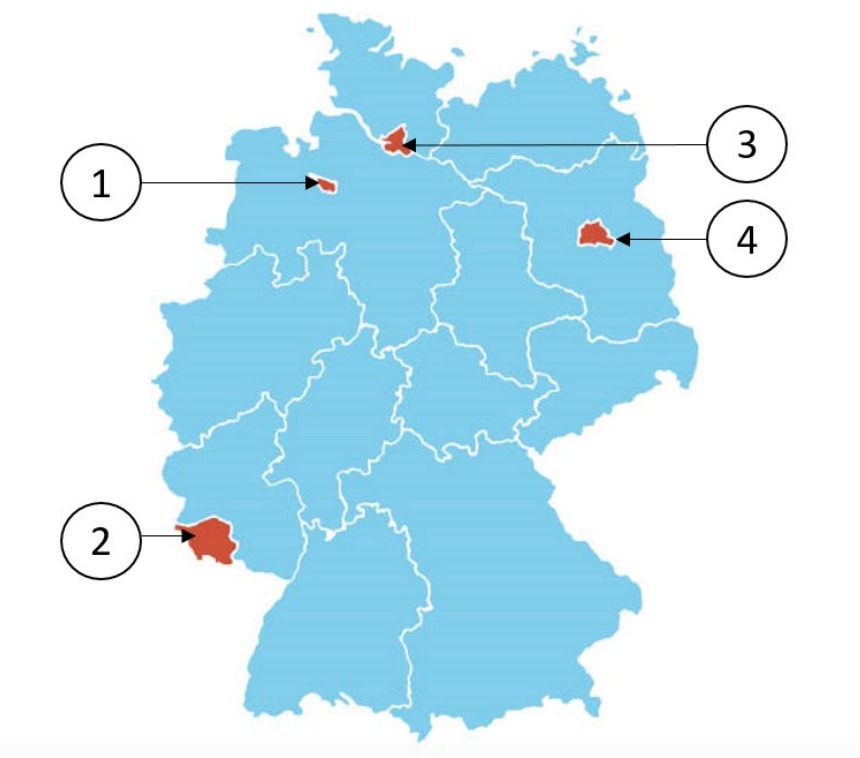
Welches Bundesland ist Bremen?
- A)1✓
- B)2
- C)3
- D)4
Which federal state is Bremen?
- A)1✓
- B)2
- C)3
- D)4
Wie nennt man die Regierungschefin/den Regierungschef des Stadtstaates Bremen?
- A)Ministerpräsidentin/Ministerpräsident
- B)Erste Bürgermeisterin/Erster Bürgermeister
- C)Präsidentin/Präsident des Senates✓
- D)Regierende Bürgermeisterin/Regierender Bürgermeister
What is the title of the head of government of the city-state of Bremen?
- A)Minister-President
- B)First Mayor
- C)President of the Senate✓
- D)Governing Mayor
Welche Senatorin/welchen Senator hat Bremen nicht?
- A)Senatorin/Senator für Außenbeziehungen✓
- B)Finanzsenatorin/Finanzsenator
- C)Justizsenatorin/Justizsenator
- D)Innensenatorin/Innensenator
Which senator does Bremen not have?
- A)Senator for External Relations✓
- B)Finance Senator
- C)Justice Senator
- D)Interior Senator
🏛️ HH – Hamburg
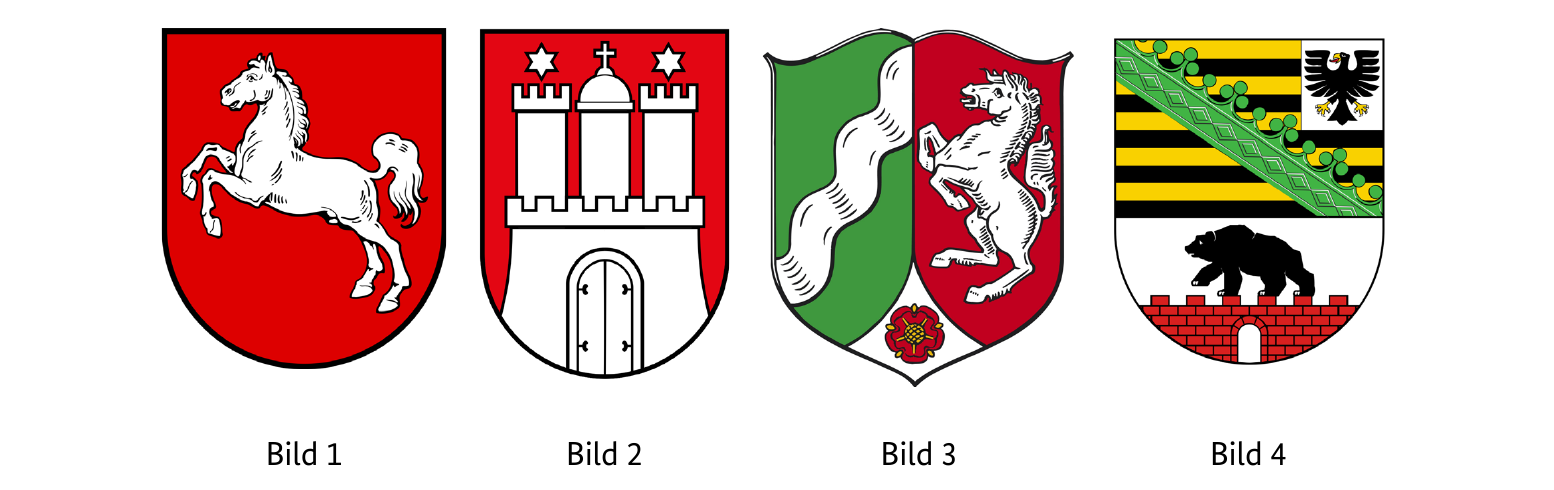
Welches Wappen gehört zur Freien und Hansestadt Hamburg?
- A)Bild 1
- B)Bild 2✓
- C)Bild 3
- D)Bild 4
Which coat of arms belongs to the Free and Hanseatic City of Hamburg?
- A)1
- B)2✓
- C)3
- D)4
Welches ist ein Bezirk von Hamburg?
- A)Altona✓
- B)Hemelingen
- C)Pankow
- D)Mecklenburgische Seenplatte
Which is a district of Hamburg?
- A)Altona✓
- B)Hemelingen
- C)Pankow
- D)Mecklenburg Lake District
Für wie viele Jahre wird das Landesparlament in Hamburg gewählt?
- A)3
- B)4
- C)5✓
- D)6
For how many years is the state parliament in Hamburg elected?
- A)3
- B)4
- C)5✓
- D)6
Ab welchem Alter darf man in Hamburg bei Kommunalwahlen (Wahl der Bezirksversammlungen) wählen?
- A)14
- B)16✓
- C)18
- D)20
From what age is one allowed to vote in local elections in Hamburg (election of the district assemblies)?
- A)14
- B)16✓
- C)18
- D)20
Welche Farben hat die Landesflagge von Hamburg?
- A)blau-weiß-rot
- B)weiß-rot✓
- C)grün-weiß-rot
- D)schwarz-gelb
What colors does the state flag of Hamburg have?
- A)blue-white-red
- B)white-red✓
- C)green-white-red
- D)black-yellow
Wo können Sie sich in Hamburg über politische Themen informieren?
- A)beim Ordnungsamt der Gemeinde
- B)bei der Verbraucherzentrale
- C)bei den Kirchen
- D)bei der Landeszentrale für politische Bildung✓
Where can you find out about political topics in Hamburg?
- A)at the public order office of the municipality
- B)at the Consumer Advice Centre
- C)at the churches
- D)at the State Agency for Civic Education✓
Welches Bundesland ist ein Stadtstaat?
- A)Hamburg✓
- B)Sachsen
- C)Bayern
- D)Thüringen
Which state is a city-state?
- A)Hamburg✓
- B)Saxony
- C)Bavaria
- D)Thuringia
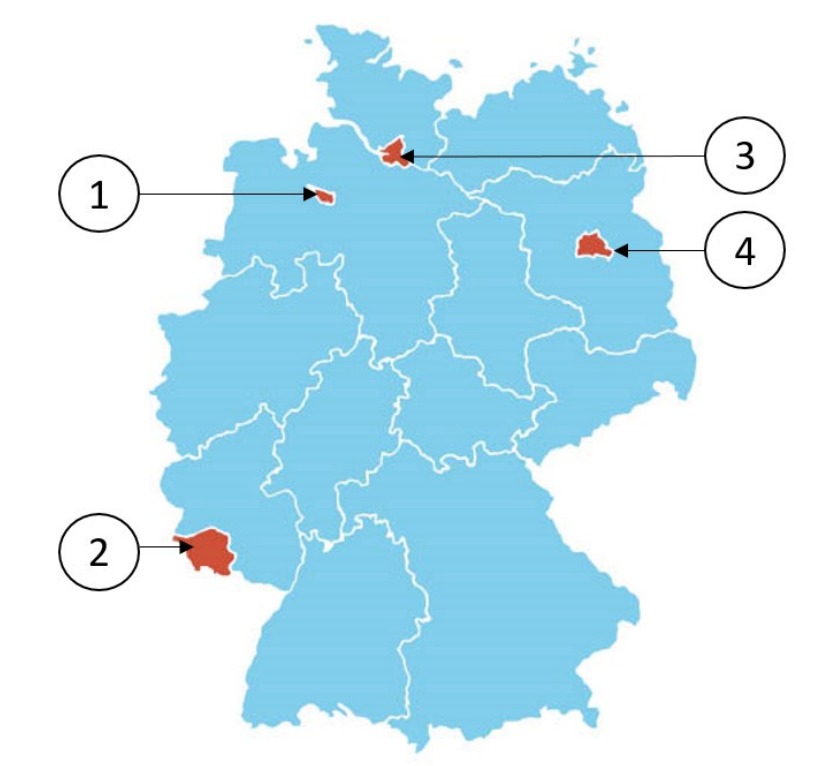
Welches Bundesland ist Hamburg?
- A)1
- B)2
- C)3✓
- D)4
Which state is Hamburg?
- A)1
- B)2
- C)3✓
- D)4
Wie nennt man die Regierungschefin/den Regierungschef des Stadtstaates Hamburg?
- A)Ministerpräsidentin/Ministerpräsident
- B)Erste Bürgermeisterin/Erster Bürgermeister✓
- C)Regierende Senatorin/Regierender Senator
- D)Oberbürgermeisterin/Oberbürgermeister
What is the title of the head of government of Hamburg?
- A)Minister-President
- B)First Mayor✓
- C)Governing Senator
- D)Lord Mayor
Welche Senatorin/welchen Senator hat Hamburg nicht?
- A)Justizsenatorin/Justizsenator
- B)Senatorin/Senator für Außenbeziehungen✓
- C)Finanzsenatorin/Finanzsenator
- D)Innensenatorin/Innensenator
Which senator does Hamburg not have?
- A)Justice Senator
- B)Senator for External Relations✓
- C)Finance Senator
- D)Interior Senator
🏛️ HE – Hessen
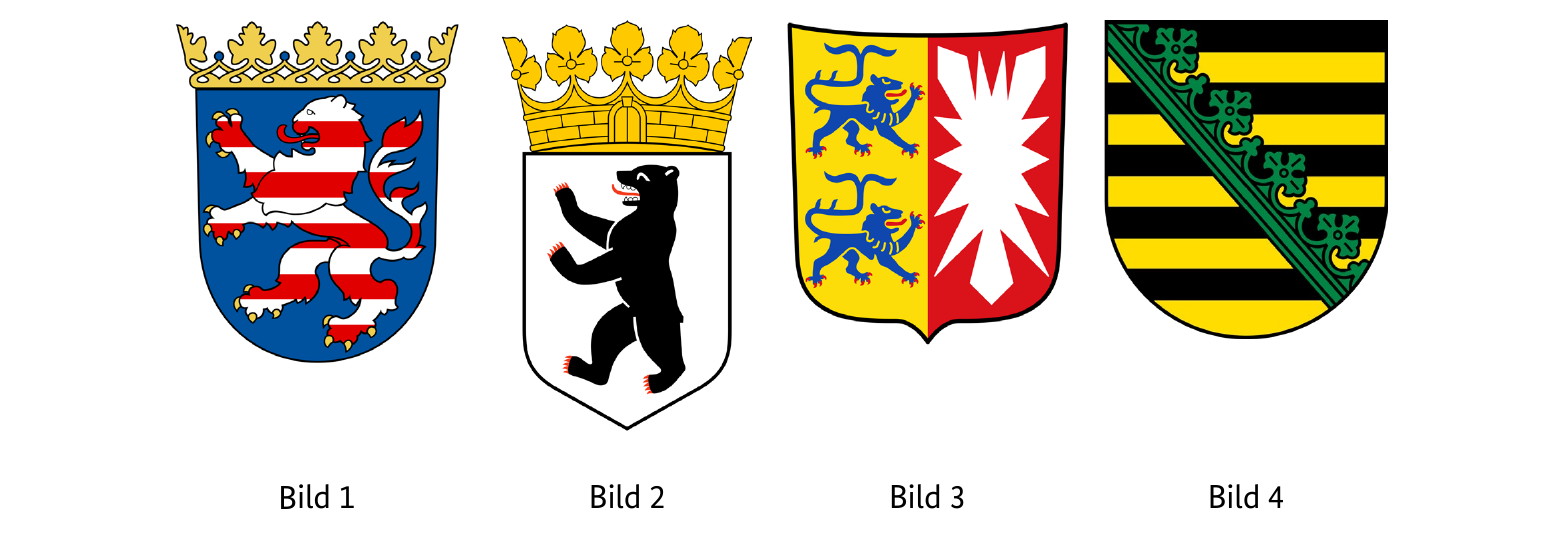
Welches Wappen gehört zum Bundesland Hessen?
- A)Bild 1✓
- B)Bild 2
- C)Bild 3
- D)Bild 4
Which coat of arms belongs to the state of Hesse?
- A)1✓
- B)2
- C)3
- D)4
Welches ist ein Landkreis in Hessen?
- A)Ammerland
- B)Altötting
- C)Prignitz
- D)Main-Taunus-Kreis✓
Which is a district in Hesse?
- A)Ammerland
- B)Altötting
- C)Prignitz
- D)Main-Taunus-Kreis✓
Für wie viele Jahre wird der Landtag in Hessen gewählt?
- A)3
- B)4
- C)5✓
- D)6
For how many years will the state parliament in Hesse be elected?
- A)3
- B)4
- C)5✓
- D)6
Ab welchem Alter darf man in Hessen bei Kommunalwahlen wählen?
- A)14
- B)16
- C)18✓
- D)20
At what age can you vote in local elections in Hesse?
- A)14
- B)16
- C)18✓
- D)20
Welche Farben hat die Landesflagge von Hessen?
- A)blau-weiß-rot
- B)rot-weiß✓
- C)schwarz-gold
- D)grün-weiß-rot
What colors does the state flag of Hesse have?
- A)blue-white-red
- B)red-white✓
- C)black-gold
- D)green-white-red
Wo können Sie sich in Hessen über politische Themen informieren?
- A)bei der Landeszentrale für politische Bildung✓
- B)bei der Verbraucherzentrale
- C)beim Ordnungsamt der Gemeinde
- D)bei den Kirchen
Where can you find out about political topics in Hesse?
- A)at the State Agency for Civic Education✓
- B)at the Consumer Advice Centre
- C)at the public order office of the municipality
- D)at the churches
Die Landeshauptstadt von Hessen heißt …
- A)Kassel.
- B)Darmstadt.
- C)Frankfurt.
- D)Wiesbaden.✓
The state capital of Hesse is called …
- A)Kassel.
- B)Darmstadt.
- C)Frankfurt.
- D)Wiesbaden.✓
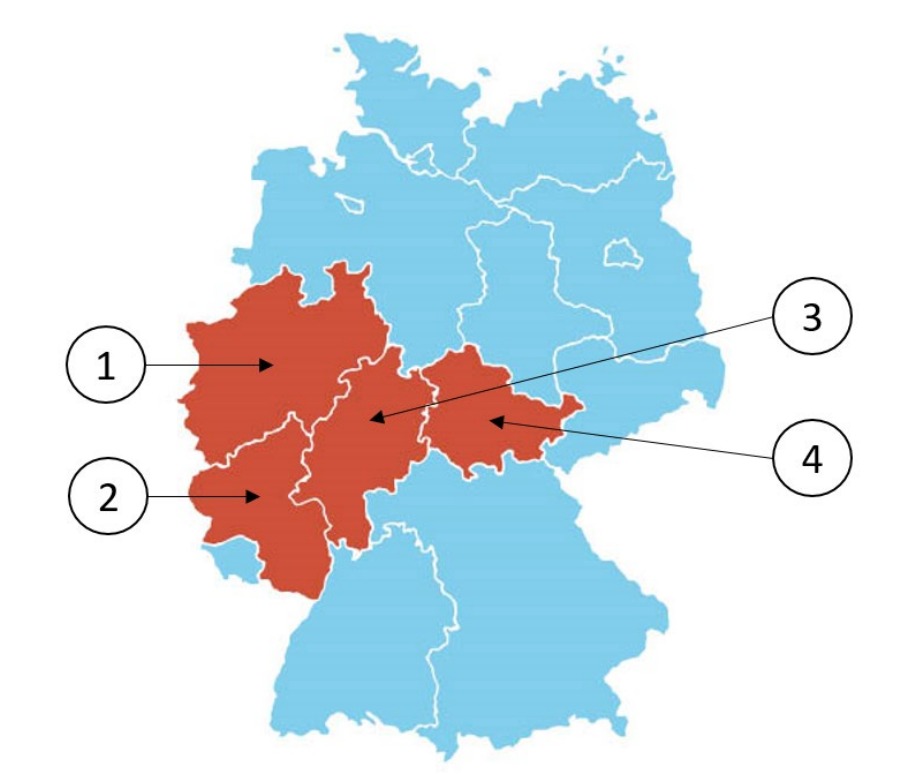
Welches Bundesland ist Hessen?
- A)1
- B)2
- C)3✓
- D)4
Which state is Hesse?
- A)1
- B)2
- C)3✓
- D)4
Wie nennt man die Regierungschefin/den Regierungschef in Hessen?
- A)Erste Ministerin/Erster Minister
- B)Premierministerin/Premierminister
- C)Bürgermeisterin/Bürgermeister
- D)Ministerpräsidentin/Ministerpräsident✓
What is the title of the head of government of Hesse?
- A)First Minister
- B)Prime Minister
- C)Mayor
- D)Minister-President✓
Welche Ministerin/welchen Minister hat Hessen nicht?
- A)Justizministerin/Justizminister
- B)Außenministerin/Außenminister✓
- C)Finanzministerin/Finanzminister
- D)Innenministerin/Innenminister
Which minister does Hesse not have?
- A)Justice Minister
- B)Foreign Minister✓
- C)Finance Minister
- D)Interior Minister
🏛️ MV – Mecklenburg-Vorpommern
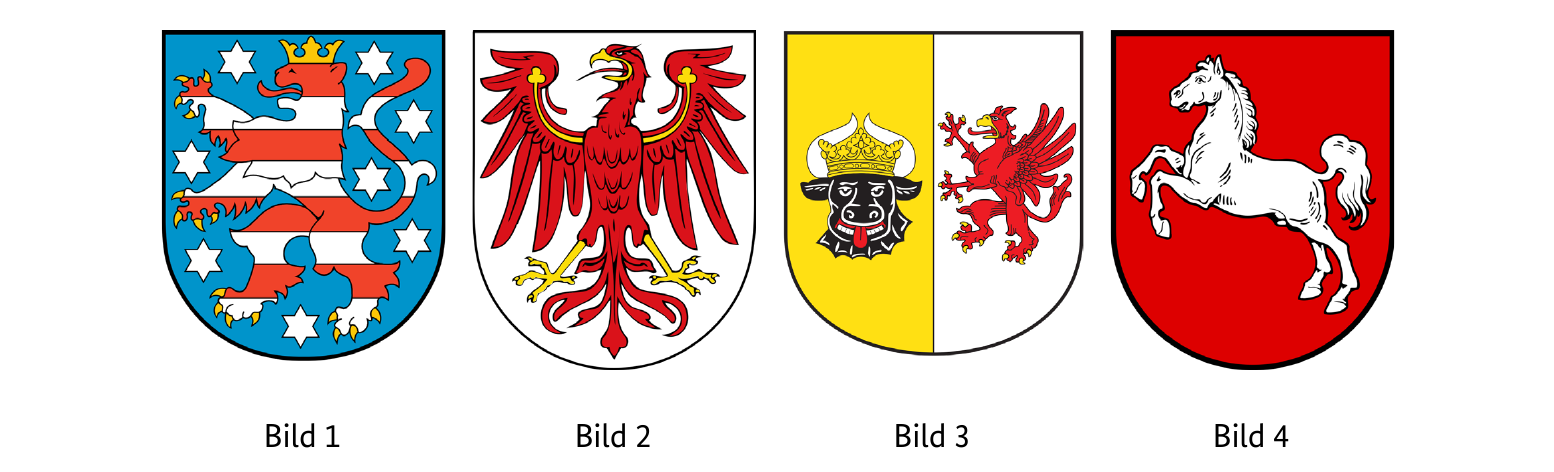
Welches Wappen gehört zum Bundesland Mecklenburg-Vorpommern?
- A)Bild 1
- B)Bild 2
- C)Bild 3✓
- D)Bild 4
Which coat of arms belongs to the state of Mecklenburg-Vorpommern?
- A)1
- B)2
- C)3✓
- D)4
Welches ist ein Landkreis in Mecklenburg-Vorpommern?
- A)Prignitz
- B)Mecklenburgische Seenplatte✓
- C)Vogtlandkreis
- D)Rhein-Sieg-Kreis
Which is a district in Mecklenburg-Vorpommern?
- A)Prignitz
- B)Mecklenburg Lake District✓
- C)Vogtlandkreis
- D)Rhein-Sieg district
Für wie viele Jahre wird der Landtag in Mecklenburg-Vorpommern gewählt?
- A)3
- B)4
- C)5✓
- D)6
For how many years is the state parliament in Mecklenburg-Western Pomerania elected?
- A)3
- B)4
- C)5✓
- D)6
Ab welchem Alter darf man in Mecklenburg-Vorpommern bei Kommunalwahlen wählen?
- A)14
- B)16✓
- C)18
- D)20
From what age is one allowed to vote in local elections in Mecklenburg-Vorpommern?
- A)14
- B)16✓
- C)18
- D)20
Welche Farben hat die Landesflagge von Mecklenburg-Vorpommern?
- A)schwarz-rot-gold
- B)blau-weiß-gelb-rot✓
- C)grün-weiß-rot
- D)schwarz-gelb
What colors does the state flag of Mecklenburg-Western Pomerania have?
- A)black-red-gold
- B)blue-white-yellow-red✓
- C)green-white-red
- D)black-yellow
Wo können Sie sich in Mecklenburg-Vorpommern über politische Themen informieren?
- A)bei der Landeszentrale für politische Bildung✓
- B)bei den Kirchen
- C)beim Ordnungsamt der Gemeinde
- D)bei der Verbraucherzentrale
Where can you find out about political topics in Mecklenburg-Western Pomerania?
- A)at the State Agency for Civic Education✓
- B)at the churches
- C)at the public order office of the municipality
- D)at the Consumer Advice Centre
Die Landeshauptstadt von Mecklenburg-Vorpommern heißt …
- A)Greifswald.
- B)Schwerin.✓
- C)Rostock.
- D)Wismar.
The state capital of Mecklenburg-Western Pomerania is called ...
- A)Greifswald
- B)Schwerin✓
- C)Rostock
- D)Wismar
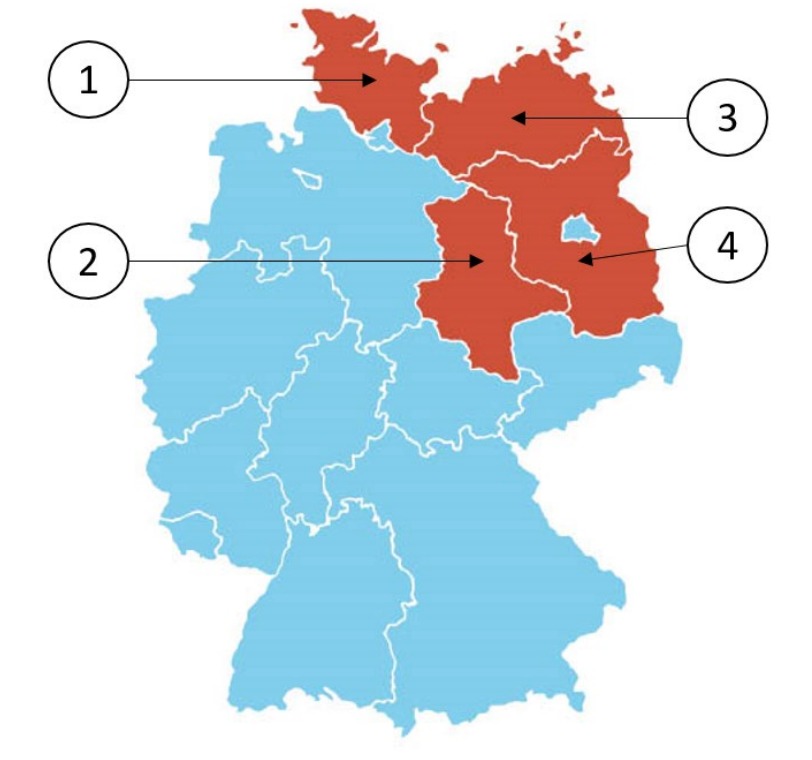
Welches Bundesland ist Mecklenburg-Vorpommern?
- A)1
- B)2
- C)3✓
- D)4
Which state is Mecklenburg-Western Pomerania?
- A)1
- B)2
- C)3✓
- D)4
Wie nennt man die Regierungschefin/den Regierungschef in Mecklenburg-Vorpommern?
- A)Erste Ministerin/Erster Minister
- B)Premierministerin/Premierminister
- C)Bürgermeisterin/Bürgermeister
- D)Ministerpräsidentin/Ministerpräsident✓
What is the title of the head of government of Mecklenburg-Vorpommern?
- A)First Minister
- B)Prime Minister
- C)Mayor
- D)Minister-President✓
Welche Ministerin/welchen Minister hat Mecklenburg-Vorpommern nicht?
- A)Justizministerin/Justizminister
- B)Außenministerin/Außenminister✓
- C)Finanzministerin/Finanzminister
- D)Innenministerin/Innenminister
Which minister does Mecklenburg-Vorpommern not have?
- A)Justice Minister
- B)Foreign Minister✓
- C)Finance Minister
- D)Interior Minister
🏛️ NI – Niedersachsen
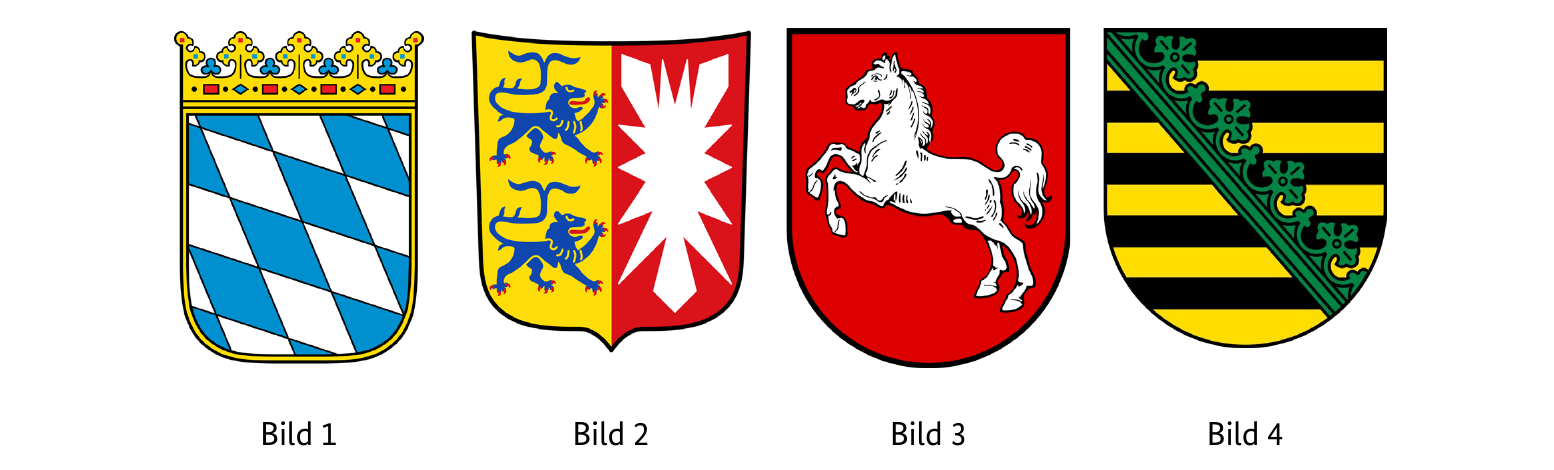
Welches Wappen gehört zum Bundesland Niedersachsen?
- A)Bild 1
- B)Bild 2
- C)Bild 3✓
- D)Bild 4
Which coat of arms belongs to the state of Lower Saxony?
- A)1
- B)2
- C)3✓
- D)4
Welches ist ein Landkreis in Niedersachsen?
- A)Ammerland✓
- B)Rhein-Sieg-Kreis
- C)Nordfriesland
- D)Vogtlandkreis
Which is a district in Lower Saxony?
- A)Ammerland✓
- B)Rhein-Sieg district
- C)Nordfriesland
- D)Vogtlandkreis
Für wie viele Jahre wird der Landtag in Niedersachsen gewählt?
- A)3
- B)4
- C)5✓
- D)6
For how many years will the state parliament in Lower Saxony be elected?
- A)3
- B)4
- C)5✓
- D)6
Ab welchem Alter darf man in Niedersachsen bei Kommunalwahlen wählen?
- A)14
- B)16✓
- C)18
- D)20
From what age are you allowed to vote in local elections in Lower Saxony?
- A)14
- B)16✓
- C)18
- D)20
Welche Farben hat die Landesflagge von Niedersachsen?
- A)weiß-blau
- B)schwarz-rot-gold✓
- C)schwarz-gelb
- D)blau-weiß-rot
What colors does the state flag of Lower Saxony have?
- A)white-blue
- B)black-red-gold✓
- C)black-yellow
- D)blue-white-red
Wo können Sie sich in Niedersachsen über politische Themen informieren?
- A)bei der Landeszentrale für politische Bildung✓
- B)beim Ordnungsamt der Gemeinde
- C)bei der Verbraucherzentrale
- D)bei den Kirchen
Where can you find out about political topics in Lower Saxony?
- A)at the State Agency for Civic Education✓
- B)at the public order office of the municipality
- C)at the Consumer Advice Centre
- D)at the churches
Die Landeshauptstadt von Niedersachsen heißt …
- A)Hannover.✓
- B)Braunschweig.
- C)Wolfsburg.
- D)Osnabrück.
The state capital of Lower Saxony is called ...
- A)Hanover✓
- B)Brunswick
- C)Wolfsburg
- D)Osnabrück
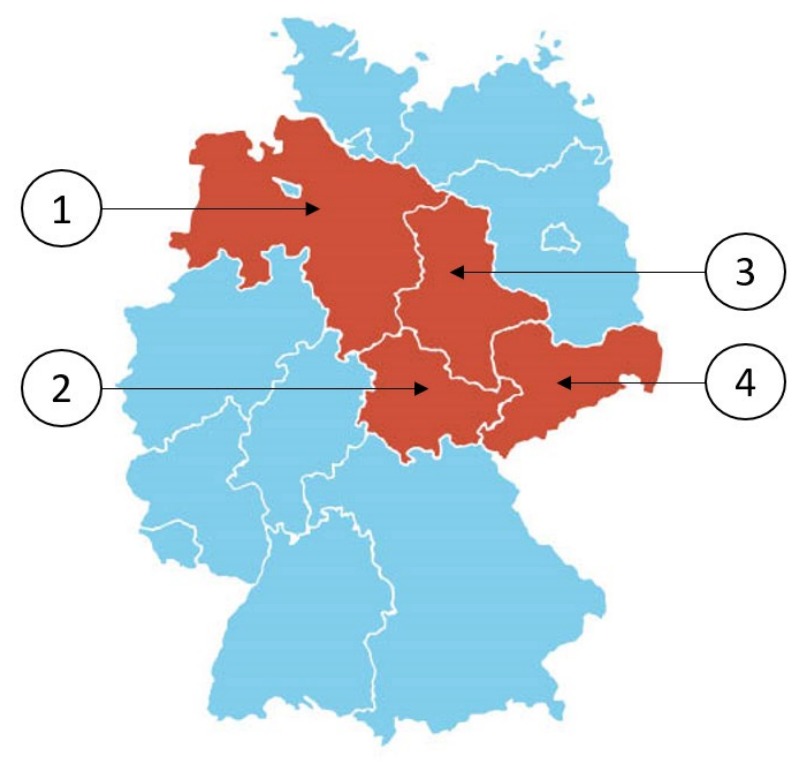
Welches Bundesland ist Niedersachsen?
- A)1✓
- B)2
- C)3
- D)4
Which state is Lower Saxony?
- A)1✓
- B)2
- C)3
- D)4
Wie nennt man die Regierungschefin/den Regierungschef in Niedersachsen?
- A)Erste Ministerin/Erster Minister
- B)Premierministerin/Premierminister
- C)Bürgermeisterin/Bürgermeister
- D)Ministerpräsidentin/Ministerpräsident✓
What is the title of the head of government of Lower Saxony?
- A)First Minister
- B)Prime Minister
- C)Mayor
- D)Minister-President✓
Welche Ministerin/welchen Minister hat Niedersachsen nicht?
- A)Justizministerin/Justizminister
- B)Außenministerin/Außenminister✓
- C)Finanzministerin/Finanzminister
- D)Innenministerin/Innenminister
Which minister does Lower Saxony not have?
- A)Justice Minister
- B)Foreign Minister✓
- C)Finance Minister
- D)Interior Minister
🏛️ NW – Nordrhein-Westfalen
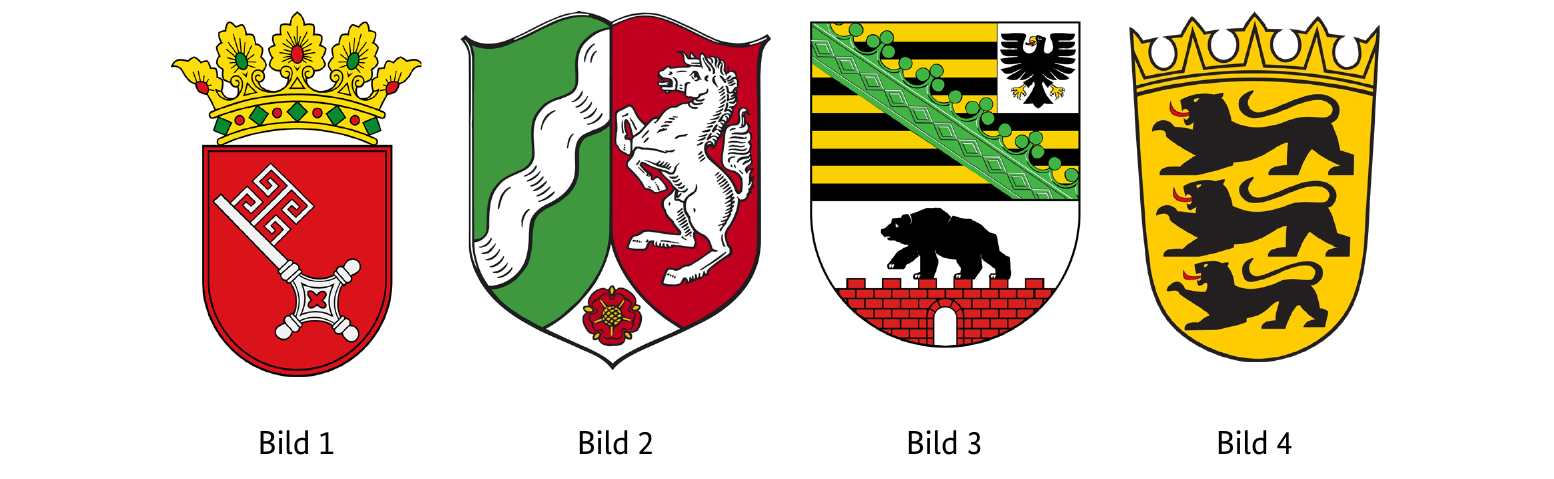
Welches Wappen gehört zum Bundesland Nordrhein-Westfalen?
- A)Bild 1
- B)Bild 2✓
- C)Bild 3
- D)Bild 4
Which coat of arms belongs to the state of North Rhine-Westphalia?
- A)1
- B)2✓
- C)3
- D)4
Welches ist ein Landkreis in Nordrhein-Westfalen?
- A)Ammerland
- B)Rhein-Sieg-Kreis✓
- C)Nordfriesland
- D)Vogtlandkreis
Which is a district in North Rhine-Westphalia?
- A)Ammerland
- B)Rhein-Sieg district✓
- C)Nordfriesland
- D)Vogtlandkreis
Für wie viele Jahre wird der Landtag in Nordrhein-Westfalen gewählt?
- A)3
- B)4
- C)5✓
- D)6
For how many years is the state parliament in North Rhine-Westphalia elected?
- A)3
- B)4
- C)5✓
- D)6
Ab welchem Alter darf man in Nordrhein-Westfalen bei Kommunalwahlen wählen?
- A)14
- B)16✓
- C)18
- D)20
From what age are you allowed to vote in local elections in North Rhine-Westphalia?
- A)14
- B)16✓
- C)18
- D)20
Welche Farben hat die Landesflagge von Nordrhein-Westfalen?
- A)rot-weiß
- B)grün-weiß-rot✓
- C)schwarz-gold
- D)blau-weiß-rot
What colors does the state flag of North Rhine-Westphalia have?
- A)red-white
- B)green-white-red✓
- C)black-gold
- D)blue-white-red
Wo können Sie sich in Nordrhein-Westfalen über politische Themen informieren?
- A)bei den Kirchen
- B)beim Ordnungsamt der Gemeinde
- C)bei der Verbraucherzentrale
- D)bei der Landeszentrale für politische Bildung✓
Where can you find out about political topics in North Rhine-Westphalia?
- A)at the churches
- B)at the public order office of the municipality
- C)at the Consumer Advice Centre
- D)at the State Agency for Civic Education✓
Die Landeshauptstadt von Nordrhein-Westfalen heißt …
- A)Köln.
- B)Bonn.
- C)Düsseldorf.✓
- D)Dortmund.
The state capital of North Rhine-Westphalia is called ...
- A)Cologne
- B)Bonn
- C)Düsseldorf✓
- D)Dortmund
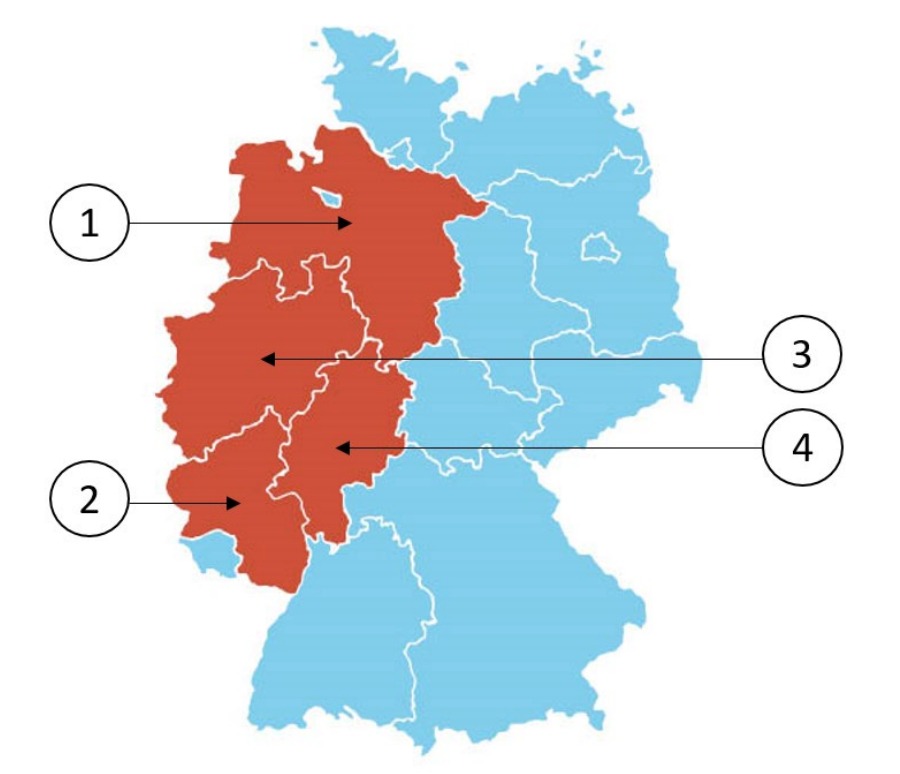
Welches Bundesland ist Nordrhein-Westfalen?
- A)1
- B)2
- C)3✓
- D)4
Which state is North Rhine-Westphalia?
- A)1
- B)2
- C)3✓
- D)4
Wie nennt man die Regierungschefin/den Regierungschef in Nordrhein-Westfalen?
- A)Erste Ministerin/Erster Minister
- B)Premierministerin/Premierminister
- C)Bürgermeisterin/Bürgermeister
- D)Ministerpräsidentin/Ministerpräsident✓
What is the title of the head of government of North Rhine-Westphalia?
- A)First Minister
- B)Prime Minister
- C)Mayor
- D)Minister-President✓
Welche Ministerin/welchen Minister hat Nordrhein-Westfalen nicht?
- A)Justizministerin/Justizminister
- B)Außenministerin/Außenminister✓
- C)Finanzministerin/Finanzminister
- D)Innenministerin/Innenminister
Which minister does North Rhine-Westphalia not have?
- A)Justice Minister
- B)Foreign Minister✓
- C)Finance Minister
- D)Interior Minister
🏛️ RP – Rheinland-Pfalz
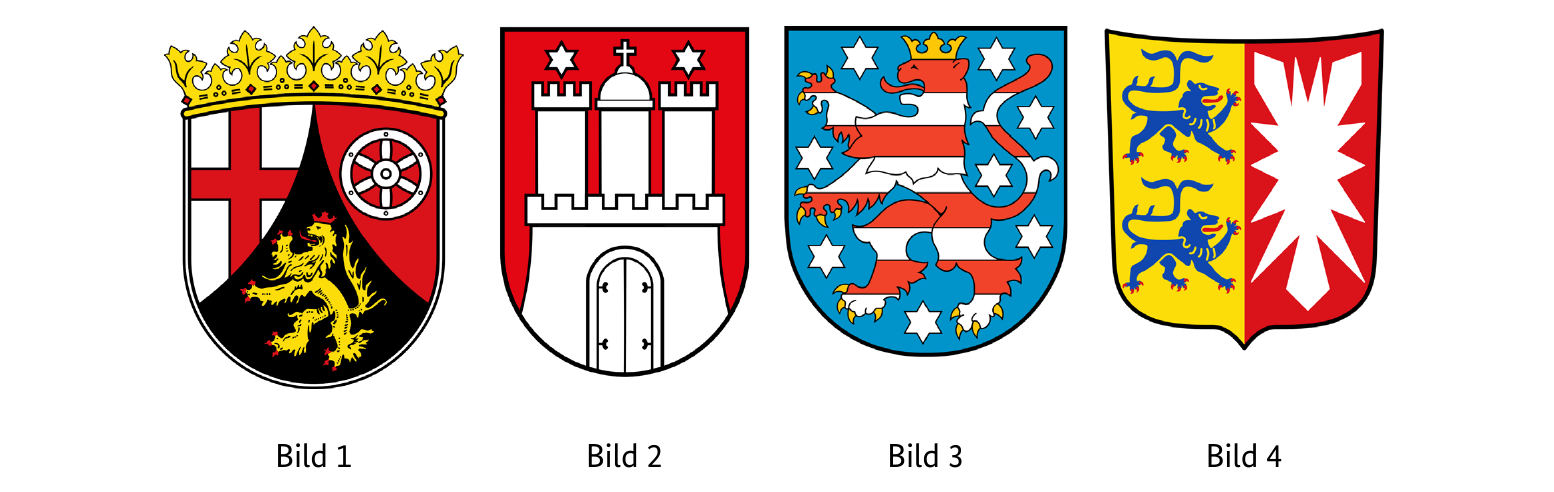
Welches Wappen gehört zum Bundesland Rheinland-Pfalz?
- A)Bild 1✓
- B)Bild 2
- C)Bild 3
- D)Bild 4
Which coat of arms belongs to the state of Rhineland-Palatinate?
- A)1✓
- B)2
- C)3
- D)4
Welches ist ein Landkreis in Rheinland-Pfalz?
- A)Westerwaldkreis✓
- B)Altötting
- C)Emsland
- D)Prignitz
Which is a district in Rhineland-Palatinate?
- A)Westerwaldkreis✓
- B)Altötting
- C)Emsland
- D)Prignitz
Für wie viele Jahre wird der Landtag in Rheinland-Pfalz gewählt?
- A)3
- B)4
- C)5✓
- D)6
For how many years is the state parliament in Rhineland-Palatinate elected?
- A)3
- B)4
- C)5✓
- D)6
Ab welchem Alter darf man in Rheinland-Pfalz bei Kommunalwahlen wählen?
- A)14
- B)16
- C)18✓
- D)20
From what age are you allowed to vote in local elections in Rhineland-Palatinate?
- A)14
- B)16
- C)18✓
- D)20
Welche Farben hat die Landesflagge von Rheinland-Pfalz?
- A)weiß-rot
- B)schwarz-rot-gold✓
- C)schwarz-gelb
- D)grün-weiß-rot
What colors does the state flag of Rhineland-Palatinate have?
- A)white-red
- B)black-red-gold✓
- C)black-yellow
- D)green-white-red
Wo können Sie sich in Rheinland-Pfalz über politische Themen informieren?
- A)bei den Kirchen
- B)bei der Verbraucherzentrale
- C)beim Ordnungsamt der Gemeinde
- D)bei der Landeszentrale für politische Bildung✓
Where can you find out about political topics in Rhineland-Palatinate?
- A)at the churches
- B)at the Consumer Advice Centre
- C)at the public order office of the municipality
- D)at the State Agency for Civic Education✓
Die Landeshauptstadt von Rheinland-Pfalz heißt …
- A)Mainz.✓
- B)Kaiserslautern.
- C)Ludwigshafen.
- D)Koblenz.
The state capital of Rhineland-Palatinate is called ...
- A)Mainz✓
- B)Kaiserslautern
- C)Ludwigshafen
- D)Koblenz
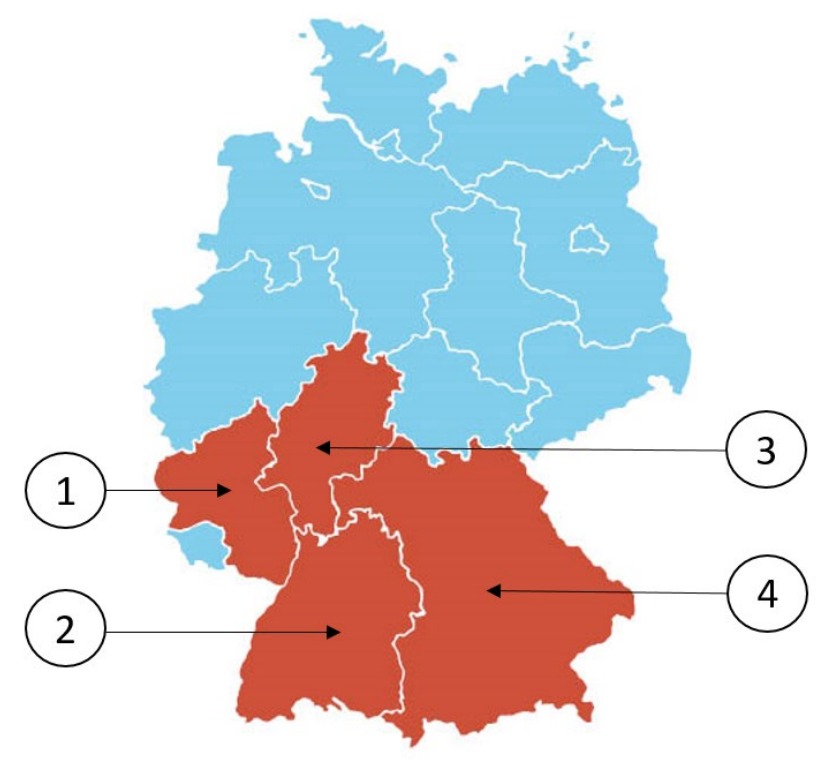
Welches Bundesland ist Rheinland-Pfalz?
- A)1✓
- B)2
- C)3
- D)4
Which state is Rhineland-Palatinate?
- A)1✓
- B)2
- C)3
- D)4
Wie nennt man die Regierungschefin/den Regierungschef in Rheinland-Pfalz?
- A)Erste Ministerin/Erster Minister
- B)Premierministerin/Premierminister
- C)Bürgermeisterin/Bürgermeister
- D)Ministerpräsidentin/Ministerpräsident✓
What is the title of the head of government of Rhineland-Palatinate?
- A)First Minister
- B)Prime Minister
- C)Mayor
- D)Minister-President✓
Welche Ministerin/welchen Minister hat Rheinland-Pfalz nicht?
- A)Justizministerin/Justizminister
- B)Außenministerin/Außenminister✓
- C)Finanzministerin/Finanzminister
- D)Innenministerin/Innenminister
Which minister does Rhineland-Palatinate not have?
- A)Justice Minister
- B)Foreign Minister✓
- C)Finance Minister
- D)Interior Minister
🏛️ SL – Saarland
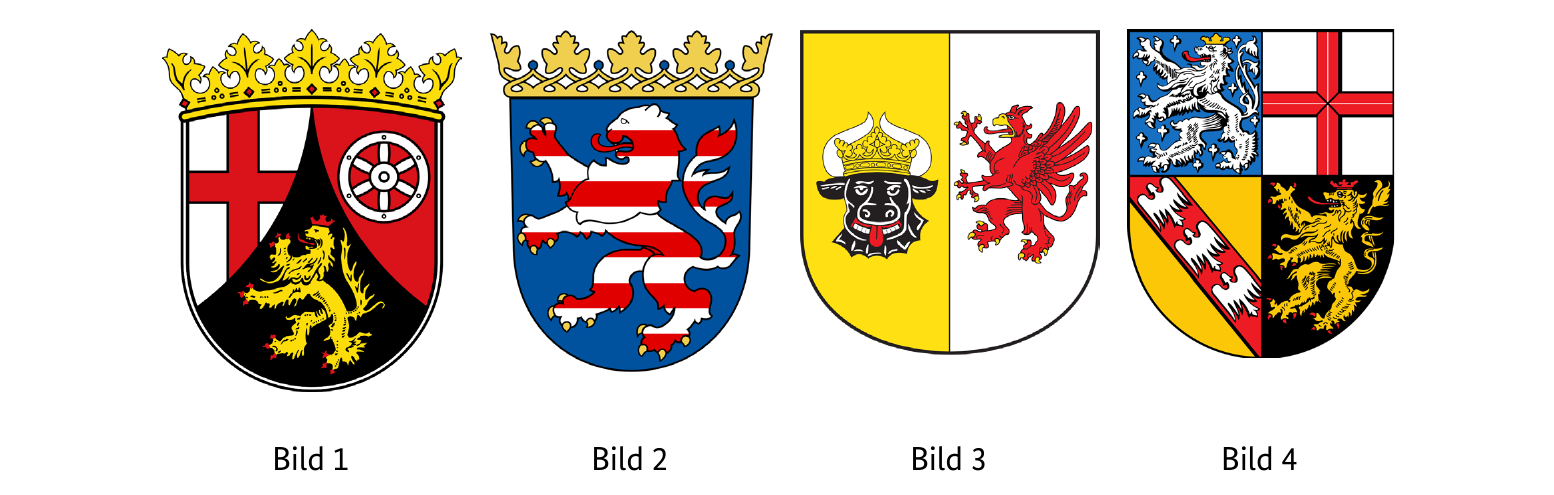
Welches Wappen gehört zum Bundesland Saarland?
- A)Bild 1
- B)Bild 2
- C)Bild 3
- D)Bild 4✓
Which coat of arms belongs to the state of Saarland?
- A)1
- B)2
- C)3
- D)4✓
Welches ist ein Landkreis im Saarland?
- A)Mecklenburgische Seenplatte
- B)Altötting
- C)Neunkirchen✓
- D)Rhein-Sieg-Kreis
Which is a district in Saarland?
- A)Mecklenburg Lake District
- B)Altötting
- C)Neunkirchen✓
- D)Rhein-Sieg district
Für wie viele Jahre wird der Landtag des Saarlandes gewählt?
- A)3
- B)4
- C)5✓
- D)6
For how many years will the Saarland state parliament be elected?
- A)3
- B)4
- C)5✓
- D)6
Ab welchem Alter darf man im Saarland bei Kommunalwahlen wählen?
- A)14
- B)16
- C)18✓
- D)20
From what age can you vote in local elections in Saarland?
- A)14
- B)16
- C)18✓
- D)20
Welche Farben hat die Landesflagge des Saarlandes?
- A)weiß-blau
- B)schwarz-rot-gold✓
- C)schwarz-gelb
- D)grün-weiß-rot
What colors does the state flag of Saarland have?
- A)white-blue
- B)black-red-gold✓
- C)black-yellow
- D)green-white-red
Wo können Sie sich im Saarland über politische Themen informieren?
- A)bei den Kirchen
- B)bei der Landeszentrale für politische Bildung✓
- C)bei der Verbraucherzentrale
- D)beim Ordnungsamt der Gemeinde
Where can you find out about political issues in Saarland?
- A)at the churches
- B)at the State Agency for Civic Education✓
- C)at the Consumer Advice Centre
- D)at the public order office of the municipality
Die Landeshauptstadt des Saarlandes heißt …
- A)Neunkirchen.
- B)Homburg.
- C)Saarbrücken.✓
- D)Völklingen.
The state capital of the Saarland is called ...
- A)Neunkirchen
- B)Homburg
- C)Saarbrücken✓
- D)Völklingen
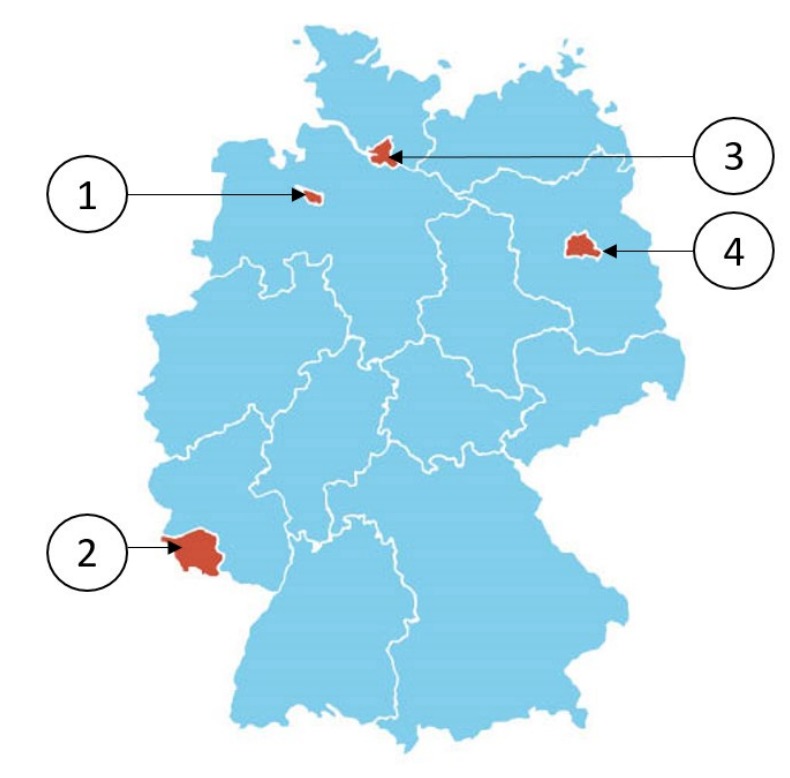
Welches Bundesland ist das Saarland?
- A)1
- B)2✓
- C)3
- D)4
Which federal state is Saarland?
- A)1
- B)2✓
- C)3
- D)4
Wie nennt man die Regierungschefin/den Regierungschef des Saarlandes?
- A)Erste Ministerin/Erster Minister
- B)Premierministerin/Premierminister
- C)Bürgermeisterin/Bürgermeister
- D)Ministerpräsidentin/Ministerpräsident✓
What is the title of the head of government of Saarland?
- A)First Minister
- B)Prime Minister
- C)Mayor
- D)Minister-President✓
Welche Ministerin/welchen Minister hat das Saarland nicht?
- A)Justizministerin/Justizminister
- B)Außenministerin/Außenminister✓
- C)Finanzministerin/Finanzminister
- D)Innenministerin/Innenminister
Which minister does Saarland not have?
- A)Justice Minister
- B)Foreign Minister✓
- C)Finance Minister
- D)Interior Minister
🏛️ SN – Sachsen
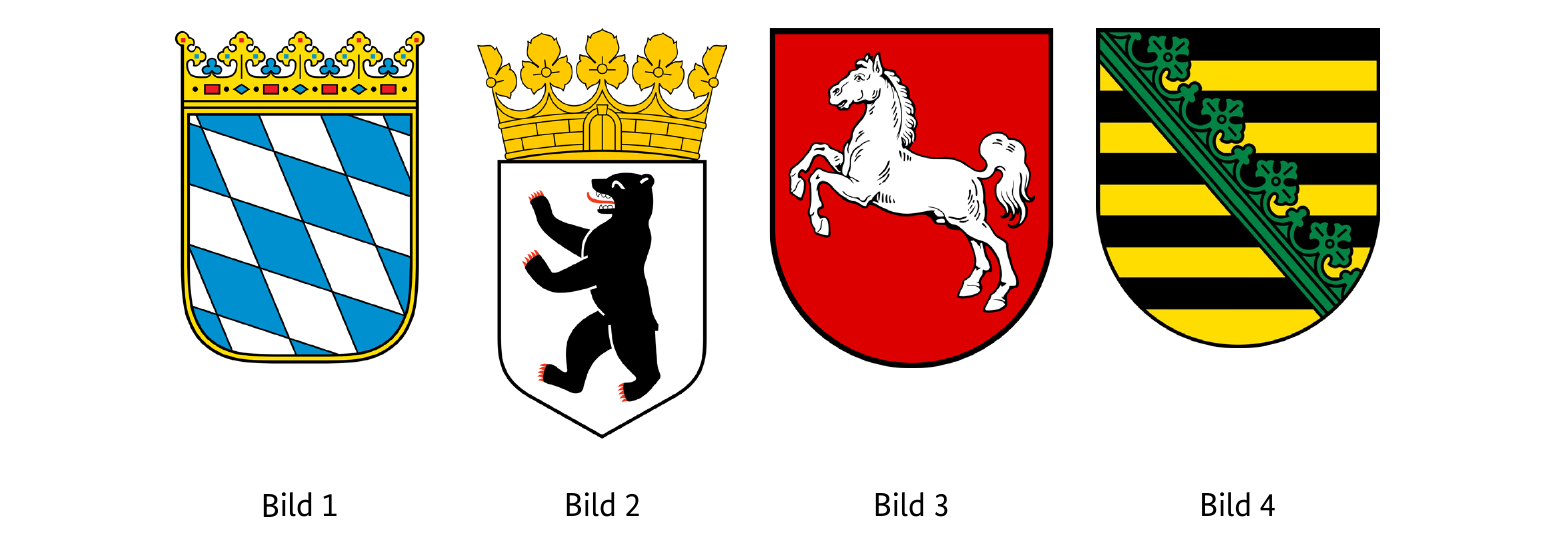
Welches Wappen gehört zum Freistaat Sachsen?
- A)Bild 1
- B)Bild 2
- C)Bild 3
- D)Bild 4✓
Which coat of arms belongs to the Free State of Saxony?
- A)1
- B)2
- C)3
- D)4✓
Welches ist ein Landkreis in Sachsen?
- A)Vogtlandkreis✓
- B)Altötting
- C)Uckermark
- D)Nordfriesland
Which is a district in Saxony?
- A)Vogtlandkreis✓
- B)Altötting
- C)Uckermark
- D)Nordfriesland
Für wie viele Jahre wird der Landtag in Sachsen gewählt?
- A)3
- B)4
- C)5✓
- D)6
For how many years will the state parliament in Saxony be elected?
- A)3
- B)4
- C)5✓
- D)6
Ab welchem Alter darf man in Sachsen bei Kommunalwahlen wählen?
- A)14
- B)16
- C)18✓
- D)20
From what age can you vote in local elections in Saxony?
- A)14
- B)16
- C)18✓
- D)20
Welche Farben hat die Landesflagge von Sachsen?
- A)blau-weiß-rot
- B)weiß-grün✓
- C)grün-weiß-rot
- D)schwarz-gelb
What colors does the state flag of Saxony have?
- A)blue-white-red
- B)white-green✓
- C)green-white-red
- D)black-yellow
Wo können Sie sich in Sachsen über politische Themen informieren?
- A)bei der Landeszentrale für politische Bildung✓
- B)beim Ordnungsamt der Gemeinde
- C)bei den Kirchen
- D)bei der Verbraucherzentrale
Where can you find out about political issues in Saxony?
- A)at the State Agency for Civic Education✓
- B)at the public order office of the municipality
- C)at the churches
- D)at the Consumer Advice Centre
Die Landeshauptstadt von Sachsen heißt …
- A)Leipzig.
- B)Dresden.✓
- C)Chemnitz.
- D)Zwickau.
The state capital of Saxony is called ...
- A)Leipzig
- B)Dresden✓
- C)Chemnitz
- D)Zwickau
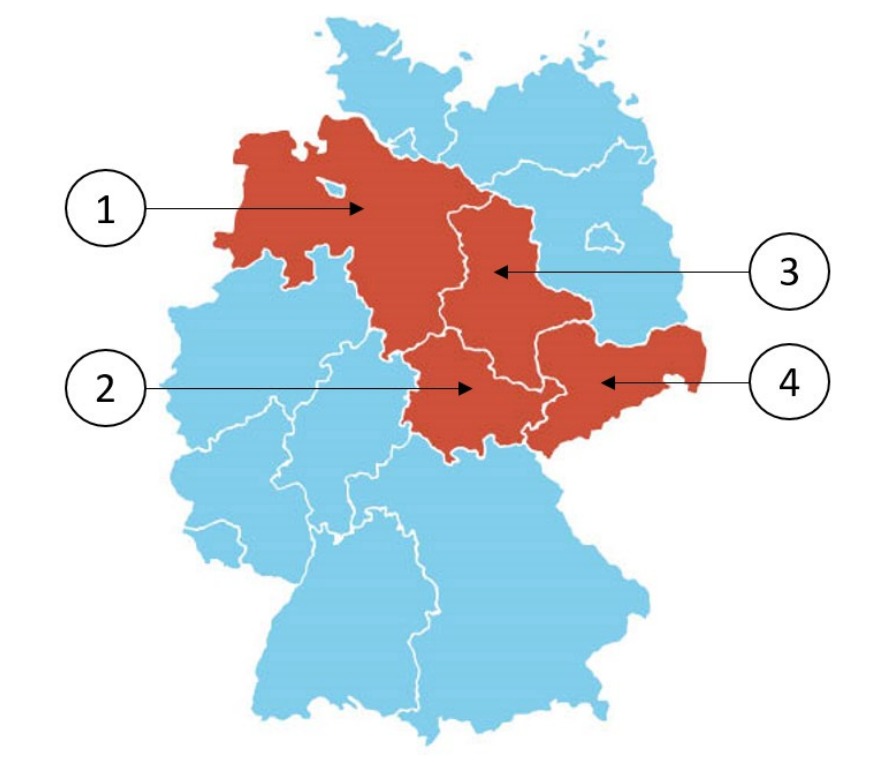
Welches Bundesland ist Sachsen?
- A)1
- B)2
- C)3
- D)4✓
Which federal state is Saxony?
- A)1
- B)2
- C)3
- D)4✓
Wie nennt man die Regierungschefin/den Regierungschef in Sachsen?
- A)Erste Ministerin/Erster Minister
- B)Premierministerin/Premierminister
- C)Bürgermeisterin/Bürgermeister
- D)Ministerpräsidentin/Ministerpräsident✓
What is the title of the head of government of Saxony?
- A)First Minister
- B)Prime Minister
- C)Mayor
- D)Minister-President✓
Welche Ministerin/welchen Minister hat Sachsen nicht?
- A)Justizministerin/Justizminister
- B)Außenministerin/Außenminister✓
- C)Finanzministerin/Finanzminister
- D)Innenministerin/Innenminister
Which minister does Saxony not have?
- A)Justice Minister
- B)Foreign Minister✓
- C)Finance Minister
- D)Interior Minister
🏛️ ST – Sachsen-Anhalt
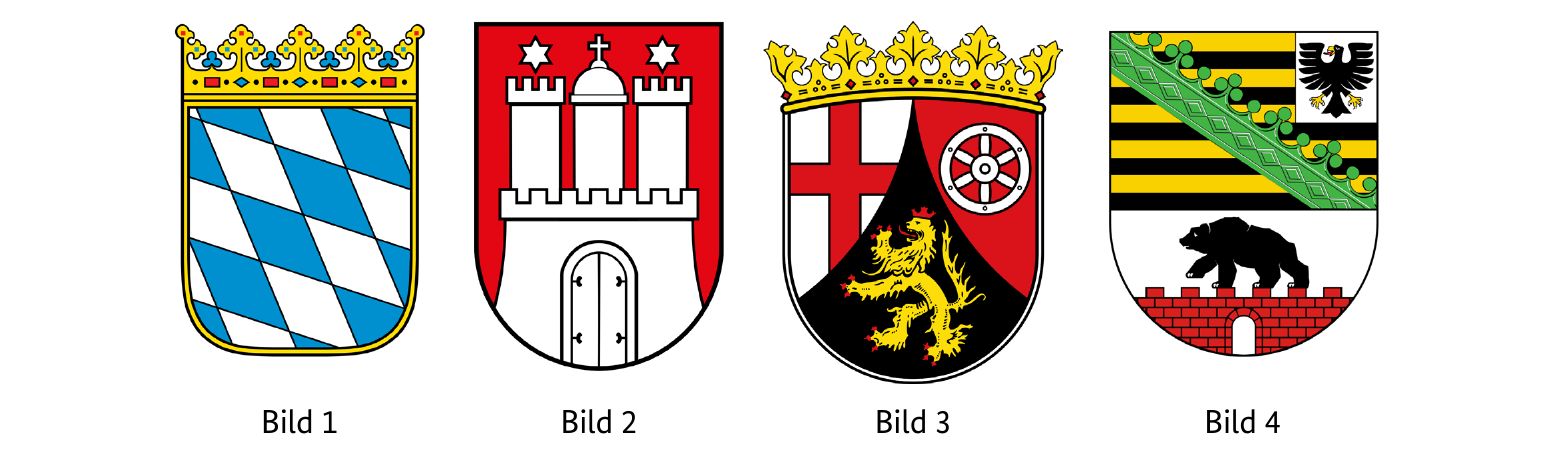
Welches Wappen gehört zum Bundesland Sachsen-Anhalt?
- A)Bild 1
- B)Bild 2
- C)Bild 3
- D)Bild 4✓
Which coat of arms belongs to the federal state of Saxony-Anhalt?
- A)1
- B)2
- C)3
- D)4✓
Welches ist ein Landkreis in Sachsen-Anhalt?
- A)Ammerland
- B)Altötting
- C)Uckermark
- D)Börde✓
Which is a district in Saxony-Anhalt?
- A)Ammerland
- B)Altötting
- C)Uckermark
- D)Börde✓
Für wie viele Jahre wird der Landtag in Sachsen-Anhalt gewählt?
- A)3
- B)4
- C)5✓
- D)6
For how many years is the state parliament in Saxony-Anhalt elected?
- A)3
- B)4
- C)5✓
- D)6
Ab welchem Alter darf man in Sachsen-Anhalt bei Kommunalwahlen wählen?
- A)14
- B)16✓
- C)18
- D)20
From what age can you vote in local elections in Saxony-Anhalt?
- A)14
- B)16✓
- C)18
- D)20
Welche Farben hat die Landesflagge von Sachsen-Anhalt?
- A)blau-weiß-rot
- B)gelb-schwarz✓
- C)grün-weiß-rot
- D)weiß-rot
What colours does the state flag of Saxony-Anhalt have?
- A)blue-white-red
- B)yellow-black✓
- C)green-white-red
- D)white-red
Wo können Sie sich in Sachsen-Anhalt über politische Themen informieren?
- A)bei den Kirchen
- B)bei der Landeszentrale für politische Bildung✓
- C)beim Ordnungsamt der Gemeinde
- D)bei der Verbraucherzentrale
Where can you find out about political issues in Saxony-Anhalt?
- A)at the churches
- B)at the State Agency for Civic Education✓
- C)at the public order office of the municipality
- D)at the Consumer Advice Centre
Die Landeshauptstadt von Sachsen-Anhalt heißt …
- A)Halle.
- B)Dessau.
- C)Magdeburg.✓
- D)Wittenberg.
The state capital of Saxony-Anhalt is called ...
- A)Halle
- B)Dessau
- C)Magdeburg✓
- D)Wittenberg
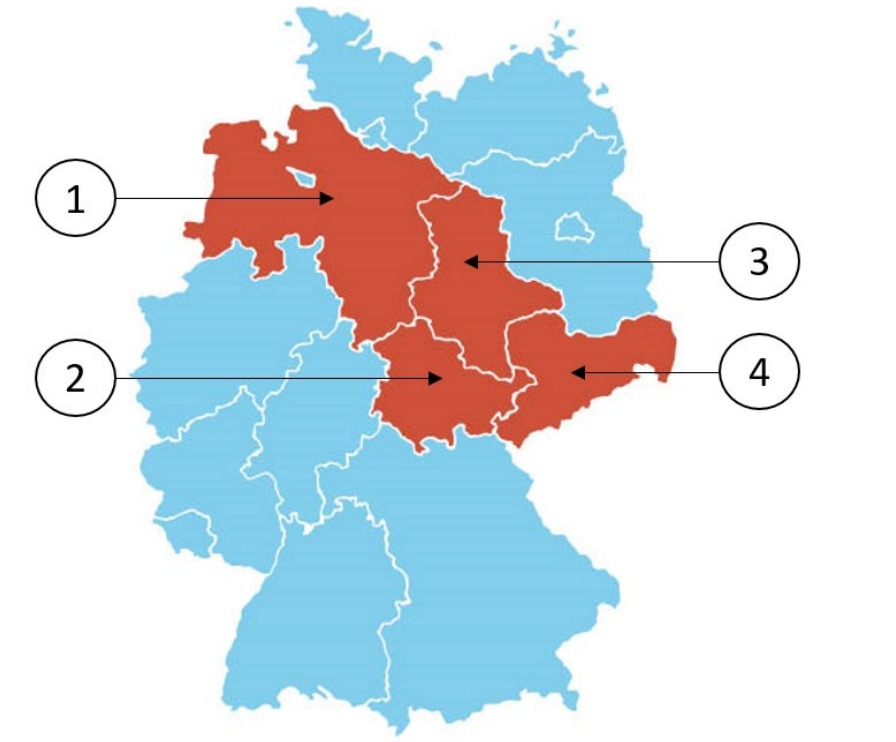
Welches Bundesland ist Sachsen-Anhalt?
- A)1
- B)2
- C)3✓
- D)4
Which federal state is Saxony-Anhalt?
- A)1
- B)2
- C)3✓
- D)4
Wie nennt man die Regierungschefin/den Regierungschef in Sachsen-Anhalt?
- A)Erste Ministerin/Erster Minister
- B)Premierministerin/Premierminister
- C)Bürgermeisterin/Bürgermeister
- D)Ministerpräsidentin/Ministerpräsident✓
What is the title of the head of government of Saxony-Anhalt?
- A)First Minister
- B)Prime Minister
- C)Mayor
- D)Minister-President✓
Welche Ministerin/welchen Minister hat Sachsen-Anhalt nicht?
- A)Justizministerin/Justizminister
- B)Außenministerin/Außenminister✓
- C)Finanzministerin/Finanzminister
- D)Innenministerin/Innenminister
Which minister does Saxony-Anhalt not have?
- A)Justice Minister
- B)Foreign Minister✓
- C)Finance Minister
- D)Interior Minister
🏛️ SH – Schleswig-Holstein
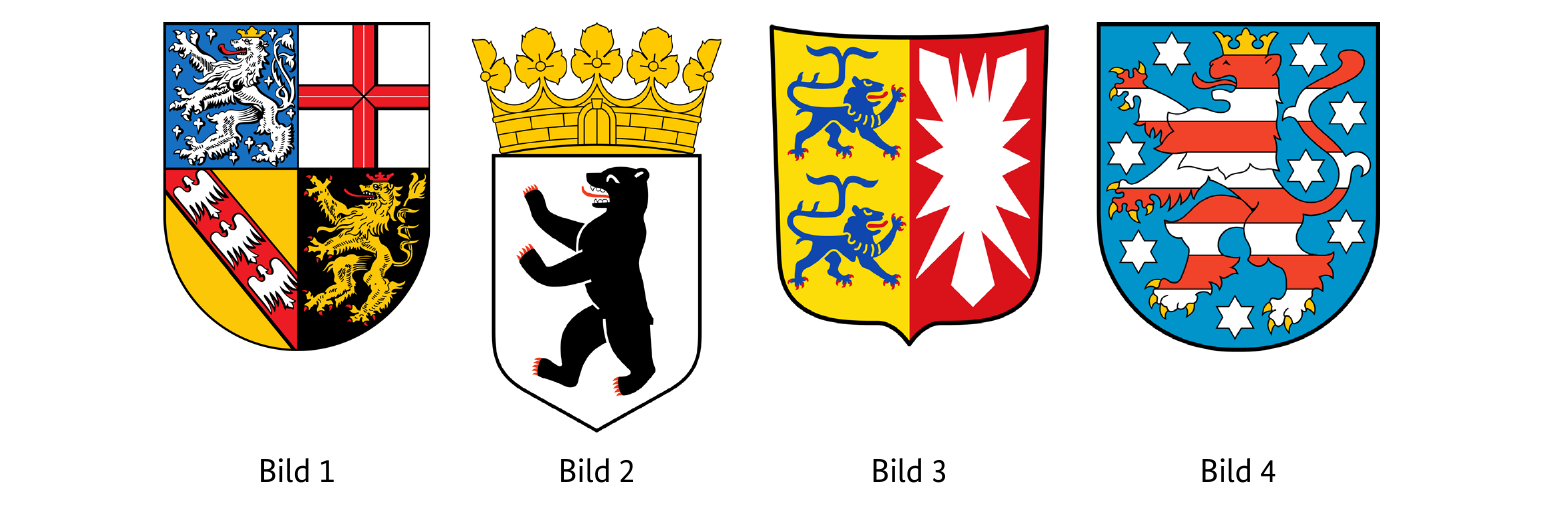
Welches Wappen gehört zum Bundesland Schleswig-Holstein?
- A)Bild 1
- B)Bild 2
- C)Bild 3✓
- D)Bild 4
Which coat of arms belongs to the federal state of Schleswig-Holstein?
- A)1
- B)2
- C)3✓
- D)4
Welches ist ein Landkreis in Schleswig-Holstein?
- A)Ammerland
- B)Mecklenburgische Seenplatte
- C)Nordfriesland✓
- D)Rhein-Sieg-Kreis
Which is a district in Schleswig-Holstein?
- A)Ammerland
- B)Mecklenburg Lake District
- C)Nordfriesland✓
- D)Rhein-Sieg district
Für wie viele Jahre wird der Landtag in Schleswig-Holstein gewählt?
- A)3
- B)4
- C)5✓
- D)6
For how many years is the state parliament in Schleswig-Holstein elected?
- A)3
- B)4
- C)5✓
- D)6
Ab welchem Alter darf man in Schleswig-Holstein bei Kommunalwahlen wählen?
- A)14
- B)16✓
- C)18
- D)20
From what age are you allowed to vote in local elections in Schleswig-Holstein?
- A)14
- B)16✓
- C)18
- D)20
Welche Farben hat die Landesflagge von Schleswig-Holstein?
- A)weiß-blau
- B)blau-weiß-rot✓
- C)weiß-rot
- D)grün-weiß-rot
What colors does the state flag of Schleswig-Holstein have?
- A)white-blue
- B)blue-white-red✓
- C)white-red
- D)green-white-red
Wo können Sie sich in Schleswig-Holstein über politische Themen informieren?
- A)bei der Verbraucherzentrale
- B)beim Ordnungsamt der Gemeinde
- C)beim / bei der Landesbeauftragten für politische Bildung✓
- D)bei den Kirchen
Where can you find out about political issues in Schleswig-Holstein?
- A)at the Consumer Advice Centre
- B)at the public order office of the municipality
- C)with the State Commissioner for Civic Education✓
- D)at the churches
Die Landeshauptstadt von Schleswig-Holstein heißt …
- A)Husum.
- B)Flensburg.
- C)Lübeck.
- D)Kiel.✓
The state capital of Schleswig-Holstein is called ...
- A)Husum
- B)Flensburg
- C)Lübeck
- D)Kiel✓
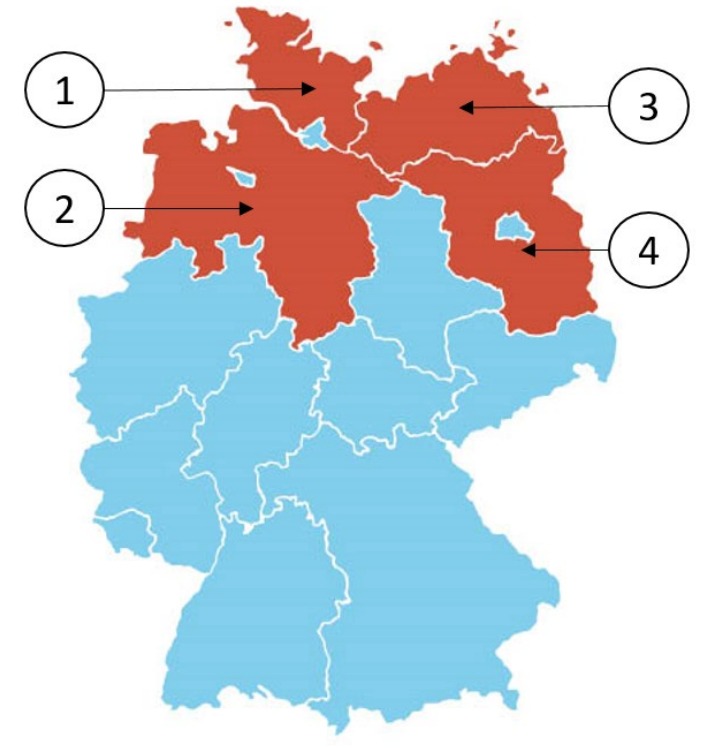
Welches Bundesland ist Schleswig-Holstein?
- A)1✓
- B)2
- C)3
- D)4
Which federal state is Schleswig-Holstein?
- A)1✓
- B)2
- C)3
- D)4
Wie nennt man die Regierungschefin/den Regierungschef in Schleswig-Holstein?
- A)Erste Ministerin/Erster Minister
- B)Premierministerin/Premierminister
- C)Bürgermeisterin/Bürgermeister
- D)Ministerpräsidentin/Ministerpräsident✓
What is the title of the head of government of Schleswig-Holstein?
- A)First Minister
- B)Prime Minister
- C)Mayor
- D)Minister-President✓
Welche Ministerin/welchen Minister hat Schleswig-Holstein nicht?
- A)Justizministerin/Justizminister
- B)Außenministerin/Außenminister✓
- C)Finanzministerin/Finanzminister
- D)Innenministerin/Innenminister
Which minister does Schleswig-Holstein not have?
- A)Justice Minister
- B)Foreign Minister✓
- C)Finance Minister
- D)Interior Minister
🏛️ TH – Thüringen
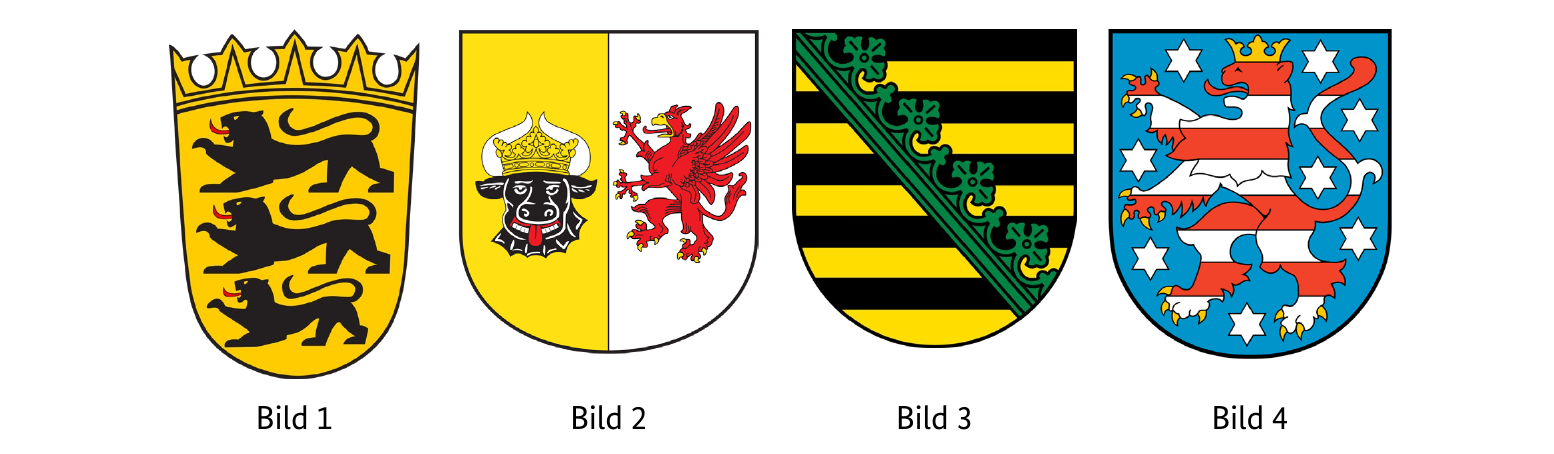
Welches Wappen gehört zum Freistaat Thüringen?
- A)Bild 1
- B)Bild 2
- C)Bild 3
- D)Bild 4✓
Which coat of arms belongs to the Free State of Thuringia?
- A)1
- B)2
- C)3
- D)4✓
Welches ist ein Landkreis in Thüringen?
- A)Ammerland
- B)Altötting
- C)Nordfriesland
- D)Wartburgkreis✓
Which is a district in Thuringia?
- A)Ammerland
- B)Altötting
- C)Nordfriesland
- D)Wartburgkreis✓
Für wie viele Jahre wird der Landtag in Thüringen gewählt?
- A)3
- B)4
- C)5✓
- D)6
For how many years will the state parliament in Thuringia be elected?
- A)3
- B)4
- C)5✓
- D)6
Ab welchem Alter darf man in Thüringen bei Kommunalwahlen wählen?
- A)14
- B)16✓
- C)18
- D)20
From what age can you vote in local elections in Thuringia?
- A)14
- B)16✓
- C)18
- D)20
Welche Farben hat die Landesflagge von Thüringen?
- A)blau-weiß-rot
- B)weiß-rot✓
- C)grün-weiß-rot
- D)schwarz-gold
What colors does the state flag of Thuringia have?
- A)blue-white-red
- B)white-red✓
- C)green-white-red
- D)black-gold
Wo können Sie sich in Thüringen über politische Themen informieren?
- A)bei den Kirchen
- B)bei der Verbraucherzentrale
- C)bei der Landeszentrale für politische Bildung✓
- D)beim Ordnungsamt der Gemeinde
Where can you find out about political topics in Thuringia?
- A)at the churches
- B)at the Consumer Advice Centre
- C)at the State Agency for Civic Education✓
- D)at the public order office of the municipality
Die Landeshauptstadt von Thüringen heißt …
- A)Eisenach.
- B)Erfurt.✓
- C)Gera.
- D)Jena.
The state capital of Thuringia is called ...
- A)Eisenach
- B)Erfurt✓
- C)Gera
- D)Jena
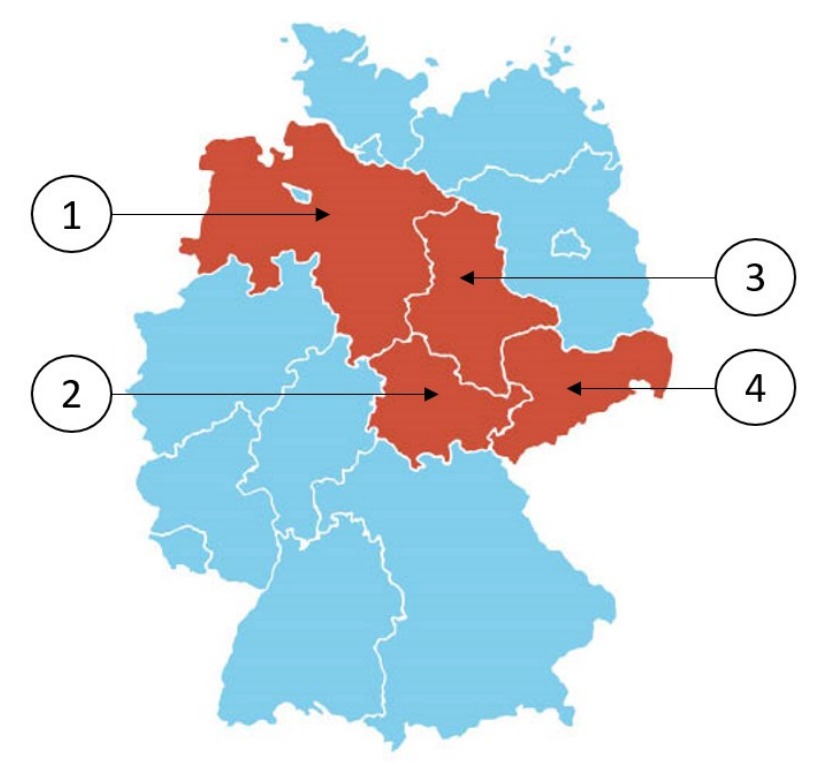
Welches Bundesland ist Thüringen?
- A)1
- B)2✓
- C)3
- D)4
Which state is Thuringia?
- A)1
- B)2✓
- C)3
- D)4
Wie nennt man die Regierungschefin/den Regierungschef in Thüringen?
- A)Erste Ministerin/Erster Minister
- B)Premierministerin/Premierminister
- C)Bürgermeisterin/Bürgermeister
- D)Ministerpräsidentin/Ministerpräsident✓
What is the title of the head of government of Thuringia?
- A)First Minister
- B)Prime Minister
- C)Mayor
- D)Minister-President✓
Welche Ministerin/welchen Minister hat Thüringen nicht?
- A)Justizministerin/Justizminister
- B)Außenministerin/Außenminister✓
- C)Finanzministerin/Finanzminister
- D)Innenministerin/Innenminister
Which minister does Thuringia not have?
- A)Justice Minister
- B)Foreign Minister✓
- C)Finance Minister
- D)Interior Minister