
Complete 2026 Guide: Getting a German Driving Licence for Iranians
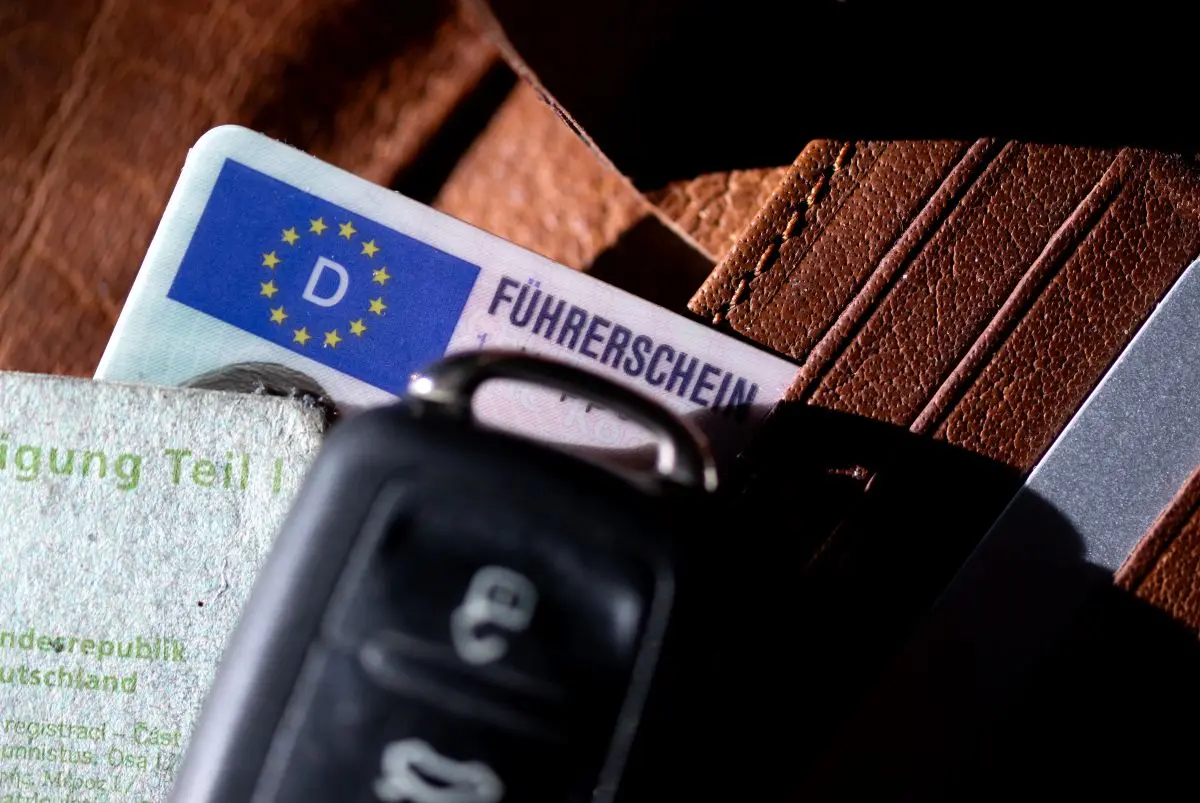
If you recently moved to Germany, one of the first practical questions is: "How long can I drive with my Iranian licence, and what exactly do I need to do to get a German one?" This guide is written for that exact situation, with a focus on what usually happens in real life: process, budget, timeline, and common failure points.
Quick summary:
- For most Iranians, there is usually no direct no-exam conversion path.
- You can generally drive for up to 6 months after establishing residence in Germany (with legal conditions met).
- You usually need to open an administrative file, pass theory, pass practical, and work through a Fahrschule.
- A realistic total budget for class B is often around EUR 2,500 to EUR 4,500, depending on city, school pricing, and how many practical lessons/retests you need.
Important note before you start
This is not legal advice. Rules can vary by city/region and can change over time. Your binding source is always your local:
- Führerscheinstelle
- Bürgeramt or local authority
- TÜV / DEKRA procedures
1) How long can I drive in Germany with an Iranian licence?
In most residence scenarios, non-German licences can be used for a limited period (typically up to 6 months from normal residence start), but only if you have an International Driving Permit (IDP) or a certified translation. Without one of these, you are not legally allowed to drive, even if your original Iranian licence is valid.
Three critical tips for Iranians:
- Your Iranian licence alone is not enough. You must obtain an International Driving Permit (IDP) before leaving Iran or immediately upon arrival in Germany, or arrange a certified translation. Without this, driving is not legal.
- Start your German licence process early, not in month 5 or 6. Otherwise, you may have a gap where you cannot legally drive.
- Do not assume your Iranian licence will be automatically converted.
2) Can Iranians convert without exams?
No, not for most Iranians. Iran is not on the Annex 11 list, so you cannot skip exams. You must pass both theory and practical exams. Only EU/EEA countries can convert without exams; all other countries (including Iran) must take both exams.
Your Iranian licence mostly helps as prior driving experience, not as an exam waiver.
3) Standard path for class B in Germany (for most Iranian applicants)
Step 1: Choose your Fahrschule carefully
- Do not compare only registration fees.
- Compare practical lesson prices, retest costs, and scheduling speed.
- Ask for real averages: how many practical lessons students like you usually need.
Step 2: First aid course (Erste Hilfe)
- Usually one day.
- You need the certificate for your file.
Step 3: Eye test (Sehtest)
- Short test, but mandatory certificate.
- If you pass with glasses/contacts, that condition may be added to your licence.
- Good news: Many places offer free eye tests. Fielmann provides free driving licence eye tests. Simply book an online appointment at a Fielmann location near you.
Step 4: Biometric photo
- Must match official German biometric standards.
Step 5: Open your file at Führerscheinstelle
- Typically includes passport, residence proof, Anmeldung/Meldebescheinigung, first aid certificate, eye test certificate, biometric photo, and Fahrschule documents.
- Some schools can handle parts of the filing workflow for you.
Step 6: Theory preparation and exam
- Computer-based exam.
- Do not rely on intuition only; train with the official question bank.
- Some non-German translations can feel awkward; if your German is workable, German can sometimes be easier for tricky questions.
- Free question banks for practice:
- fahrschule.de - Fragenkatalog - Complete question bank with free practice tests
- fahrschule24.de - Theorie-Prüfungsfragen - Free theory exam questions
Step 7: Practical training
- Number of lessons depends on your actual performance.
- Common issue for experienced foreign drivers: local habit mismatch (priority rules, shoulder checks, lane behavior, safe stopping distance).
Step 8: Practical exam
- Conducted by official examiner (TÜV/DEKRA), usually with your instructor in the car.
- Typical evaluation: city driving, signs, lane changes, priority handling, parking, safe decision-making.
- Result is usually communicated immediately.
Step 9: Licence issuance
- After passing, the card issuance process starts.
- Depending on city procedure, you may receive a temporary proof first.
4) Document checklist (practical version)
- Valid passport
- Valid residence permit
- Anmeldung / Meldebescheinigung
- Biometric photo
- Erste Hilfe certificate
- Sehtest certificate
- Fahrschule contract/documents
- Valid Iranian driving licence
- Official translation of Iranian licence (if required by your authority)
Tip: Always verify the exact document list on your city authority website before your appointment.
5) Realistic cost in Germany
Many people underestimate total cost because they only look at school registration. Your final budget usually includes:
- Fahrschule registration and teaching fees
- Practical lessons
- Theory exam fee (and possible retake)
- Practical exam fee (and possible retake)
- Administrative fees (Führerscheinstelle/Bürgeramt)
- First aid course
- Eye test
- Translation costs (if needed)
Common real-world range for class B: around EUR 2,500 to EUR 4,500. It can be higher in expensive cities or with multiple retests.
6) How long does it take?
In many normal cases, people finish in about 3 to 6 months. But it depends on:
- Administrative waiting times in your city
- TÜV/DEKRA exam slot availability
- Your study pace for theory
- How many practical lessons you need before instructor approval
If your goal is speed, run steps in parallel from week one: documents, classes, bookings, theory prep.
7) Language reality in exams
- Theory is available in multiple languages, but translation quality is not always ideal.
- Practical exam commands are often short and in German; you should understand basic driving instructions.
- If your German is weak, train key command vocabulary before test day.
8) Theory pass strategy for Persian speakers
- Use the official app/question bank from your school, not random PDFs only.
- Repeat priority/sign scenarios until pattern recognition is automatic.
- Track why each wrong answer happened.
- Before booking the real exam, pass several full mock exams consistently.
9) Practical pass strategy (where many fail)
Practical failures are often not about basic car control; they are about safety behavior and legal precision:
- Missing right-of-way
- Insufficient mirror/shoulder checks
- Late or risky decisions at intersections
- Poor speed adaptation
- Stress communication breakdown
Simple fix: use a pre-action routine for every move: mirror, shoulder, sign, speed, distance, decision.
10) What if I fail?
You can usually retake, but retakes cost money and time:
- Full exam fee again
- Possible mandatory waiting gap before the next attempt
- Total project cost rises quickly with each failed attempt
Your best strategy is not just passing, but passing with the minimum number of attempts.
11) After you pass: insurance and first-year realities
After getting your licence, cost management continues:
- New-driver car insurance can be expensive.
- Premium depends on car type, region, annual mileage, and driving history.
- Before buying a car, collect several insurance quotes first.
12) Most common mistakes Iranians make
- Starting too late: month 6 arrives before they have exam slots.
- Choosing school only by lowest ad price: ends up more expensive later.
- Underestimating theory: driving experience does not replace exam-specific preparation.
- Not adapting driving style: old habits conflict with German testing standards.
- Ignoring language prep for practical: misunderstanding instructions causes avoidable errors.
13) Suggested 8-week plan
Week 1: choose school, register, book first aid and eye test.
Week 2: complete document package, open file, start structured theory practice.
Week 3-4: finish theory classes, daily mock tests.
Week 5: take theory exam.
Week 6-7: focused practical training for weak points.
Week 8: practical exam.
In high-demand cities, this can extend to 10-16 weeks due to scheduling bottlenecks.
14) Sample budget table
| Item | Typical range |
|---|---|
| Admin + baseline documents | about EUR 150 to EUR 400 |
| School + training costs | about EUR 1,500 to EUR 3,200 |
| Exam + related costs | about EUR 400 to EUR 900 |
| Total common range | about EUR 2,500 to EUR 4,500 |
15) Final takeaway for Iranians in Germany
For most Iranian applicants, the German licence path is a real project, not a one-week admin task. If you start early and execute in order, you can control both cost and stress:
- Start early.
- Prepare documents precisely.
- Choose Fahrschule strategically.
- Train theory with discipline.
- Adapt fully to German exam driving standards.
Quick FAQ
Can I drive in Germany with an Iranian licence?
Usually yes, but only for a limited period, commonly up to 6 months after establishing normal residence.
Can Iranians convert to a German licence without exams?
In most cases, no. You usually still need to pass both theory and practical exams.
What is the realistic total cost for class B?
A common real-world range is about EUR 2,500 to EUR 4,500, depending on city, school pricing, and retakes.
How long does the full process take?
Often around 3 to 6 months, but longer in busy cities due to appointment and exam-slot bottlenecks.
What matters most for passing practical on the first try?
Right-of-way handling, mirror and shoulder checks, safe speed decisions, and consistent calm execution under instructions.
Useful references to verify current details
- All About Berlin - How to get a driving licence in Germany
- All About Berlin - Converting foreign licences
Final note: for your specific case, your local Führerscheinstelle instructions always have final priority.